
Last Updated on April 8, 2026 by Vlad
The samurai battles that shaped Japanese history represent some of the most strategically complex and significant military engagements in world history. From massive clashes involving hundreds of thousands of warriors to desperate last stands, these battles determined the fate of clans, the rise and fall of shogunates, and ultimately the course of Japan’s development as a nation.
This comprehensive guide examines the ten most famous samurai battles fought by Japan’s most iconic samurai warriors, analysing their strategic importance, scale, and lasting impact on Japanese history. Whether you’re researching the Sengoku period’s brutal conflicts or studying the decline of the samurai class, these battles provide crucial insights into Japan’s warrior culture and political evolution.
What Made These Samurai Battles Significant?
The battles featured in this list were selected based on several criteria:
- Historical impact: Battles that changed the course of Japanese history, establishing new shogunates or ending major conflicts
- Scale: The largest engagements involving tens or hundreds of thousands of warriors
- Tactical innovation: Battles that introduced new strategies or weaponry that transformed samurai warfare
- Cultural significance: Conflicts that became legendary in Japanese culture and continue to be studied today
Samurai Battle Comparison
| Battle | Year | Combatants | Estimated Forces | Casualties | Historical Significance |
|---|---|---|---|---|---|
| Sekigahara | 1600 | Eastern vs Western Coalition | 160,000+ total | 30,000-40,000 | Established Tokugawa shogunate |
| Osaka (Siege) | 1614-1615 | Tokugawa vs Toyotomi | 200,000+ total | 100,000+ | Ended Toyotomi clan |
| Nagashino | 1575 | Oda-Tokugawa vs Takeda | 38,000 vs 15,000 | 10,000+ | Revolutionized warfare with firearms |
| Dan-no-ura | 1185 | Minamoto vs Taira | Unknown (naval) | Thousands | Ended Genpei War, established Kamakura shogunate |
| Kawanakajima (4th) | 1561 | Takeda vs Uesugi | 20,000 vs 18,000 | 7,000-8,000 | Legendary rivalry battle |
| Anegawa | 1570 | Oda-Tokugawa vs Azai-Asakura | 28,000 vs 18,000 | 10,000+ | Consolidated Nobunaga’s power |
| Mikatagahara | 1572 | Takeda vs Tokugawa | 27,000 vs 11,000 | Heavy Tokugawa losses | Demonstrated Takeda supremacy |
| Minatogawa | 1336 | Ashikaga vs Imperial forces | Unknown | Thousands | Established Ashikaga shogunate |
| Shiroyama | 1877 | Imperial vs Satsuma | 30,000 vs 500 | 500+ samurai | Last samurai battle |
| Uji | 1180 | Taira vs Minamoto | 28,000 vs unknown | Unknown | First major battle of Genpei War |
Battle Locations Across Japan
Click on markers to learn more about each historic battlefield
1. Battle of Sekigahara (1600)
The Battle That United Japan
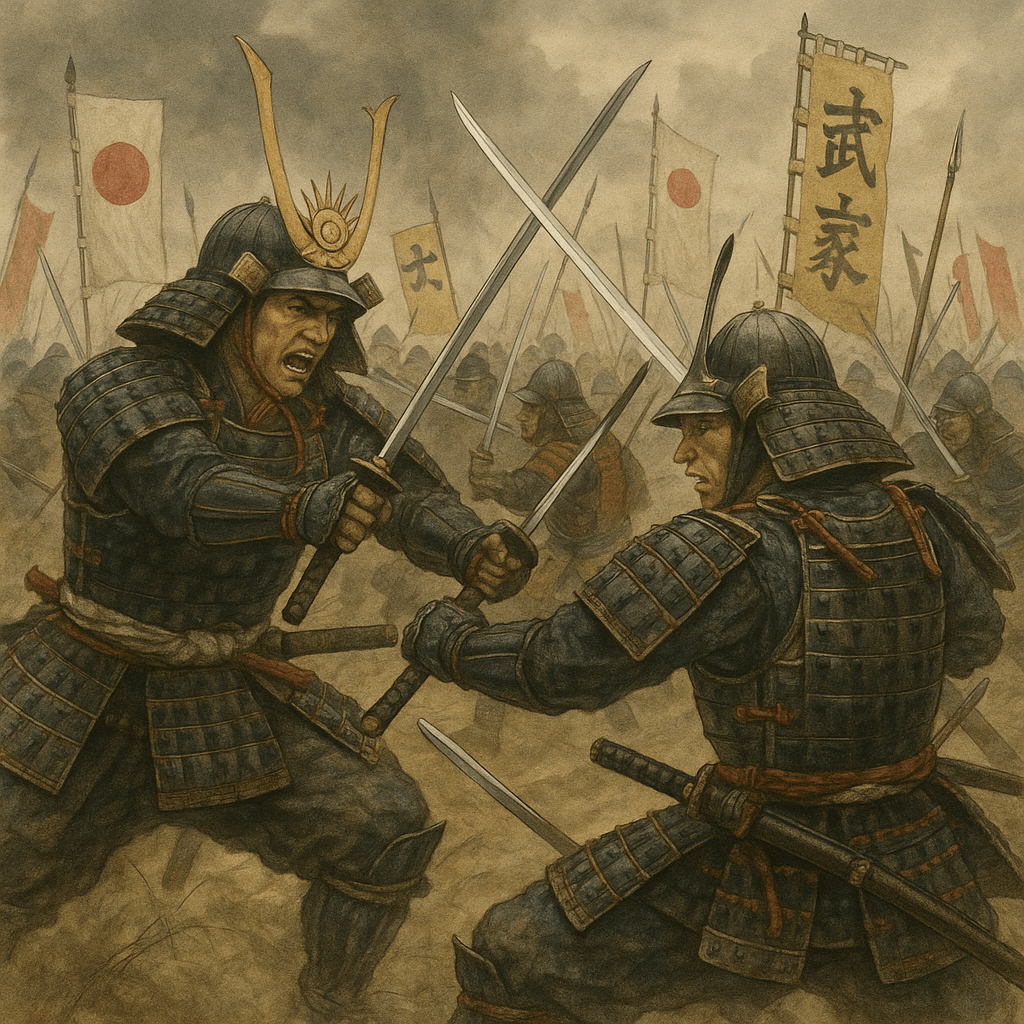
The Battle of Sekigahara stands as the most decisive engagement in Japanese history, marking the definitive end of the Sengoku period and establishing the political framework that would govern Japan for the next 250 years.
Background and Forces: Fought on October 21, 1600, the battle pitted Tokugawa Ieyasu’s Eastern Army (approximately 75,000-88,000 warriors) against Ishida Mitsunari’s Western Coalition (approximately 80,000-120,000 warriors). The conflict arose from the power vacuum following Toyotomi Hideyoshi’s death, with rival factions vying to control Japan.
The Battle: Despite facing a numerically superior force, Tokugawa Ieyasu secured victory through political manipulation as much as military prowess. Key commanders in the Western army, including Kobayakawa Hideaki, had secretly pledged loyalty to Ieyasu. When Kobayakawa’s 15,000 warriors switched sides mid-battle, the Western Coalition collapsed. The engagement lasted only six hours but resulted in 30,000-40,000 casualties.
Significance: Sekigahara’s outcome established the Tokugawa shogunate, which ruled Japan until 1868. The battle demonstrated that political strategy could be as decisive as battlefield tactics, a lesson that shaped subsequent Japanese governance.
2. Battle of Dan-no-ura (1185)
The Naval Battle That Ended the Genpei War
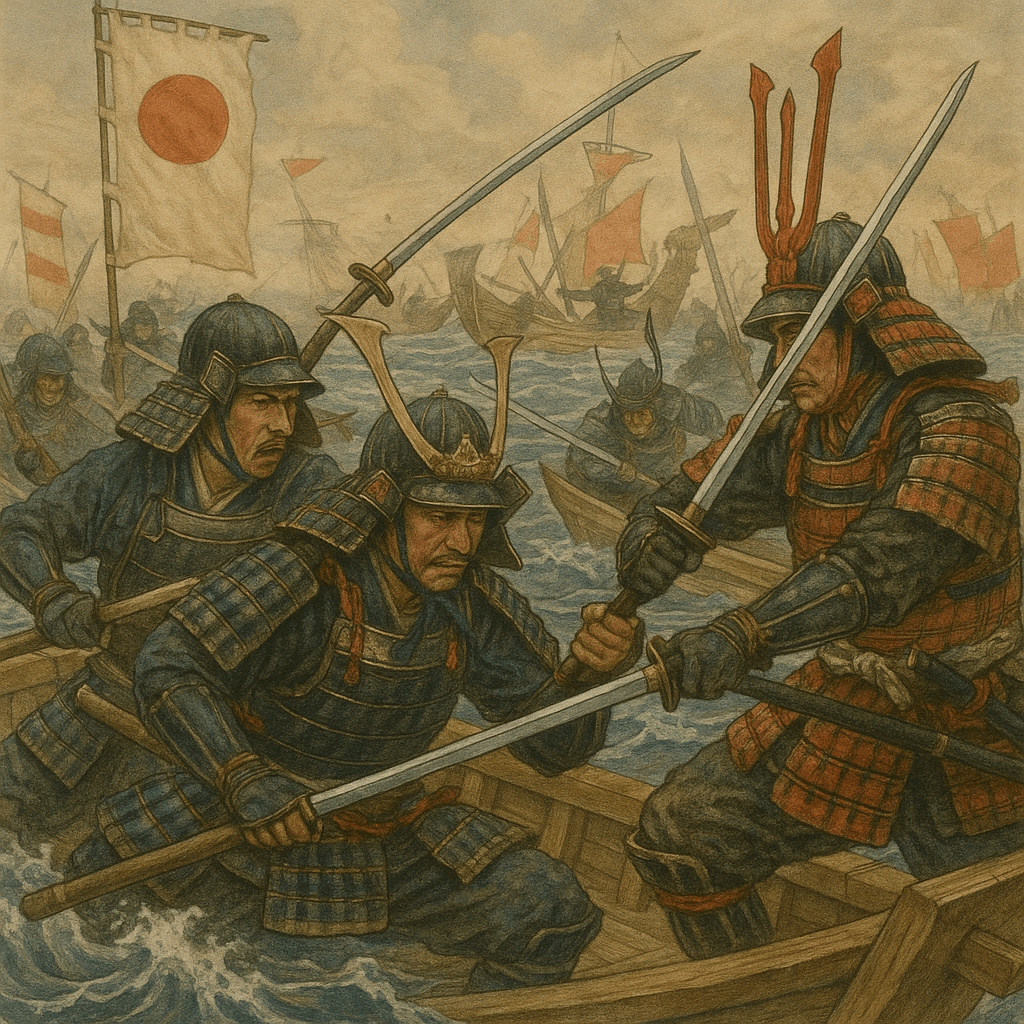
The Battle of Dan-no-ura was the climactic naval engagement that concluded the five-year Genpei War between the Taira and Minamoto clans, fundamentally altering Japan’s political structure.
Background and Forces: Fought in the Shimonoseki Strait on April 25, 1185, the battle saw the Minamoto fleet, commanded by Minamoto no Yoshitsune, confront the Taira fleet carrying the child Emperor Antoku. The Taira, once the dominant clan in Japan, had been driven to this final confrontation after years of defeats.
The Battle: Naval warfare in this period centred on boarding actions rather than ship-to-ship combat. Initially, the Taira held the advantage due to favourable currents. However, when the tide changed, Minamoto forces overwhelmed the Taira fleet. Crucially, Taira warriors who had been forced into service by the clan began deserting or switching sides. Faced with certain defeat, many Taira nobles chose suicide by drowning, including Emperor Antoku, who was only seven years old.
Significance: The Minamoto victory at Dan-no-ura led to the establishment of the Kamakura shogunate in 1192, Japan’s first military government. This shifted power from the imperial court to the warrior class, a transformation that would define Japanese governance for nearly 700 years. The battle also gave rise to numerous legends and cultural works, including tales of the Heike (Taira) ghosts haunting the strait.
3. Battles of Kawanakajima (1553-1564)
The Legendary Rivalry Between Two Great Daimyo
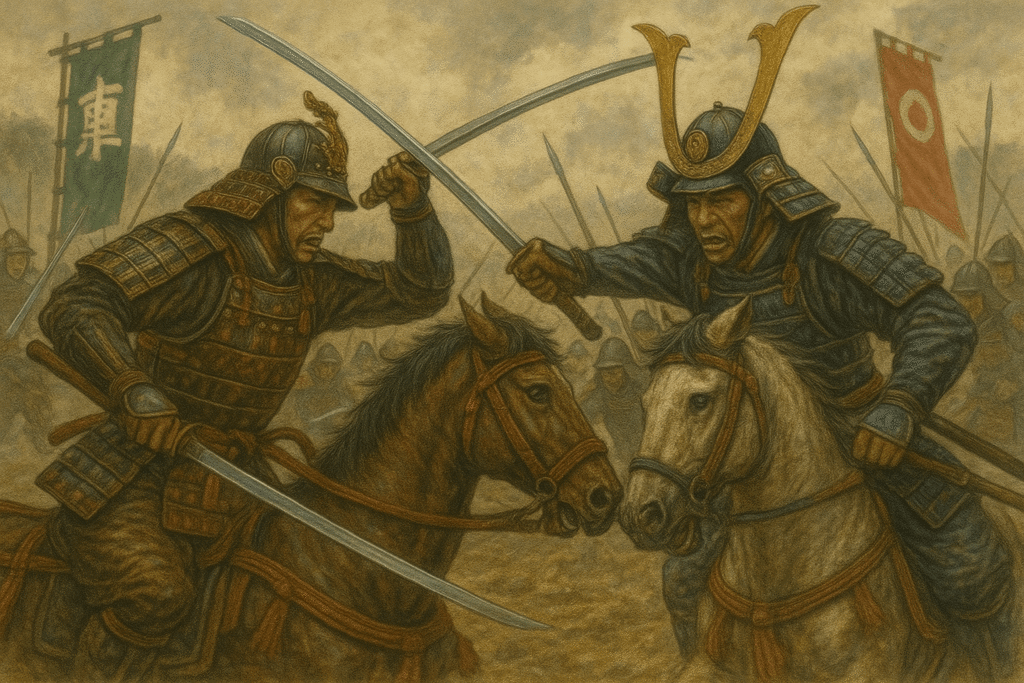
The Battles of Kawanakajima comprise five separate engagements fought over eleven years between two of the Sengoku period’s most celebrated commanders: Takeda Shingen and Uesugi Kenshin. These conflicts exemplify the complex nature of Sengoku-era warfare.
Background and Forces: The battles took place near the Sai River in Shinano Province (modern Nagano Prefecture), a strategically valuable region both daimyo sought to control. Despite the extended conflict, neither commander achieved decisive victory, leading to a military stalemate that became legendary for the mutual respect between the rivals.
The Fourth Battle (1561): The most famous engagement occurred on October 17-18, 1561. Takeda Shingen deployed approximately 20,000 warriors against Uesugi Kenshin’s force of around 18,000. The battle is renowned for an incident where Kenshin allegedly broke through Takeda lines and personally attacked Shingen in his command post, forcing Shingen to defend himself with his war fan before his guards could intervene. This single combat between commanders was extremely rare in samurai warfare.
The fourth battle resulted in approximately 7,000-8,000 casualties combined, making it the bloodiest of the five engagements. Despite heavy losses on both sides, neither commander gained a strategic advantage.
Significance: The Kawanakajima battles demonstrated that military stalemates could persist even between the era’s most capable commanders. The conflicts have been extensively studied for their tactical innovations and the chivalric conduct between the two rivals, who reportedly exchanged gifts and letters between battles.
4. Siege of Osaka (1614-1615)
The End of the Toyotomi Clan
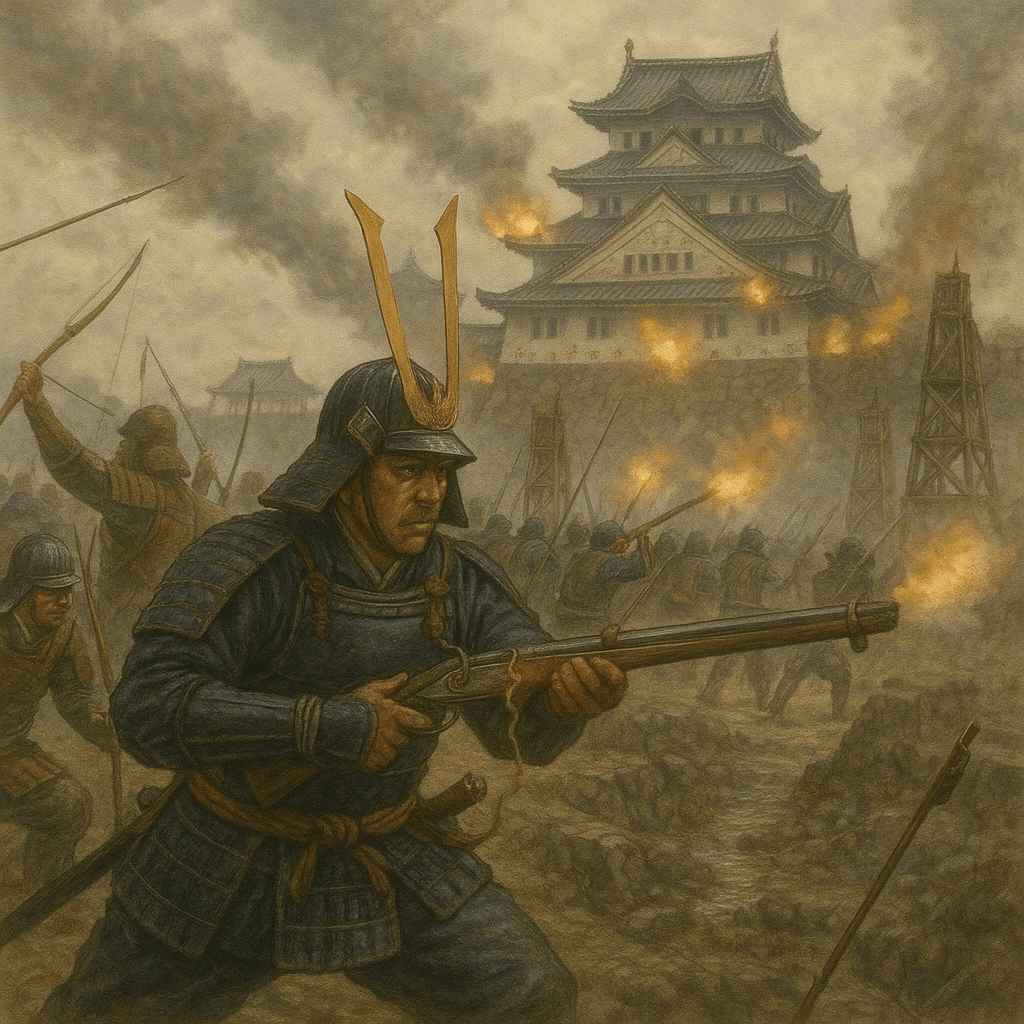
The Siege of Osaka represents one of the largest military operations in samurai history and marked the final consolidation of Tokugawa power in Japan.
Background and Forces: Following his victory at Sekigahara, Tokugawa Ieyasu had established his shogunate but faced a potential threat from Toyotomi Hideyori, son of the late Toyotomi Hideyoshi. Osaka Castle, headquarters of the Toyotomi clan, was considered the most formidable fortress in Japan, with massive stone walls and multiple defensive layers.
The Winter Campaign (1614): Ieyasu’s first assault involved approximately 200,000 warriors against Osaka Castle’s garrison of 90,000-100,000 defenders, many of them rōnin (masterless samurai) who had joined the Toyotomi cause. The castle’s defenses proved impenetrable to direct assault. After months of siege, Ieyasu negotiated a peace treaty, but used the terms to have the outer moats filled in, severely weakening the castle’s defenses.
The Summer Campaign (1615): With the castle’s defenses compromised, Ieyasu launched a renewed assault in May 1615. The defenders, now numbering around 50,000, fought desperately but were ultimately overwhelmed. The castle fell on June 4, 1615, resulting in the death of Toyotomi Hideyori and the massacre or suicide of thousands of Toyotomi loyalists. Total casualties across both campaigns exceeded 100,000.
Significance: The fall of Osaka Castle eliminated the last serious challenge to Tokugawa authority, ushering in the Edo period of relative peace that would last until 1868. The siege also demonstrated the effectiveness of siege warfare and the limitations of even the most formidable fortifications against overwhelming force.
5. Battle of Nagashino (1575)
The Battle That Revolutionized Samurai Warfare
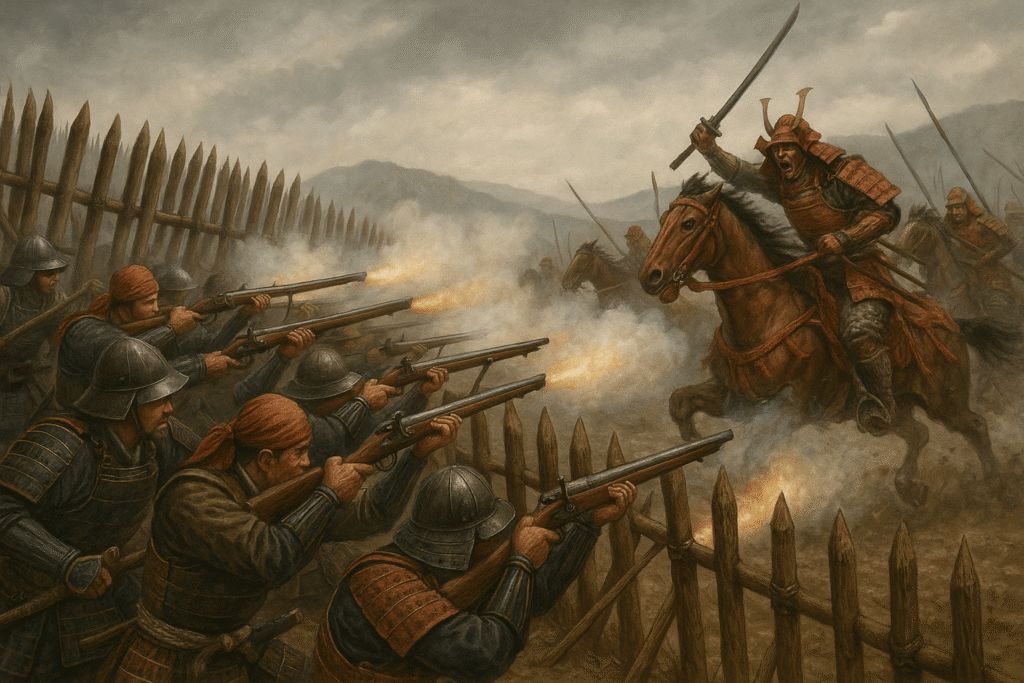
The Battle of Nagashino fundamentally transformed Japanese warfare by demonstrating the devastating effectiveness of firearms against traditional cavalry tactics.
Background and Forces: On June 28, 1575, the combined forces of Oda Nobunaga and Tokugawa Ieyasu (approximately 38,000 warriors) faced Takeda Katsuyori’s army of about 15,000, including the renowned Takeda cavalry – considered the finest mounted warriors in Japan.
The Battle: Oda Nobunaga deployed a revolutionary tactic: he positioned approximately 3,000 arquebusiers (gunners) behind wooden palisades and arranged them in rotating volleys, ensuring continuous fire. When Takeda’s cavalry charged, they were met with devastating volleys that decimated their ranks before they could reach the Oda-Tokugawa lines. The traditional samurai cavalry charge, previously nearly unstoppable, proved ineffective against disciplined firearms.
The battle resulted in catastrophic losses for the Takeda clan, with approximately 10,000 casualties, including many of their most experienced commanders and warriors.
Significance: Nagashino marked a turning point in Japanese military history. It demonstrated that firearms, properly deployed, could counter traditional samurai tactics. The battle accelerated the adoption of firearms across Japan and contributed to the evolution of warfare from cavalry-centred to combined-arms tactics. For the Takeda clan, the defeat at Nagashino began their decline, which culminated in their destruction by 1582.
6. Battle of Mikatagahara (1572)
Takeda Shingen’s Masterpiece
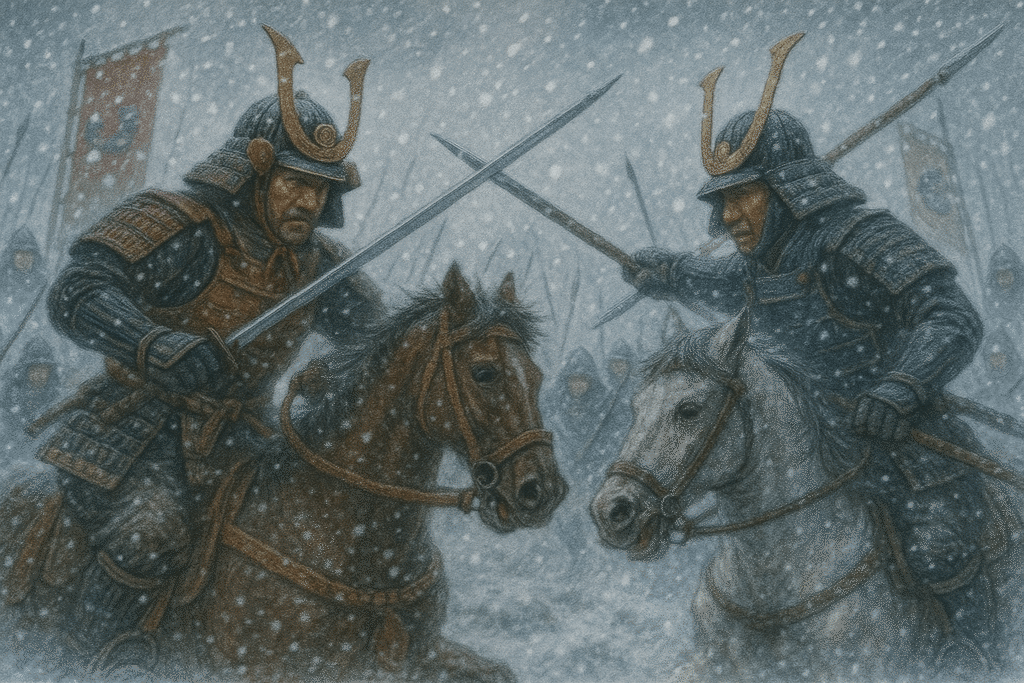
The Battle of Mikatagahara stands as possibly Takeda Shingen’s greatest tactical victory and Tokugawa Ieyasu’s most devastating defeats.
Background and Forces: On January 25, 1573, Takeda Shingen’s army of approximately 27,000 warriors confronted Tokugawa Ieyasu’s force of about 11,000 near Hamamatsu. Despite advice from his advisors, the young Ieyasu chose to engage Takeda’s superior force rather than remain in his castle.
The Battle: Takeda Shingen’s tactical brilliance was on full display. He feigned a withdrawal, luring Ieyasu’s forces into pursuit, then executed a devastating counterattack that nearly annihilated the Tokugawa army. Ieyasu himself barely escaped, reportedly so terrified that he soiled himself during the retreat—an incident that, true or not, became part of samurai lore as a lesson in humility.
The Tokugawa forces suffered catastrophic casualties, with some estimates suggesting 90% losses. Only Ieyasu’s strategic retreat to Hamamatsu Castle and the arrival of reinforcements from Oda Nobunaga prevented complete destruction.
Significance: Mikatagahara demonstrated Takeda Shingen’s mastery of battlefield tactics and the importance of knowing when not to engage. For Tokugawa Ieyasu, the defeat became a formative experience that shaped his later, more cautious military strategy. The battle is often cited as one of the finest examples of tactical deception in samurai warfare.
7. Battle of Anegawa (1570)
Oda Nobunaga’s Bloody Path to Power

The Battle of Anegawa was one of the largest and bloodiest engagements of Oda Nobunaga’s campaign to unify Japan, notable for its fierce hand-to-hand combat.
Background and Forces: Fought on August 9, 1570, the battle saw the allied forces of Oda Nobunaga and Tokugawa Ieyasu (approximately 28,000 warriors) face the combined armies of the Azai and Asakura clans (approximately 18,000 warriors) near the Anegawa River in Ōmi Province.
The Battle: The engagement began with both sides crossing the shallow Anegawa River to engage in close combat. The fighting was exceptionally brutal, with extensive hand-to-hand combat rather than the mounted charges typical of many samurai battles. The Azai clan initially held their ground against Nobunaga’s forces, while the Asakura pushed back Tokugawa’s troops.
The tide turned when Nobunaga personally led reinforcements to support Tokugawa, breaking the Asakura lines. This allowed Nobunaga’s forces to then overwhelm the Azai position. The battle resulted in over 10,000 casualties, with the Azai and Asakura clans suffering the majority of losses.
Significance: While not a decisive victory that immediately eliminated his enemies, Anegawa significantly weakened the Azai and Asakura clans, paving the way for their eventual destruction. The battle demonstrated Nobunaga’s aggressive tactics and willingness to personally lead his troops in critical moments—characteristics that would define his military career.
8. Battle of Minatogawa (1336)
The Battle That Established the Ashikaga Shogunate
The Battle of Minatogawa was a pivotal engagement in the Nanboku-chō period, determining which imperial faction would control Japan.
Background and Forces: The battle, fought on July 5, 1336, pitted Ashikaga Takauji’s forces against the loyalist army of Emperor Go-Daigo, led by the renowned warrior Kusunoki Masashige. Takauji, originally dispatched by the emperor to suppress rebellions, had turned against the imperial court to establish his own shogunate.
The Battle: Despite Kusunoki’s tactical brilliance and desperate defense, he faced overwhelming odds. Several key imperial supporters defected to Ashikaga’s side before and during the battle, reflecting the complex political calculations of the period. Kusunoki, recognizing the inevitability of defeat, fought to the death rather than surrender. According to legend, he and his brother committed seppuku together after the battle was lost.
Significance: Ashikaga’s victory at Minatogawa led to the establishment of the Ashikaga shogunate and created a split in the imperial court, with rival northern and southern courts existing until 1392. The battle exemplified the complex loyalties of the period, where personal advancement often trumped imperial loyalty. Kusunoki Masashige’s heroic death made him a symbol of loyalty and became legendary in Japanese culture.
9. Battle of Shiroyama (1877)
The Last Stand of the Samurai
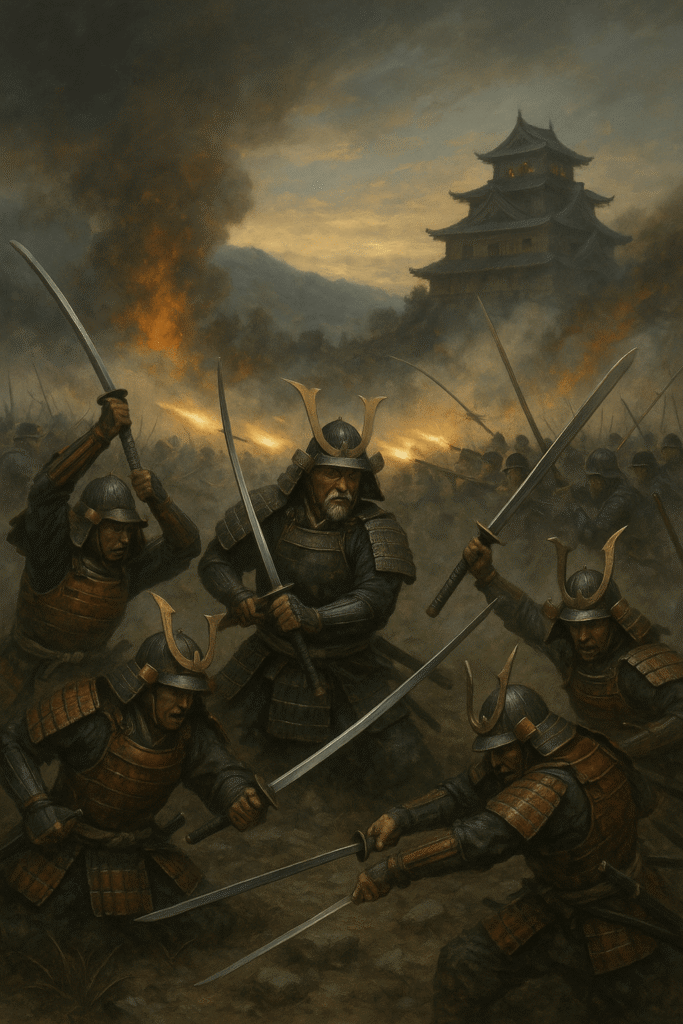
The Battle of Shiroyama represents the final organized resistance of the traditional samurai class against Japan’s modernization, marking the symbolic end of samurai warfare.
Background and Forces: By 1877, the Meiji government had abolished the samurai class, banned the wearing of swords, and established a modern conscript army. Saigō Takamori, a former Meiji leader, led the Satsuma Rebellion in protest. After months of conflict, approximately 500 samurai rebels made their last stand at Shiroyama against an Imperial Japanese Army of around 30,000 soldiers armed with modern weapons.
The Battle: On September 24, 1877, the remaining samurai, many wounded and lacking ammunition, launched a final charge against government lines. Armed primarily with swords and a handful of firearms, they charged into machine gun and artillery fire. The battle lasted less than a day, resulting in the death of nearly all the samurai, including Saigō Takamori, who either committed seppuku or was killed in the fighting.
Significance: Shiroyama marked the definitive end of samurai warfare and the warrior class’s political power. However, the heroic nature of the defense transformed Saigō and his followers into symbols of traditional Japanese values. The battle demonstrated that even the finest traditional warriors could not resist modern military technology, validating Japan’s modernization program while simultaneously creating a romantic mythology around the samurai’s end.
10. Battle of Uji (1180)
The Opening Engagement of the Genpei War
The Battle of Uji was the first major confrontation of the Genpei War, setting the stage for five years of conflict that would fundamentally reshape Japanese society.
Background and Forces: In 1180, Prince Mochihito, frustrated with Taira clan domination of the imperial court, called for the Minamoto clan to rise against the Taira. Minamoto no Yorimasa responded by fortifying the Byōdō-in temple near the Uji Bridge, south of Kyoto. A large Taira army of approximately 28,000 warriors was dispatched to crush this rebellion.
The Battle: The engagement centred on the defense of Uji Bridge, which the Minamoto had partially dismantled to slow the Taira advance. Yorimasa and his small force of a few hundred warriors defended the bridge against overwhelming odds. Some of the most famous acts of individual heroism in samurai history occurred during this battle, including warriors performing incredible feats to cross the damaged bridge.
Despite their valiant defense and the advantage of the defensive position, the Minamoto were eventually overwhelmed by sheer numbers. Yorimasa, one of the few elder statesmen of the Minamoto clan, committed seppuku in the Byōdō-in temple, one of the earliest recorded instances of this practice becoming associated with samurai honour.
Significance: Although a defeat for the Minamoto, the Battle of Uji demonstrated their willingness to challenge Taira supremacy and inspired other Minamoto leaders, particularly Minamoto no Yoritomo, to raise their own armies. The battle’s legacy of heroic defense against impossible odds became a recurring theme in samurai culture and established precedents for honourable defeat that would influence warrior culture for centuries.
Questions About Samurai Battles
What was the biggest samurai battle in history?
The Siege of Osaka (1614-1615) involved the largest forces, with over 200,000 warriors participating across both campaigns. However, the Battle of Sekigahara (1600) was the largest single-day engagement, involving approximately 160,000 warriors and resulting in 30,000-40,000 casualties in just six hours.
Which samurai battle was most important to Japanese history?
The Battle of Sekigahara (1600) had the most significant long-term impact, establishing the Tokugawa shogunate that ruled Japan for 268 years. This political stability enabled the development of Japanese culture during the Edo period and set the foundation for modern Japan.
What were samurai battles actually like?
Samurai battles combined cavalry charges, archery, hand-to-hand combat, and (in later periods) firearms. Contrary to popular depictions, battles were often preceded by lengthy political negotiations, and commanders frequently won through strategy and betrayal as much as combat prowess. Individual duels were rare; most fighting occurred in unit formations.
Which clan won the most samurai battles?
The Minamoto clan’s victory in the Genpei War established the first shogunate, while the Tokugawa clan (descended from Minamoto lineage) achieved the most enduring success, ruling Japan from 1600 to 1868. However, during the Sengoku period, Oda Nobunaga’s forces won the most significant tactical victories before his assassination in 1582.
How did samurai battles change over time?
Early samurai warfare (1100s-1400s) emphasized individual combat, archery, and cavalry. The Sengoku period (1467-1615) saw the rise of mass infantry formations, siege warfare, and increasingly sophisticated tactics. The introduction of firearms in the 1540s revolutionized combat, with battles like Nagashino (1575) demonstrating the supremacy of disciplined gunfire over traditional cavalry charges.
What weapons were used in samurai battles?
Samurai employed various weapons depending on the era: bows (yumi) in early periods, spears (yari) and polearms (naginata) for infantry combat, swords (katana and tachi) for close combat, and arquebuses (tanegashima) from the 1540s onward. Contrary to popular belief, swords were often secondary weapons; spears and bows were more important in actual battles.
How many people died in samurai wars?
Casualties varied dramatically. The Sengoku period (1467-1615) saw hundreds of thousands of deaths across numerous conflicts. Single battles could result in tens of thousands of casualties, Sekigahara alone killed 30,000-40,000 warriors. The Siege of Osaka resulted in over 100,000 deaths across both campaigns.
Who were the most famous samurai warriors in these battles?
These battles featured many of Japan’s most legendary samurai warriors, including Tokugawa Ieyasu (Sekigahara, Nagashino, Mikatagahara), Oda Nobunaga (Nagashino, Anegawa), Takeda Shingen (Kawanakajima, Mikatagahara), Uesugi Kenshin (Kawanakajima), Minamoto no Yoshitsune (Dan-no-ura), and Saigō Takamori (Shiroyama). Each warrior’s tactical brilliance and character were tested and often defined by these conflicts.
Conclusion
These ten battles represent the defining moments of samurai warfare, from the establishment of Japan’s first military government at Dan-no-ura to the symbolic end of the samurai class at Shiroyama. Each engagement demonstrates different aspects of samurai culture: political intrigue at Sekigahara, tactical innovation at Nagashino, personal honour at Minatogawa, and unwavering loyalty at Shiroyama.
The samurai battles of Japanese history were rarely simple contests of martial prowess. They involved complex political calculations, strategic deceptions, and the interplay between traditional warfare and technological innovation. Understanding these battles provides crucial insight not only into military history but into the development of Japanese culture, politics, and national identity.
For those interested in exploring the locations of these historic battles, many sites have been preserved and feature museums and monuments commemorating these pivotal moments in Japanese history.