Last Updated on November 27, 2025 by Vlad
Japanese castles represent far more than architectural achievements – they were the strategic centres of samurai power, the sites of pivotal historical events, and symbols of clan authority during Japan’s feudal era. From the massive fortifications at Osaka that withstood one of history’s largest sieges to the elegant white walls of Himeji, these structures tell the story of samurai warfare, political intrigue, and the evolution of Japanese military architecture.
This comprehensive guide examines the ten most historically significant samurai castles in Japan, analyzing their strategic importance, architectural innovations, and roles in shaping Japanese history. Many of these castles served as battlegrounds for the conflicts described in our guide to Japan’s most famous samurai battles and housed Japan’s most iconic samurai warriors during their rise to power.
This guide is part of my deep dive into Japanese history. Plan your trip with my 4 Week Japan Itinerary for History Lovers.
The Strategic Importance of Samurai Castles
Japanese castles evolved significantly from the early medieval period through the end of the samurai era. Initially simple wooden fortifications on mountains, they developed into sophisticated complexes combining military function with administrative centers and symbols of political authority.
The castle-building boom of the late Sengoku period (1467-1615) produced Japan’s most impressive fortifications. Daimyo competed to construct increasingly elaborate castles, employing advanced defensive features including:
- Concentric defensive walls with multiple baileys creating layered defense systems
- Stone foundations that elevated keeps above the landscape for visibility and defense
- Complex gate systems with multiple turns forcing attackers into kill zones
- Moats and water defenses that prevented siege equipment approach
- Elevated keeps (tenshu) serving as final defensive positions and command centers
The Tokugawa shogunate’s “One Castle Per Province” edict of 1615 dramatically reduced the number of castles, with most being dismantled. The Meiji Restoration further decimated castle architecture, with the government ordering the destruction of most remaining fortifications as symbols of the old feudal system. Today, only twelve castles retain original keeps, making them invaluable historical treasures.
Quick Reference: Japan’s Most Historic Samurai Castles
| Castle | Year Built | Builder | Type | Associated Battles/Events | Current Status |
|---|---|---|---|---|---|
| Osaka Castle | 1583 (original) | Toyotomi Hideyoshi | Reconstruction | Siege of Osaka (1614-1615) | Museum/modern reconstruction |
| Himeji Castle | 1609 | Ikeda Terumasa | Original | Never saw major combat | UNESCO World Heritage/Original keep |
| Matsumoto Castle | 1592 | Ishikawa clan | Original | Built during Sengoku period | National Treasure/Original keep |
| Edo Castle | 1590s-1600s | Tokugawa Ieyasu | Partial remains | Seat of Tokugawa shogunate | Imperial Palace/Historic walls |
| Kumamoto Castle | 1601 | Katō Kiyomasa | Reconstruction | Satsuma Rebellion (1877) | Under restoration (earthquake damage) |
| Nijō Castle | 1603 | Tokugawa Ieyasu | Original palace | Tokugawa Kyoto residence | UNESCO World Heritage/Original palace |
| Hikone Castle | 1603-1622 | Ii Naomasa | Original | Ii clan stronghold | National Treasure/Original keep |
| Matsue Castle | 1607-1611 | Horio Yoshiharu | Original | Matsue domain seat | National Treasure/Original keep |
| Nagoya Castle | 1610 | Tokugawa Ieyasu | Reconstruction | Owari Tokugawa seat | Reconstruction (destroyed 1945) |
| Inuyama Castle | 1537 | Oda Nobuyasu | Original (oldest) | Sengoku period fortress | National Treasure/Oldest original keep |
Castle Locations Across Japan
Click on markers to learn more about each castle’s location
1. Osaka Castle
The Site of Japan’s Largest Siege

Osaka Castle stands as the most historically significant fortress in Japanese history, serving as the epicentre of the conflict that definitively established Tokugawa supremacy over Japan.
Historical Background: Originally constructed by Toyotomi Hideyoshi beginning in 1583, Osaka Castle was designed to be Japan’s most formidable fortress. Hideyoshi, having unified much of Japan, required a castle that would symbolize his authority and provide an impregnable base of power. The original castle’s construction employed up to 100,000 workers and featured unprecedented scale and sophistication.
The Siege of Osaka (1614-1615): The castle’s greatest test came during the Siege of Osaka, when Tokugawa Ieyasu‘s forces, numbering over 200,000 warriors, besieged the fortress held by Toyotomi Hideyori and approximately 90,000-100,000 defenders. The Winter Campaign of 1614 demonstrated the castle’s defensive strength – Tokugawa forces proved unable to breach the walls through direct assault. Only through negotiation and subsequent treachery (filling in the outer moats) did Ieyasu create the conditions for the castle’s eventual fall during the Summer Campaign of 1615.
Architecture: The original castle featured a five-story main keep rising approximately 40 meters, surrounded by multiple defensive circuits with massive stone walls – some stones weighing over 100 tons. The complex covered approximately 1 square kilometer and incorporated cutting-edge defensive innovations including overlapping fields of fire, multiple gatehouses, and sophisticated water management systems.
Current Status: The castle was destroyed and rebuilt multiple times throughout history. The current reconstruction, completed in 1931 and renovated in 1997, uses modern materials (ferro-concrete) but maintains the external appearance of the original. While not historically authentic internally, it houses an excellent museum detailing the castle’s history and the Siege of Osaka. The impressive stone walls and portions of the moat system are original Tokugawa-era construction from after 1620.
2. Himeji Castle
The White Heron, Japan’s Most Beautiful Castle, and my favourite


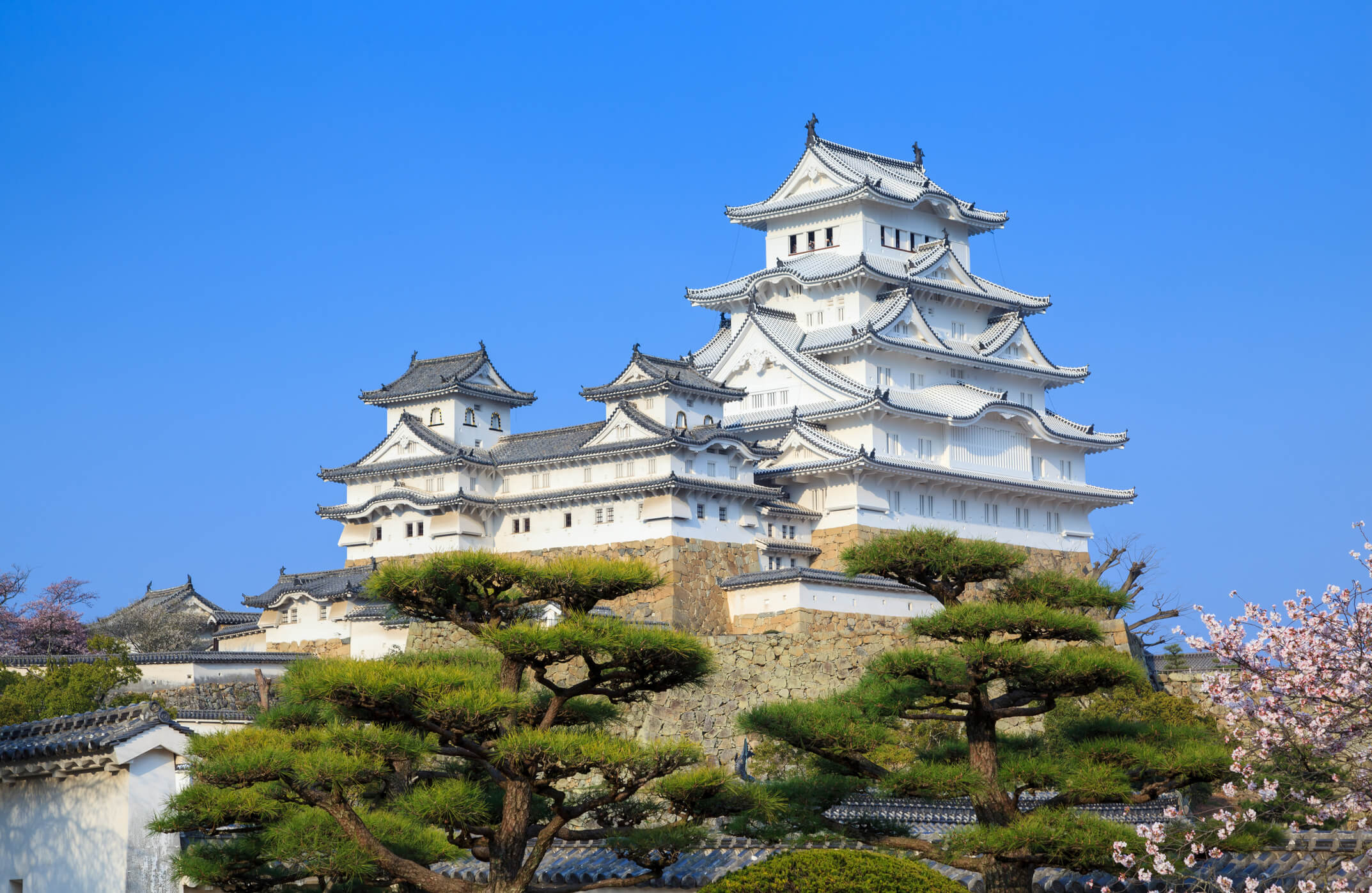
Himeji Castle, nicknamed “Hakuro-jō” (White Heron Castle) for its brilliant white exterior, represents the pinnacle of Japanese castle architecture and is widely considered the most beautiful castle in Japan. This is my favourite castle.
Historical Background: While fortifications existed on the site since 1333, the castle’s current form was completed in 1609 by Ikeda Terumasa, who received the domain as a reward for his service to Tokugawa Ieyasu at the Battle of Sekigahara. The castle was specifically designed to defend against potential western threats to the newly established Tokugawa shogunate.
Architecture: Himeji exemplifies the sophisticated defensive design of early Edo period castles. The complex features:
- A six-story main keep (appearing as five externally) rising 46 meters
- Three smaller subsidiary keeps connected by corridors
- A labyrinthine approach system with spiraling paths and dead ends designed to confuse attackers
- Over 80 gates positioned at strategic points
- Loopholes of various shapes for archers and arquebusiers
- Drop holes (ishiotoshi) for defensive projectiles
- A complex of approximately 83 buildings
Despite its formidable defenses, Himeji Castle never experienced major combat, allowing it to survive intact as Japan’s finest example of castle architecture.
Significance: Himeji is one of only twelve castles in Japan with an original keep. Its pristine condition provides invaluable insight into samurai-era castle construction and defensive philosophy. The castle was designated a UNESCO World Heritage Site in 1993, the first Japanese castle to receive this recognition.
Current Status: The castle underwent major restoration from 2010-2015, including earthquake-proofing measures and restoration of the white plaster coating. It remains one of Japan’s most visited tourist attractions, though its importance as a historical document of feudal military architecture cannot be overstated.
3. Matsumoto Castle
The Black Crow of the Japanese Alps
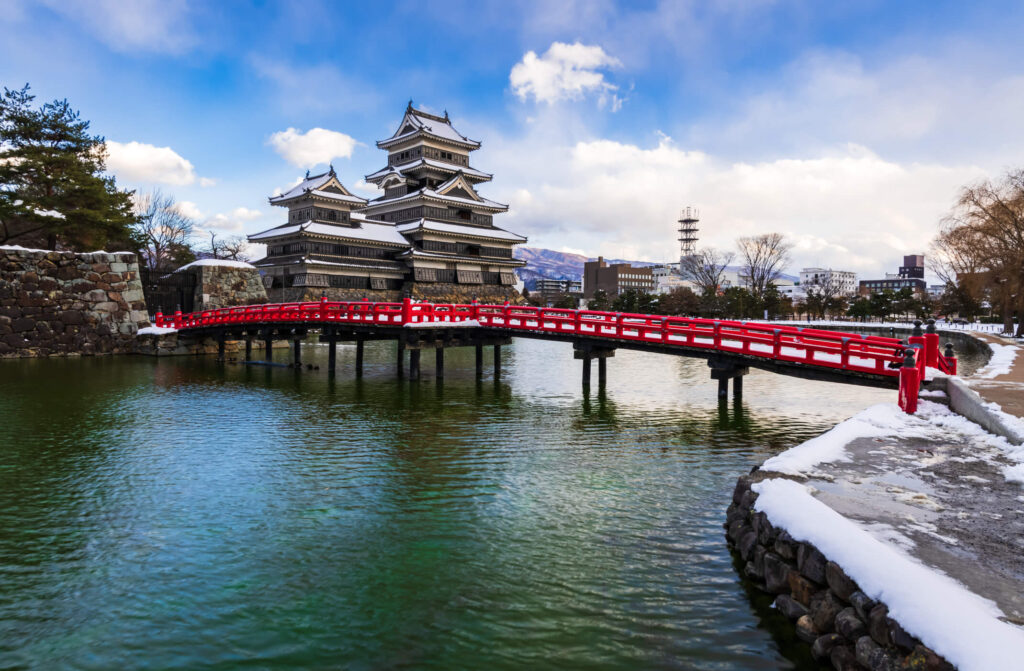
Matsumoto Castle, nicknamed “Karasu-jō” (Crow Castle) for its striking black exterior, is one of Japan’s most beautiful original castles and represents the transition from purely military fortification to castle as status symbol.
Historical Background: Construction of the current castle began in 1592 under the Ishikawa clan during the late Sengoku period. The castle’s design reflects the military tensions of its era – it was built as a serious defensive fortification during a period of active warfare. Later additions during the peaceful Edo period added more decorative elements, including the distinctive moon-viewing turret.
Architecture: Matsumoto features a five-story, six-floor keep that rises directly from its moat without the elevated stone foundation typical of other major castles. This flatland (hirajiro) construction is relatively rare among Japan’s great castles. The castle’s black walls, created using black lacquer, provide striking contrast with white decorative elements and create an imposing appearance.
Key defensive features include:
- Strategic positioning of gun ports and arrow slits
- Hidden sixth floor for weapons storage and command functions
- Thick stone walls at the base
- Complex internal layout designed to confuse invaders
- Integration with the surrounding moat system
Significance: As one of Japan’s twelve original keeps and five castles designated as National Treasures, Matsumoto provides authentic examples of late Sengoku period military architecture. The castle demonstrates the evolution of defensive thinking during Japan’s transition from constant warfare to the relative peace of the Edo period.
Current Status: The keep and several auxiliary structures remain original. The castle has been meticulously maintained and is open to the public, offering visitors the rare opportunity to experience authentic samurai-era castle architecture. The steep internal staircases and original wooden construction provide genuine insight into life in a feudal fortress.
4. Edo Castle
The Seat of Tokugawa Power

Edo Castle served as the political and military centre of Tokugawa Japan for over 250 years and represents the ultimate expression of shogunal power through architecture.
Historical Background: While fortifications existed on the site since the 15th century, Tokugawa Ieyasu established his headquarters here in 1590. After becoming shogun in 1603, Ieyasu transformed Edo Castle into Japan’s largest castle complex, a project that continued under his successors. The castle served as both the shogun’s residence and the administrative center of the Tokugawa shogunate until 1868.
Architecture: At its peak, Edo Castle was the largest castle in the world by area, covering approximately 800 acres. The complex featured:
- A main keep that stood approximately 51 meters tall (destroyed by fire in 1657 and never rebuilt)
- Multiple concentric defensive circuits extending over 16 kilometers
- Approximately 38 gates and 20 guard towers
- Massive stone walls, including the famous “Bansho” stone weighing approximately 140 tons
- Elaborate residential palaces for the shogun and important retainers
- Administrative buildings housing the shogunate bureaucracy
The castle’s “Three Great Keeps” period (main keep plus two subsidiary keeps) lasted only from 1607-1657, but established Edo Castle as the architectural symbol of Tokugawa authority.
Significance: Edo Castle’s scale demonstrated the Tokugawa clan’s dominance over all other daimyo. The sankin-kōtai system, which required daimyo to maintain residences in Edo and alternate their attendance at the castle, turned the fortress into the effective capital of Japan. This concentration of power and population transformed Edo (modern Tokyo) into one of the world’s largest cities.
Current Status: Following the Meiji Restoration, the castle became the Imperial Palace. While most castle structures were demolished or destroyed by war, significant portions of the stone walls, moats, and several gates survive. The East Gardens, built on the castle’s former inner fortifications, are open to the public and contain ruins of the keep foundation and several reconstructed guard towers. The Imperial Palace itself occupies the former inner citadel and is not generally accessible.
5. Kumamoto Castle
The Fortress of Innovation
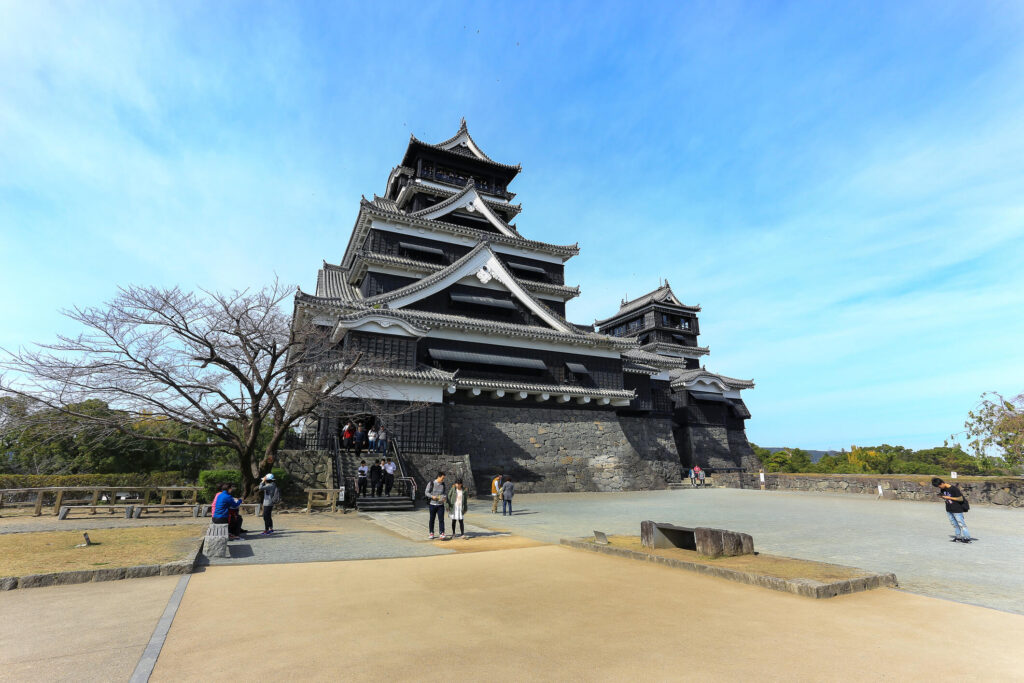
Kumamoto Castle earned its reputation as one of Japan’s most formidable fortifications through innovative defensive features and its crucial role in the Satsuma Rebellion – the only one of these castles to experience major modern combat.
Historical Background: Construction began in 1601 under Katō Kiyomasa, a daimyo who had served Toyotomi Hideyoshi and later pledged loyalty to Tokugawa Ieyasu. Katō, an experienced castle builder who had participated in the Korean campaigns, incorporated advanced defensive innovations learned from decades of warfare.
Architecture: Kumamoto’s defensive innovations included:
- “Musha-gaeshi” (warrior-repelling) walls that curve outward near the top, making them nearly impossible to scale
- A complex of 49 turrets and 29 gates creating overlapping defensive zones
- Underground passages connecting key defensive positions
- A keep with hidden floors and rooms for tactical surprise
- Extensive storage facilities allowing the castle to withstand prolonged siege—reputedly stockpiled with enough food for several years
- Strategic positioning of wells throughout the complex
The castle complex originally covered approximately 245 acres with a 13-story main keep and numerous subsidiary structures.
The Battle of Kumamoto Castle (1877): During the Satsuma Rebellion, approximately 30,000 samurai led by Saigō Takamori besieged the castle, defended by only 4,000 government troops. Despite being heavily outnumbered, the defenders held for 53 days until reinforcements arrived. The siege demonstrated the continuing effectiveness of proper castle defenses even against modern weapons. Tragically, much of the castle was destroyed by fire during the siege, including the main keep.
Significance: Kumamoto represents the evolution of Japanese castle design at its peak, incorporating lessons from centuries of warfare. Its performance during the Satsuma Rebellion proved that traditional defensive architecture retained relevance even in the modern era.
Current Status: The castle was reconstructed in 1960, but suffered severe damage during the 2016 Kumamoto earthquakes. Extensive restoration work is ongoing, with full completion expected by 2037. Despite the damage, the castle remains an important historical site, and the musha-gaeshi walls – which survived both the siege and the earthquake – can still be observed.
6. Nijō Castle
The Shogun’s Kyoto Power Base

Nijō Castle served as the Tokugawa shogunate’s official residence in Kyoto, symbolizing shogunal authority in the traditional seat of imperial power.
Historical Background: Constructed in 1603 by Tokugawa Ieyasu to serve as his residence during visits to Kyoto, Nijō represented both a military stronghold and a political statement. The castle’s location in the imperial capital demonstrated the shogun’s supremacy over even the emperor. The castle witnessed significant historical events, including the 1867 declaration that ended the Tokugawa shogunate.
Architecture: Unlike the purely military fortifications of earlier periods, Nijō reflects Edo period architecture where castles served as much as administrative palaces as military installations:
- Ninomaru Palace (1603): A complex of five connected buildings with 33 rooms covering 3,000 square meters
- “Nightingale floors” (uguisubari) that squeak when walked upon, alerting occupants to intruders
- Elaborate painted sliding doors and carvings demonstrating Tokugawa wealth and power
- Defensive features including concealed guard rooms, thick walls, and strategic positioning
- Honmaru Palace (originally from the Imperial Palace, moved to the site in 1893)
- Stone walls and moats surrounding the complex
Significance: Nijō exemplifies the transition of Japanese castles from pure military function to symbols of political authority and cultural refinement during the Edo period. The castle’s architecture balances defensive capability with aesthetic sophistication, reflecting the shogunate’s dual role as military government and patron of arts.
Current Status: Nijō Castle was designated a UNESCO World Heritage Site in 1994 as part of the Historic Monuments of Ancient Kyoto. The Ninomaru Palace retains its original structure and interior decorations, offering exceptional insight into elite samurai life during the Edo period. The castle grounds are extensively open to visitors, though some interior areas have restricted access for conservation purposes.
7. Hikone Castle
The Jewel of Lake Biwa

Hikone Castle is one of Japan’s finest surviving original castles, combining strategic military importance with aesthetic beauty overlooking Lake Biwa.
Historical Background: Construction began in 1603 under Ii Naomasa, one of Tokugawa Ieyasu’s most trusted generals who distinguished himself at the Battle of Sekigahara. The castle was completed in 1622 under Ii Naokatsu. The Ii clan maintained control of Hikone throughout the Edo period, making it unusual in having a continuous ruling family.
Architecture: Hikone features a three-story keep incorporating elements salvaged from other castles being demolished under the Tokugawa consolidation:
- Keep components from at least five different castles, creating an architectural palimpsest
- Strategic hilltop positioning providing commanding views of Lake Biwa and surrounding approaches
- Complex gate system with three layers of defenses
- Multiple turrets connected by defensive corridors
- Extensive garden areas reflecting Edo period aesthetic refinement
The castle’s design balances military function with residential comfort, reflecting its construction during the early Edo period when the risk of warfare was declining but not eliminated.
Significance: As one of only five castles designated National Treasures (along with Himeji, Matsumoto, Inuyama, and Matsue), Hikone represents invaluable architectural heritage. The castle demonstrates how regional daimyo maintained their power and prestige under the Tokugawa system while acknowledging shogunal supremacy.
Current Status: The keep, several turrets, and gates remain original. The castle grounds include Genkyu-en, a beautiful daimyo garden constructed in 1677. Hikone Castle avoided demolition during the Meiji period partly due to intervention by Emperor Meiji himself, who ordered its preservation during an 1878 visit. The castle remains extensively intact and accessible to visitors.
8. Matsue Castle
The Black Castle of the Clouds
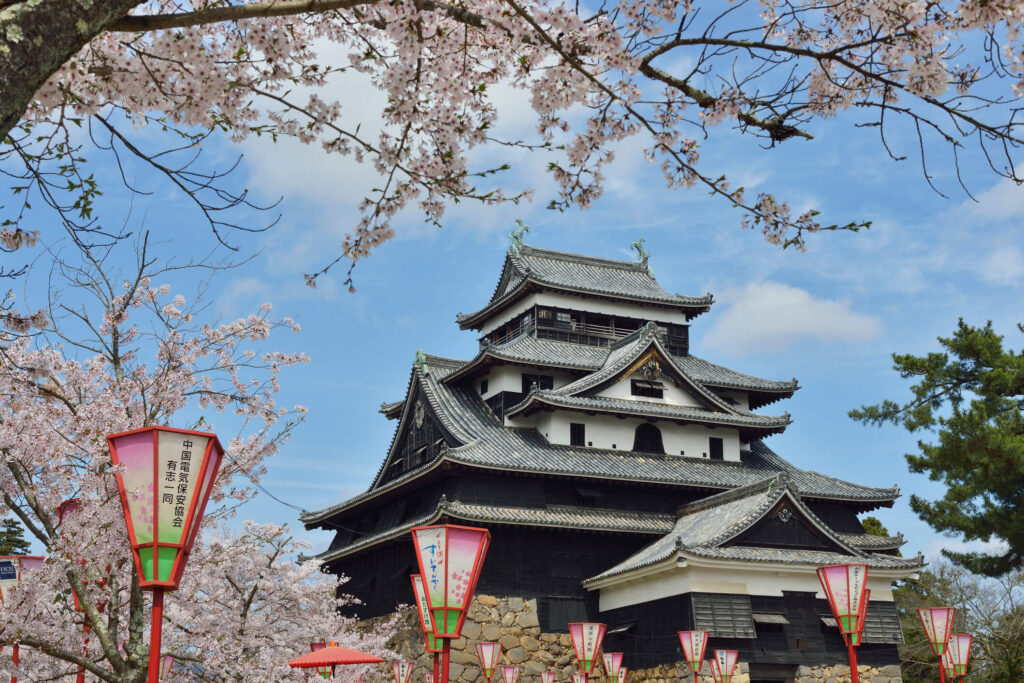
Matsue Castle, nicknamed “Chidori-jō” (Plover Castle), represents one of Japan’s best-preserved medieval fortifications and the last remaining castle in the San’in region.
Historical Background: Constructed between 1607-1611 by Horio Yoshiharu, Matsue Castle was built during the early Edo period but incorporated defensive features reflecting active military concerns. The castle served as the seat of the Matsue domain throughout the Edo period.
Architecture: Matsue features a four-story, five-floor keep with several distinctive characteristics:
- Black-painted wooden walls similar to Matsumoto Castle
- Thick stone walls rising directly from the moat
- Defensive features including stone-dropping holes, gun ports, and hidden chambers
- Central pillar constructed from a single 24-meter fir tree
- Practical military design with minimal decorative elements
- Underground chambers for storage and defense
The castle’s construction prioritized defensive function over aesthetic refinement, making it an excellent example of early 17th-century military architecture.
Significance: Matsue is one of the twelve original keeps remaining in Japan and achieved National Treasure status in 2015 after research confirmed the keep’s construction date. The castle provides authentic insight into early Edo period fortification techniques and the continued military mindset of that transitional era.
Current Status: The keep and stone walls remain largely original. The castle underwent restoration in 2014-2015 but retained its historical authenticity. Internal access allows visitors to examine original construction techniques, including the massive central support pillar and authentic defensive features. The surrounding moat system remains intact and can be toured by boat.
9. Nagoya Castle
The Tokugawa Fortress of the East
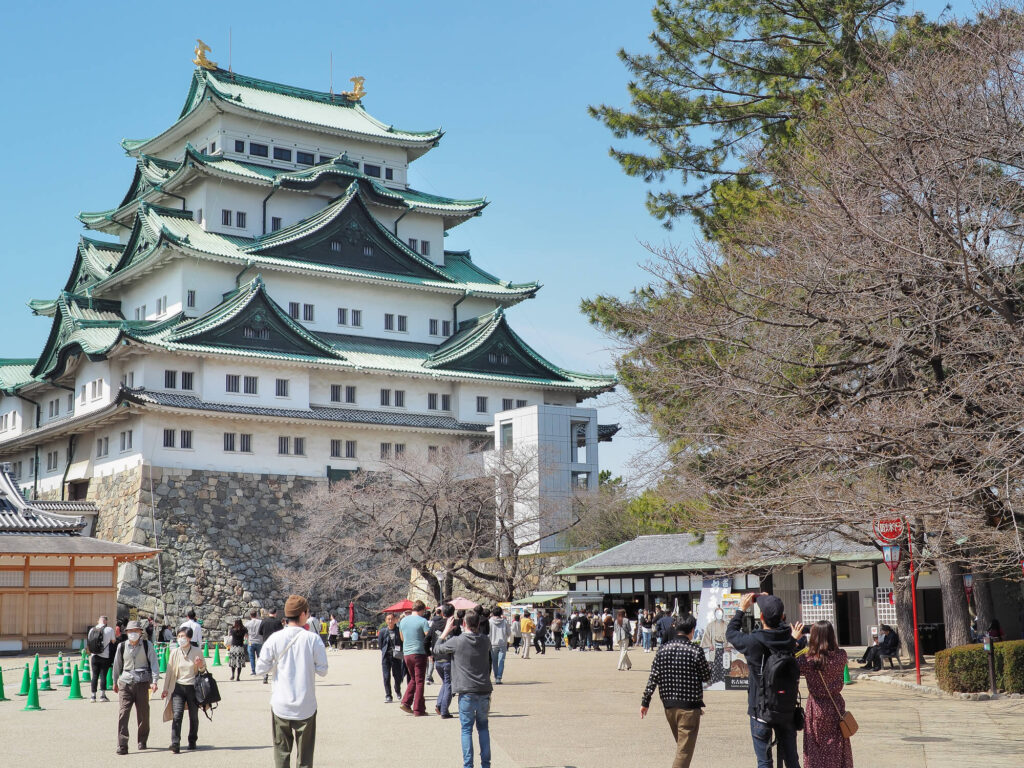
Nagoya Castle served as the primary stronghold of the Owari branch of the Tokugawa family and represented one of the most important military and political centres of the Edo period.
Historical Background: Constructed beginning in 1610 by Tokugawa Ieyasu, Nagoya Castle served multiple strategic purposes: replacing the older Kiyosu Castle, defending the Tōkaidō road between Edo and Kyoto, and providing a powerbase for the Owari Tokugawa branch family. The castle’s construction employed daimyo from across Japan in a form of economic and political control.
Architecture: Nagoya featured elaborate and militarily sophisticated design:
- Five-story main keep with golden shachihoko (mythical dolphin-like creatures) ornaments
- Underground treasury for storing gold and supplies
- Expansive residential palaces with elaborate decorative painting
- Massive stone walls including contributions from major daimyo (marked with their emblems)
- Complex defensive circuits covering extensive grounds
- Advanced gate systems and defensive corridors
The castle’s scale and sophistication reflected the Owari Tokugawa family’s position as one of the three “gosanke” (collateral houses) eligible to provide a shogun if the main line failed.
Significance: Nagoya served as a crucial defensive position protecting the Tokugawa heartland and maintained importance throughout the Edo period. The castle represented the combination of military power and political authority typical of major daimyo seats during peaceful times.
Current Status: The original keep and Honmaru Palace were destroyed in 1945 during World War II air raids. The keep was reconstructed in 1959 using ferro-concrete, though plans for authentic wooden reconstruction have been discussed. The Honmaru Palace underwent meticulous reconstruction from 2009-2018 based on historical records and photographs, recreating the elaborate interior decorations and architectural details. While not historically authentic, the reconstructions provide insight into the castle’s original magnificence. The original stone walls and moats largely survive.
10. Inuyama Castle
Japan’s Oldest Original Keep
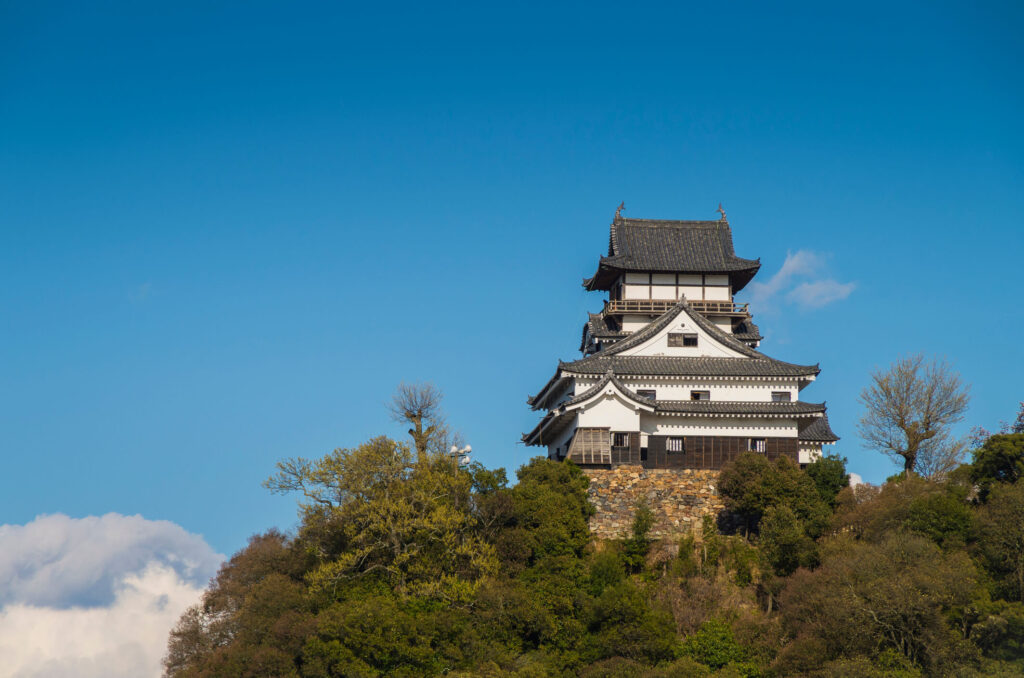
Inuyama Castle claims distinction as possessing the oldest surviving original castle keep in Japan, providing invaluable insight into medieval Japanese fortification.
Historical Background: Originally constructed in 1537 by Oda Nobuyasu (uncle of Oda Nobunaga), Inuyama occupies a strategic hilltop position overlooking the Kiso River. The castle changed hands multiple times during the Sengoku period, including occupation by Oda Nobunaga and later Toyotomi Hideyoshi’s forces. It eventually came under Tokugawa control after Sekigahara.
Architecture: Inuyama’s relatively modest three-story keep reflects its construction during the Sengoku period before the elaborate castle-building boom of the early Edo period:
- Simple but effective defensive design with thick walls and strategic positioning
- Commanding hilltop location providing extensive views of approaches
- Compact internal layout focusing on military function
- Original construction techniques visible throughout
- Adjacent Kiso River serving as a natural moat on one side
The castle’s authenticity provides rare insight into how castles functioned as pure military installations before becoming symbols of political authority.
Significance: As Japan’s oldest surviving original keep and a National Treasure, Inuyama represents irreplaceable architectural heritage. The castle demonstrates the evolution of fortification from simple defensive structures to the elaborate castles of later periods.
Current Status: The keep remained in continuous possession of the Naruse family (descendants of retainers of Oda Nobunaga) until 2004, making it the last privately-owned castle in Japan. It is now owned by a foundation but remains well-preserved and accessible. The interior retains original construction elements and provides authentic experience of medieval castle architecture. The compact size and steep staircases offer intimate insight into samurai-era military facilities.
Frequently Asked Questions About Japanese Samurai Castles
What is the most famous samurai castle in Japan?
Himeji Castle is generally considered the most famous, recognized as Japan’s finest surviving example of castle architecture and designated as a UNESCO World Heritage Site. However, Osaka Castle holds greater historical significance due to its role in the Siege of Osaka that established Tokugawa dominance over Japan.
How many original samurai castles remain in Japan?
Only twelve castles in Japan retain original keeps (main towers) that survived from the Edo period or earlier: Himeji, Matsumoto, Hikone, Inuyama, Matsue, Bitchu-Matsuyama, Marugame, Maruoka, Matsuyama, Uwajima, Kochi, and Hirosaki. Thousands of castles existed during the Sengoku period, but most were destroyed through the “One Castle Per Province” edict of 1615, Meiji-era demolitions, or World War II bombings.
Why are Japanese castles built differently than European castles?
Japanese castles evolved to address different military challenges and cultural contexts. Key differences include:
- Elevated keeps serving as command centers rather than primary defensive positions
- Extensive use of wood in construction due to abundant timber resources
- Complex defensive circuits with multiple gates designed to channel and confuse attackers
- Integration of residential and administrative functions within defensive structures
- Adaptation to Japan’s mountainous terrain and seismic activity
Which castles were involved in famous samurai battles?
Several of these castles were sites of historically significant conflicts:
- Osaka Castle: Site of the massive Siege of Osaka (1614-1615) that ended the Toyotomi clan
- Kumamoto Castle: Defended against Saigō Takamori during the Satsuma Rebellion (1877)
- Edo Castle: Center of political power for the Tokugawa shogunate
- Several castles were constructed on sites of earlier fortifications that saw combat during the Sengoku period
Can you visit these samurai castles today?
Yes, all the castles discussed in this guide are accessible to visitors, though the degree of access varies:
- Castles with original keeps (Himeji, Matsumoto, Hikone, Matsue, Inuyama) allow interior access
- Reconstructed castles (Osaka, Nagoya) often house museums but use modern construction
- Edo Castle’s grounds (now the Imperial Palace) are partially accessible, with the East Gardens open to the public
- Most castles charge admission fees and have restricted hours
What defensive features made samurai castles effective?
Samurai castles employed sophisticated defensive systems:
- Concentric defensive circuits forcing attackers through multiple chokepoints
- Complex gate systems with right-angle turns creating kill zones
- Stone walls designed to prevent scaling (including “musha-gaeshi” curved walls)
- Hidden defensive positions including chambers for archers and arquebusiers
- Water defenses (moats) preventing siege equipment approach
- Elevated positioning providing visibility and defensive advantage
- Storage facilities allowing castles to withstand extended sieges
Why were so many castles destroyed during the Meiji period?
The Meiji government viewed castles as symbols of the old feudal system they sought to eliminate. The 1873 “Castle Abolition Edict” ordered the dismantling of most castles, with materials sold for redevelopment. Sadly, many historically significant castles were demolished during this period. Those that survived often did so through chance, local intervention, or military usefulness. World War II bombings destroyed many surviving structures, making the remaining original castles extraordinarily valuable.
Closing Words
Japan’s samurai castles represent architectural achievements that served military, political, and cultural functions throughout feudal Japan’s history. From Osaka’s massive fortifications that witnessed Japan’s largest siege to Inuyama’s modest but ancient keep, each castle tells distinct chapters in the story of samurai warfare and governance.
These structures were not just defensive installations but symbols of clan authority, centres of administration, and demonstrations of architectural sophistication. Many housed Japan’s most legendary samurai warriors and served as command centres for the battles that shaped Japanese history.
The surviving castles – particularly the twelve with original keeps – provide invaluable insight into medieval Japanese military architecture, engineering capabilities, and the evolution of warfare from the Sengoku period through the peaceful Edo era. Their preservation allows modern visitors to experience authentic samurai-era fortifications and understand how these structures functioned as both military installations and symbols of power that shaped Japan’s development as a unified nation.