Last Updated on April 16, 2026 by Vlad
Japan’s Greatest Convenience Food (And Why You Need to Try One)
I must have eaten hundreds of onigiri over the years. Maybe thousands. And I’m not even slightly embarrassed about that.
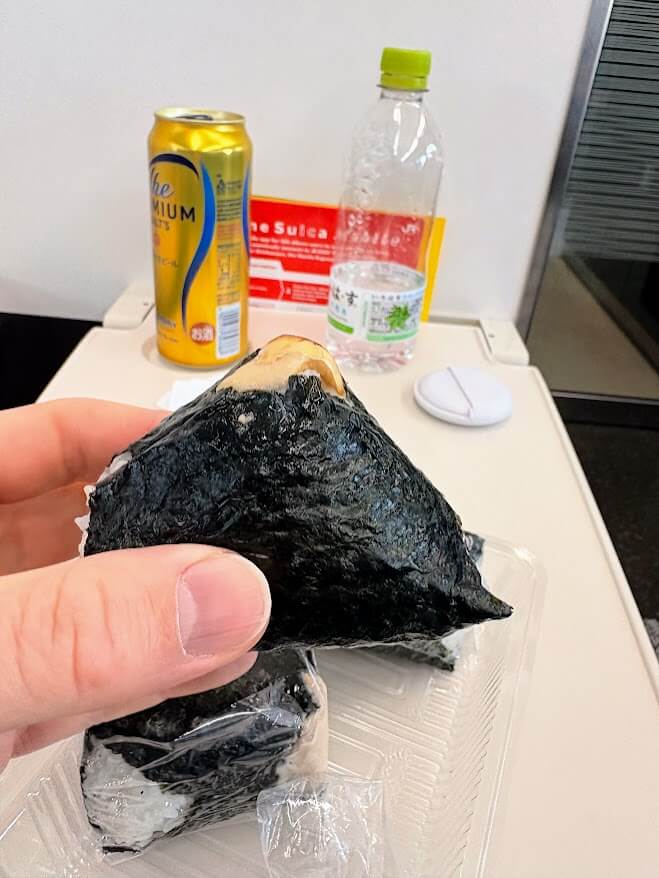
My personal ritual? Two onigiri and a cold beer on any long train journey. Every single trip, without fail. This particular photo below was taken on the Azusa limited express, heading up to Hakuba – onigiri in hand, a can of cold Suntory Premium Malts within arm’s reach (yes, a bottle of water too) and a few hours of countryside scenery and tunnels ahead. Honestly, not a bad way to travel.
My son’s been hoovering them up since he was about 18 months, and given the choice he’d eat them every single day. On trains, at parks, after a long day of temples and shrines when everyone’s feet hurt and no one can to decide where to eat, onigiri saves the day, every single time.
If you’re heading to Japan and you haven’t heard of onigiri yet, buckle up. You’re about to meet your new best friend.
So What Is Onigiri?
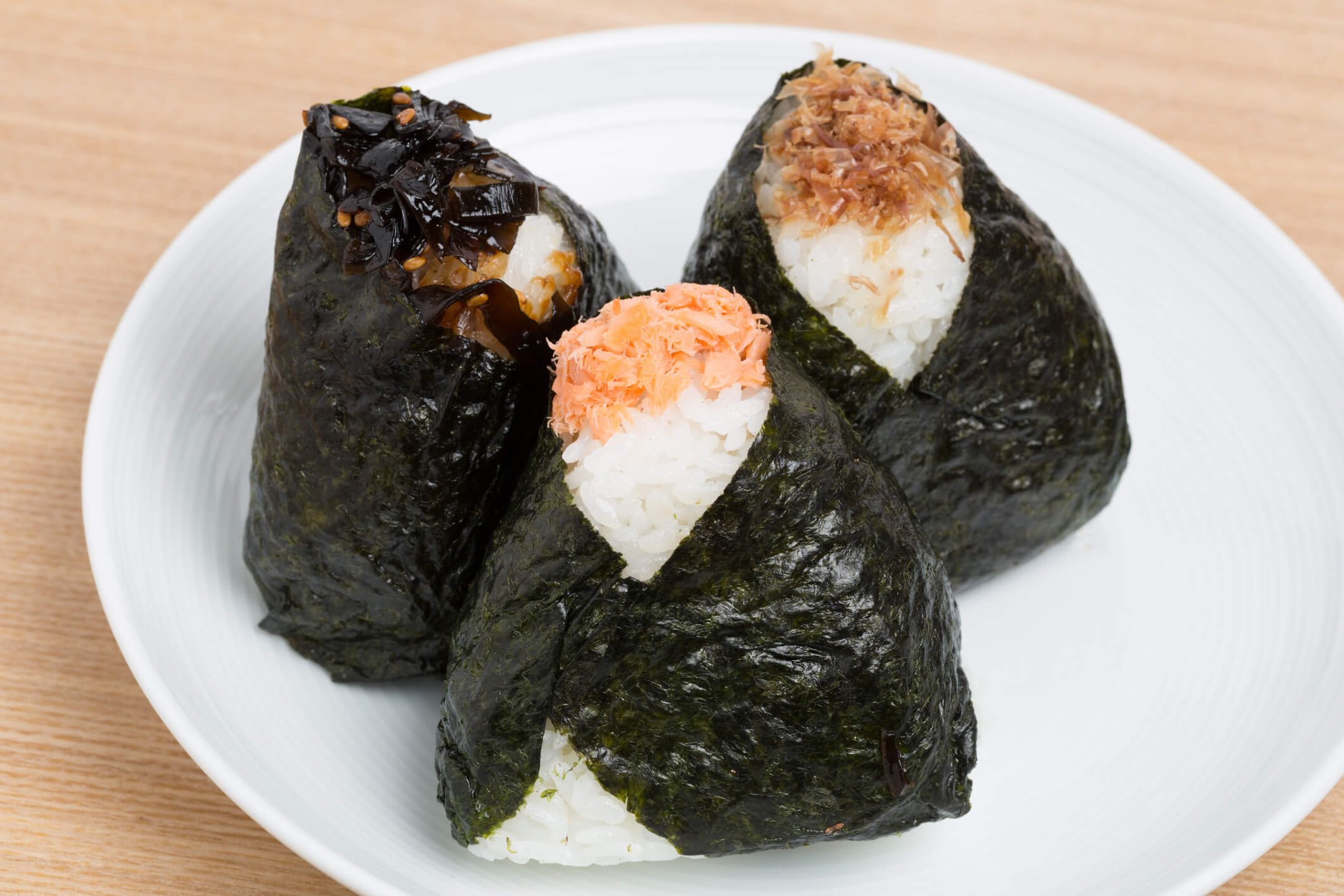
Onigiri (pronounced oh-nee-GEE-ree) is technically a rice ball. Though if you’re picturing a ball, think again. Most of the time they’re shaped into a triangle, which is actually the most common form you’ll see at convenience stores and specialty shops alike.
The fuller version: it’s cooked Japanese rice, shaped into a triangle or ball, usually wrapped in a sheet of nori (dried seaweed), with a filling tucked inside.
The basics:
- Made from plain white (typically) Japanese rice (short-grain, slightly sticky)
- Shaped by hand – traditionally triangular, sometimes round or cylindrical
- Usually wrapped in nori
- Filled with something tasty in the middle
- Eaten at room temperature, cold, or sometimes warmed up
- Costs between ¥150–300 at a convenience store
That’s it. Simple, filling, and genuinely delicious.
A Quick History Lesson (I’ll Keep It Short)
Onigiri has been a Japanese staple for centuries. Japanese soldiers and travellers used to carry them as portable meals.
The concept hasn’t really changed much since then. Rice, filling, wrap it up, eat it. Some things don’t need improving.
The Fillings (This Is the Fun Part)
Walk into any Japanese convenience store and you’ll find a whole wall of onigiri. Most will have an English label on the packaging, so finding your way around is easier than it looks. Here are the fillings worth knowing:
The classics:
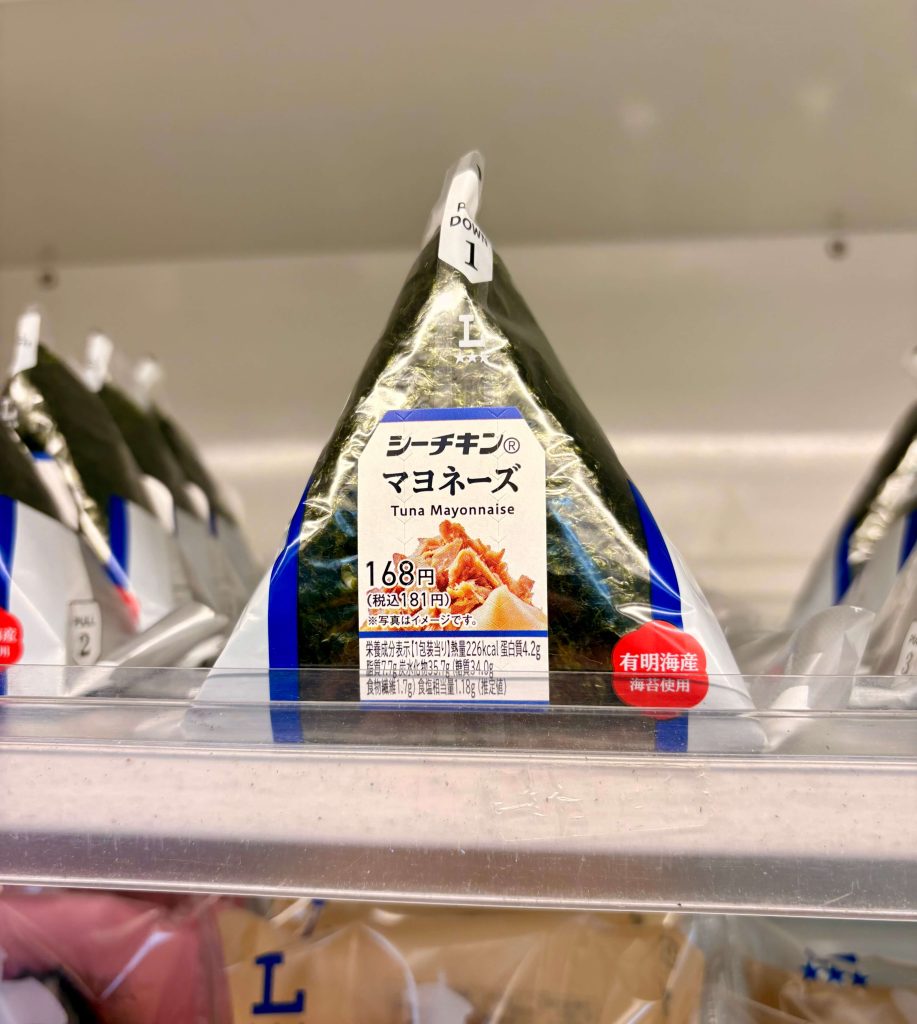
- Tuna mayo (ツナマヨ / tsuna mayo) – The crowd favourite, especially with first-timers. Japanese mayo is richer and creamier than what we’re used to back home. Hard to go wrong with this one.
- Salmon (鮭 / sake) – Simple, lightly salted, reliable. My son’s absolute favourite. Never leaves Japan without eating at least a dozen of these.
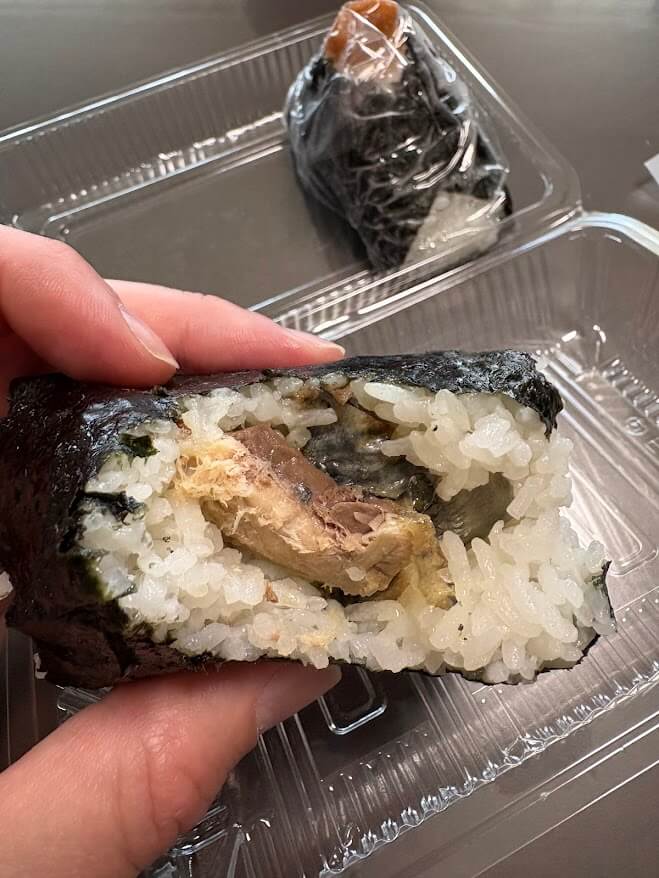
- Mackerel (鯖 / saba) – My personal favourite. Slightly smoky, full of flavour, and honestly underrated. Most tourists go straight for tuna mayo and miss this one entirely.
- Umeboshi (梅干し) – A pickled plum right in the middle. Sour, salty, a little intense. Not for everyone on the first try, but it grows on you fast. Very traditional, and very good.
- Kombu (昆布) – Simmered seaweed filling. Subtle, savoury, earthy. Another one I keep coming back to. If you want something that tastes properly Japanese rather than familiar, start here.
- Grilled salmon (焼き鮭 / yaki shake) – Flaked and slightly smoky. Solid choice.
- Spicy cod roe (明太子 / mentaiko) – Punchy and a bit spicy. For when you’re feeling adventurous.
- Katsuobushi (鰹節) – Bonito flakes with soy sauce. Deeply savoury. Underrated by tourists, honestly.
Seasonal and regional picks:
Some convenience stores and specialty shops rotate fillings based on the season. You might find:
- Edamame and cheese in summer
- Mushroom and rice in autumn
- Various regional specialties depending on where you are in Japan
Convenience Store Onigiri vs Made-Fresh Onigiri
There are two main ways you’ll encounter onigiri in Japan, and while both are worth trying, they are not the same thing.
Convenience store (konbini) onigiri:
7-Eleven, FamilyMart, and Lawson all sell onigiri, and? They’re really good and super affordable. The quality is miles above what you’d expect from a fridge in a petrol station back home. Convenient, cheap, and reliable – perfect for a quick breakfast or a snack between sights.
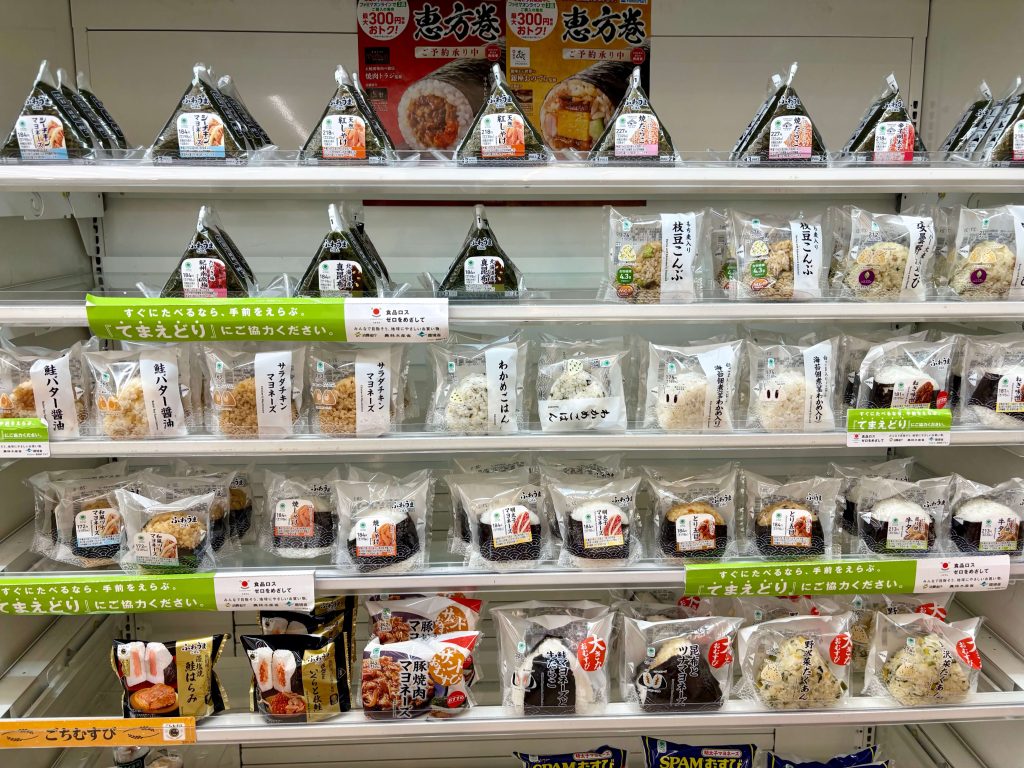
But… if konbini onigiri is the only kind you try in Japan, you’re leaving with an incomplete picture. It’s a bit like judging all pasta by the stuff that comes in a tin.
Specialty onigiri shops (おにぎり専門店):
Made fresh onsite, often with premium fillings, freshly cooked rice that you can smell from miles away, and sometimes regional ingredients you’d never find on a convenience store shelf. Prices typically start around ¥190–250 and go up to ¥350 for premium fillings – a bit more expensive than a konbini onigiri, but still incredibly good value for what you get.
My favourite is ひらしげ (Hirashige) in Kamiooka, Yokohama. The mackerel onigiri there is something else – properly seasoned, generous with the filling, and the rice is always spot on.

One of the things I love about it is watching the queue. It’s mostly older locals – people who’ve been eating onigiri their whole lives and know exactly where to go. That tells you everything. It’s not trendy or Instagram-famous, it’s just genuinely good, affordable food that’s been earning repeat customers for years. You’ll find the same dynamic at good onigiri shops all over Japan.
My honest recommendation: grab a konbini onigiri when it’s convenient – especially on the shinkansen or when you’re on the go. But make sure you visit at least one proper onigiri shop while you’re in Japan. It’s worth it.
How to open konbini onigiri (a genuine life skill that I still struggle with sometimes):
They come individually wrapped with a clever three-part packaging system that keeps the nori separate from the rice until you open it – so the seaweed stays crispy.
- Pull the tab numbered ① down the middle
- Pull the wrapper sides apart – ② left and ③ right
- The nori wraps around the rice as you pull
- Eat immediately before it goes soft
It sounds fiddly the first time. By your third one, you’ll be fine (not that I am).
Where to Find Onigiri in Japan
The honest answer is: everywhere.
- Every convenience store – 7-Eleven, FamilyMart, Lawson. Available 24/7, usually stocked fresh multiple times a day.
- Narita and Haneda airports -There are convenience stores inside both airports, and grabbing an onigiri the moment you land is something I’d genuinely recommend. We always stop at the konbini at Narita before jumping on the limousine bus – it’s become a bit of a tradition, and honestly one of those small moments where it finally hits you that you’re back in Japan. Same thing on the way home, one last onigiri before the flight. Do it.
- Train station kiosks – Great for grabbing one before a long shinkansen ride.
- Supermarkets – Usually cheaper than konbini, sometimes with more variety.
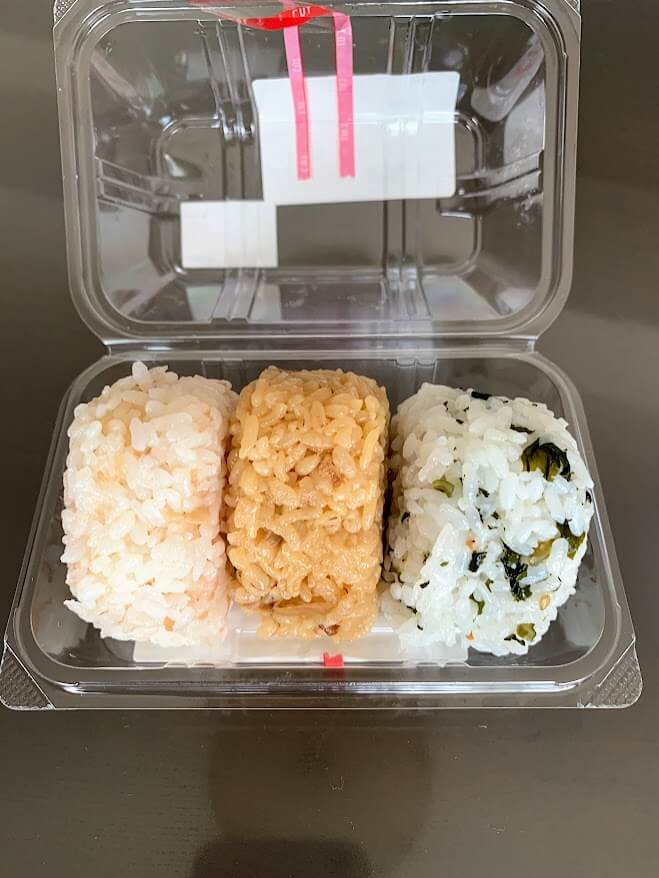
- Specialty onigiri shops – Worth seeking out in Tokyo and Osaka if you want the premium version.
- Markets and food halls – Department store basement food floors (depachika) often have brilliant onigiri counters.
Tips for First-Timers
Start with tuna mayo or salmon – Most accessible for Western palates. Once you’re comfortable, work your way to mackerel, kombu, or umeboshi. That’s where the real character is.
Not sure what a filling is? Just try it – At ¥150–220, the risk is pretty low. Worst case, you don’t like it and you know for next time. Best case, you discover a new favourite.
Eat it fresh – Onigiri is best eaten shortly after being made. The rice firms up and dries out if you leave it too long. Try and see for yourself. The difference between a fresh onigiri and the one that’s been on a shelf for a few hours is like night and day.
It’s a meal, not just a snack – One decent-sized onigiri is an okay quick snack. Two to three will easily replace a light lunch. Perfect for keeping the family going between sights.
Check the “best before” time at konbinis – They put a time, not just a date, on convenience store onigiri. If it’s looking close, grab a fresh one from the back.
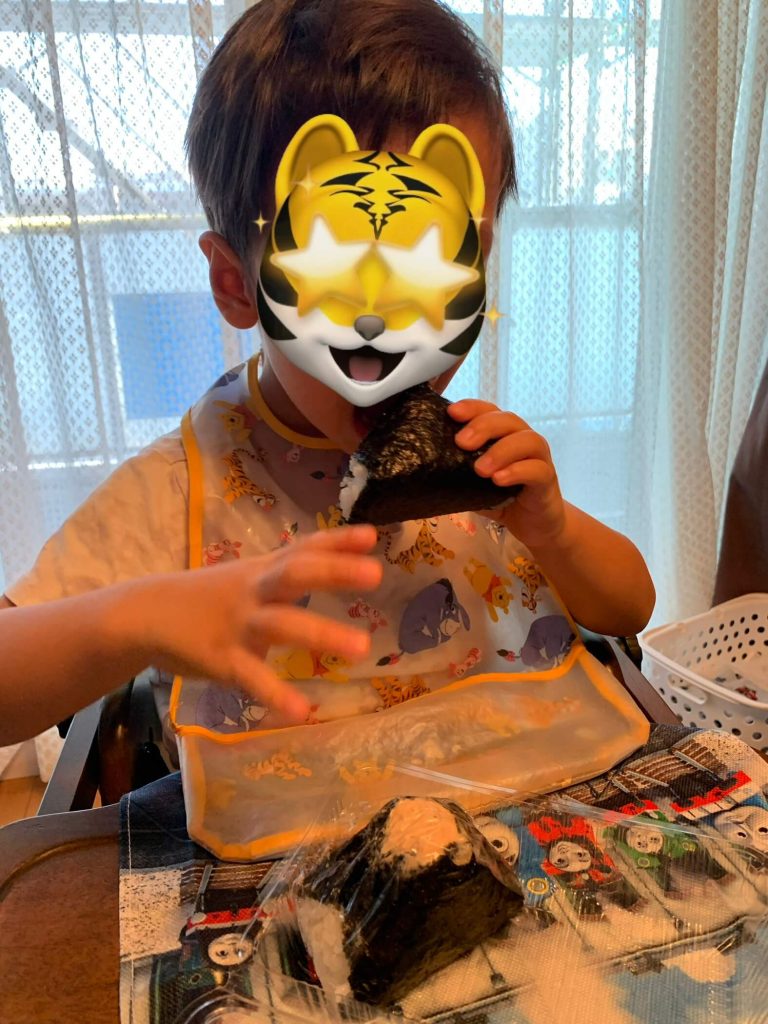
Great for picky kids -Plain rice with a mild filling? Most kids take to it immediately. My kid couldn’t stop eating tuna and mayo one for a good few months (3 years later he still loves it). See the picture below.
The shinkansen/train combo – Two onigiri and a cold beer on the bullet train or limited express train is one of life’s simple pleasures. I do it every trip without exception. Grab them from the station konbini before you board.
Why Onigiri Is One of Japan’s Best Foods
Here’s what I love about onigiri: it’s humble. There’s no pretension to it. It’s rice, seaweed, and a bit of filling. That’s all it’s ever been.
But the Japanese have perfected it over a thousand years (according to my Japanese friends and family), and you can taste that. The rice seasoning, the quality of the ingredients, the way the nori wraps when you eat it… it all just works.
It’s also a great gateway food. If you’ve got someone in your group who’s nervous about Japanese cuisine, hand them a tuna mayo onigiri. Nine times out of ten, they’ll be back for a second.
And when you’re exhausted after a day of sightseeing and everyone’s hungry and indecisive? Pop into a konbini like 7-Eleven or FamilyMart, grab a couple of onigiri, find a park bench or a train seat, and just eat. It’s one of my favourite Japan moments, and it costs next to nothing.
Give it a go. You won’t regret it.
Tried onigiri for the first time? Drop a comment below and let me know which filling you went with.