Last Updated on March 12, 2026 by Vlad
My very first hanami was at night. I was walking along the Meguro River in Tokyo, hundreds of paper lanterns, thousands of people, cherry blossoms glowing pink overhead, canal reflections shimmering below. Food stalls everywhere. People were laughing, eating, drinking, taking photos.
I had no idea what I was experiencing had a specific name. Years later, I found out: yozakura (夜桜).
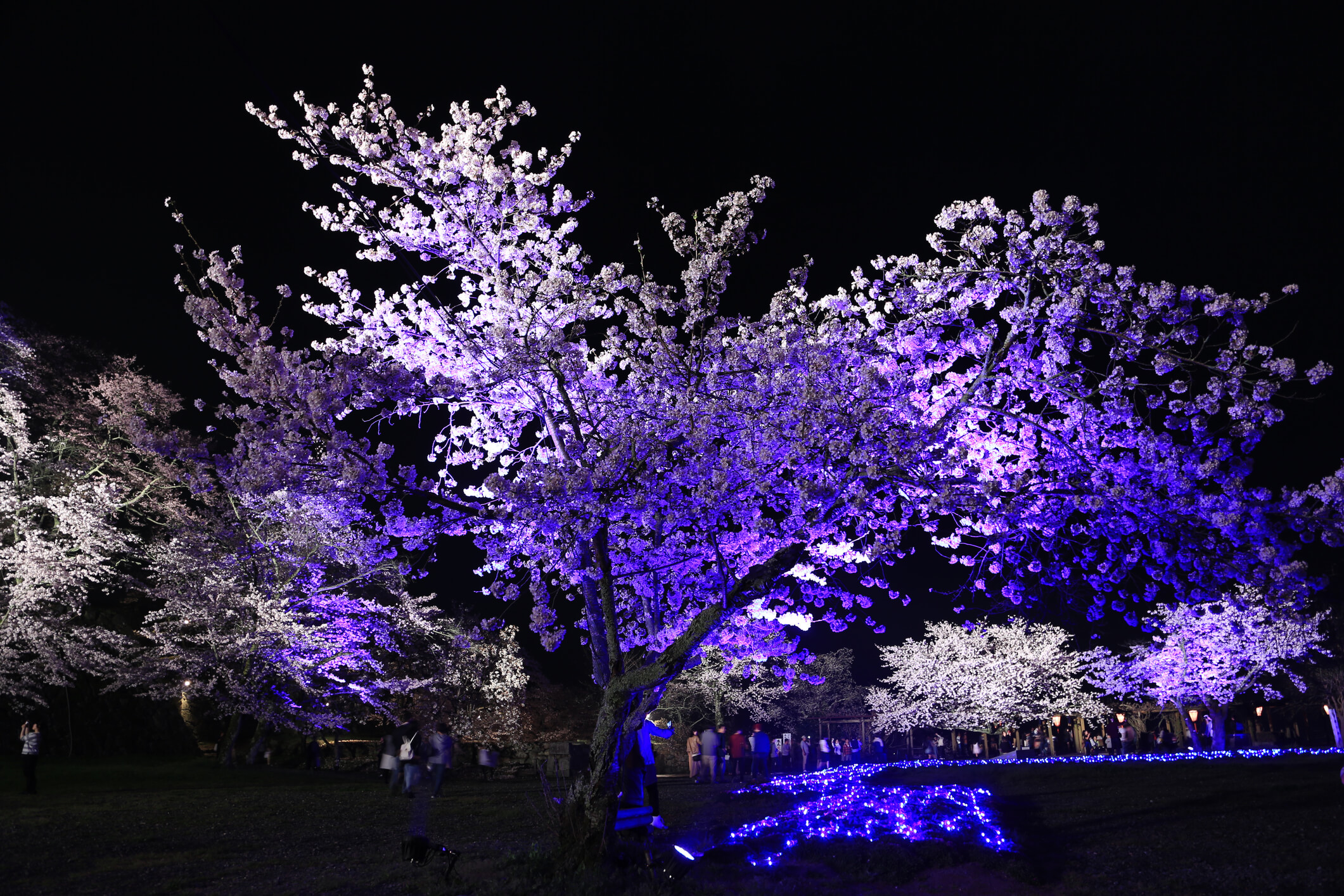
If daytime cherry blossom viewing is beautiful, night viewing is something else entirely. The blossoms look different under artificial light. The whole atmosphere feels different. And once you’ve done it, you’ll want to do it every year.
This guide covers:
- What yozakura actually is
- When night illuminations happen
- The best spots in Tokyo, Kyoto, Osaka and beyond
What Is Yozakura?
Yozakura (夜桜) literally means “night cherry blossoms.” It’s the practice of viewing sakura after dark, when parks and temples light up their trees with lanterns, floodlights and artistic light installations. Yozakura is big event in Japan, like really big, as you will see when you attend one.
The tradition goes back centuries in Japan, but the modern version you’ll experience today is a proper event. Parks switch on illuminations during peak bloom, the trees take on a completely different colour under the lights, and the whole atmosphere shifts from daytime picnic vibes to something more atmospheric.
- Popular with couples, photographers, and anyone who wants to avoid the lunchtime crush
- Most major viewing spots offer some form of nighttime illumination
- Night viewing typically only runs during peak bloom week, so timing is everything
Why Yozakura Is Worth Experiencing
You might be wondering whether it’s worth heading out at night when you’ve already seen blossoms during the day. Short answer: yes, absolutely.
- Different atmosphere entirely – calm, romantic, and honestly a bit magical
- Blossoms glow – under spotlights and lanterns, the petals look more vibrant, often a much deeper pink than during the day
- Fewer crowds at some spots – not everywhere, but some locations are noticeably quieter after 8pm
- Reflections – rivers, moats and ponds reflect the lit-up trees beautifully
- Photography – the light and contrast make for genuinely stunning shots
One thing worth knowing: blossoms under artificial light often appear more intensely pink than they do in daylight. If your photos from the day look a bit washed out, yozakura shots tend to be a lot more dramatic.
When You Can See Night Cherry Blossoms
This is where a lot of people get caught out. Night illuminations don’t run for the entire cherry blossom season. They typically only operate during peak bloom, which is when around 70–80% of the blossoms are open.
Key things to know:
- Illumination hours are usually around 6pm–9pm or 10pm (varies by location)
- Events typically run for 7–10 days during peak bloom
- Exact dates vary year to year depending on when the blossoms open
- Some parks have ticketed evening entry, others are free
👉 Check my 2026 Cherry Blossom Forecast to plan your yozakura visit around peak bloom dates.
Best Time of Night to See Yozakura
Most guides tell you when illuminations run. Very few tell you when during the evening to actually show up. It makes a much bigger difference than you’d think.
| Time | What to Expect |
|---|---|
| Just after sunset (around 5:45pm) | Best light, smaller crowds, magical atmosphere |
| 7–8pm | Liveliest atmosphere, food stalls pumping, bigger crowds |
| 8:30–9pm | Quieter, easier photography, some stalls winding down depending on location |
Just After Sunset (Best Overall Time)
This is the sweet spot, and most people miss it because they arrive too late.
For about 20–30 minutes after sunset, the sky still holds a deep blue tone while the illuminations are already on. The blossoms glow softly against that blue backdrop, the light is warm and even, and the crowds haven’t fully built yet. It’s genuinely one of the most beautiful things you’ll see in Japan.
Arrive 30 minutes before sunset. This gives you time to see the blossoms in the last of the daylight, watch the lights flick on, and settle in before it gets busy. Photographers call this window “blue hour,” and it’s worth planning your entire evening around.
Early Evening (Most Popular Time)
By 7–8pm, the parks are in full swing. Food stalls are busy, groups are doing hanami, music is floating around at the bigger spots, and the atmosphere is lively and fun.
The tradeoff is crowds. At places like Meguro River and Ueno, this is when it gets genuinely packed. Photography becomes harder as you’re navigating around people, and the reflections in the water get broken up by the number of people on the banks.
Still worth it for the atmosphere, especially if this is your first yozakura.
Late Evening (Quietest Experience)
After about 8:30–9pm, crowds start thinning noticeably. The serious photographers come out, the families with kids head home, and the spots settle into something calmer and easier to enjoy at your own pace.
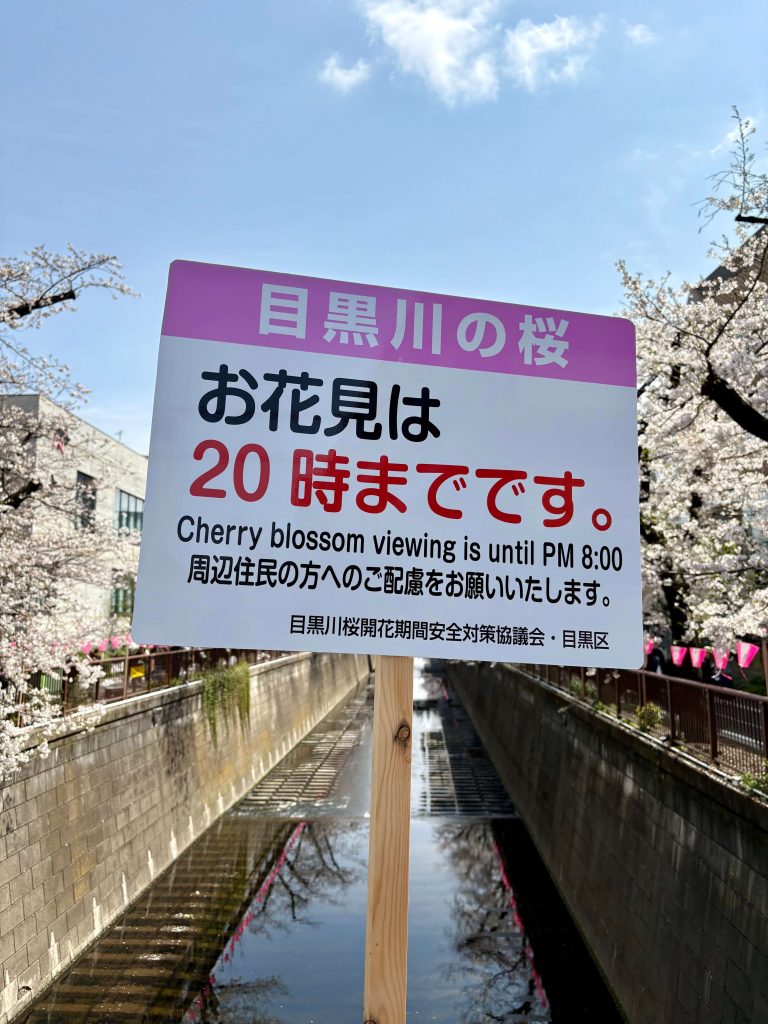
The catch: many parks and illumination events shut down around 9–10pm. Check closing times before you go, because security will politely but firmly move you along once the lights go off. And note that Meguro River cherry blossom viewing closes at 8pm – so the late-evening option doesn’t apply there at all.
Best Yozakura Spots in Tokyo
Tokyo does night cherry blossoms very well. There are several famous illuminated spots spread across the city, each with its own character.
Meguro River (Nakameguro)
My first yozakura ever. And still my favourite.
Hundreds of pink paper lanterns hang between the trees lining both sides of the canal. At peak bloom the lanterns glow warm and soft, and the blossoms reflect in the water below. Food stalls set up along the path selling everything from yakitori to craft beer.
Worth managing expectations though: the trees were significantly pruned in recent years, so the famous “tunnel of blossoms” over the canal that you’ve probably seen in photos is no longer quite what it was. It’s still a beautiful spot, but go in knowing that rather than being disappointed on the night.
Fair warning: it gets very busy on peak nights. Like, shoulder-to-shoulder busy. Go on a weeknight if you can, or arrive early in the evening before the crowds build.
The Meguro River viewing area closes at 8pm during cherry blossom season. That makes the sunset window even more important here. Arrive early, because you won’t get a late-evening option.
- Access: Nakameguro Station (Tokyu Toyoko Line, Tokyo Metro Hibiya Line)
- 📍 View on Google Maps
- Cost: Free
- Best time: Weeknight evenings, arrive before sunset
- Blossom forecast: Flowering March 22nd, Full Bloom March 30
Chidorigafuchi
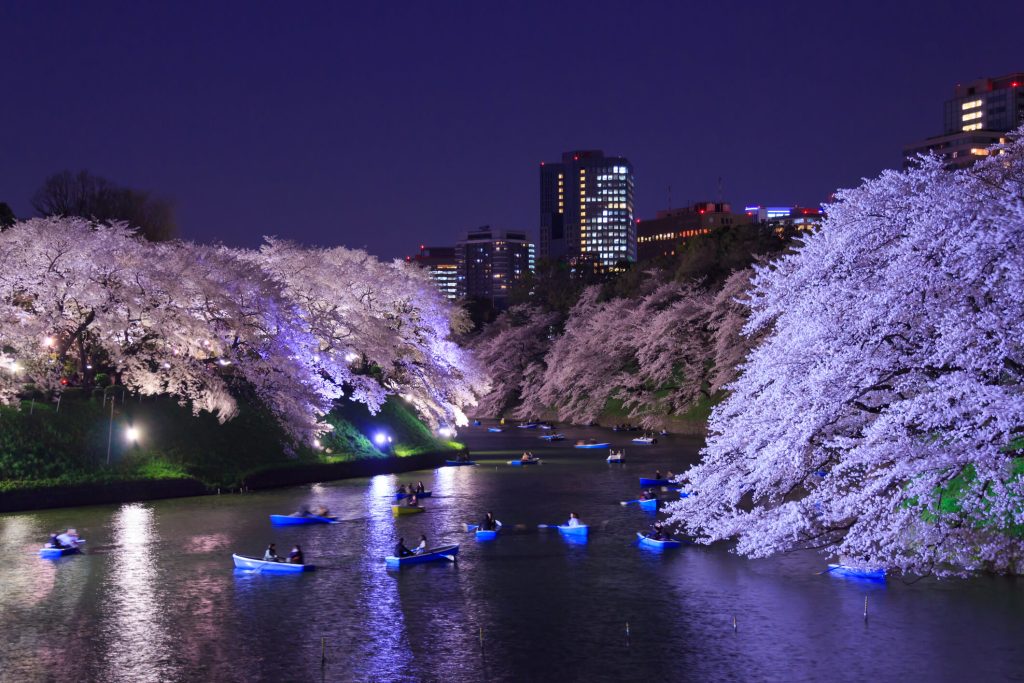
The moat surrounding the Imperial Palace is one of Tokyo’s most photogenic cherry blossom spots, and it holds its own at night too.
The walking path along the moat is lined with trees, and during peak bloom the illuminated blossoms hanging over the dark water are genuinely beautiful. Rowing boats operate during the day, though usually not at night. Either way, the reflections from the bank are worth the visit.
- Access: Kudanshita Station (Tokyo Metro Hanzomon, Shinjuku, Tozai Lines)
- 📍 View on Google Maps
- Cost: Free
- Best time: Weeknight evenings, arrive before sunset
- Blossom forecast: Flowering March 23rd, Full Bloom March 30
Rikugien Garden
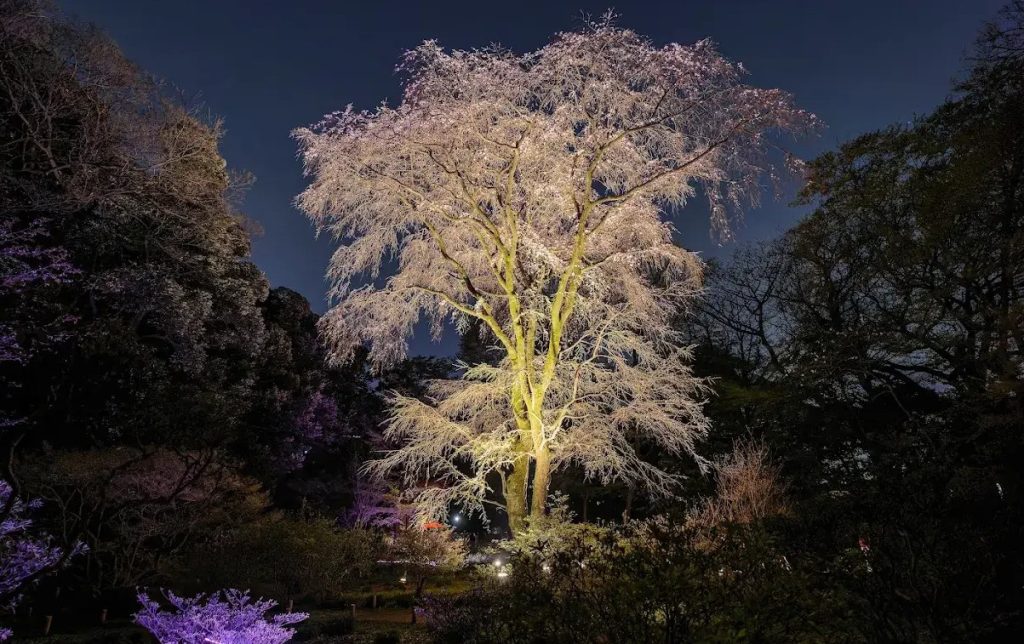
Rikugien is famous for one tree: the Great Mother Weeping Cherry Tree, a weeping cherry about 15 metres tall and 20 metres wide that gets fully floodlit for the special nighttime events. It’s honestly one of the most dramatic things you’ll see during sakura season. The tree looks like it’s floating in the dark.
The atmosphere inside is quiet, refined and completely different from the riverside spots. Beyond the weeping cherry, there’s projection mapping on the historic old storehouse walls, lit-up pines reflecting in the central pond, and light installations recreating the shimmer of water across the garden paths. There’s a lot to take in.
2026 event details:
- Dates: Approximately one consecutive week between mid and late March (exact dates to be confirmed 1 week before the event, based on bloom conditions)
- Blossom forecast: Flowering March 19th, Full bloom March 27th
- Evening hours: 6:30pm–9:00pm (last entry 8:00pm)
- Note: The park closes at 5pm and reopens at 6:30pm specifically for the evening event
- Advance tickets: ¥1,000 online
- Same-day tickets: ¥1,200 online or at the gate (cash only at counter – cash is still king in Japan)
- Under elementary school age: Free (must be accompanied by a ticket-holding adult)
- Entry: Somei Gate only. Exit: Main Gate only. Don’t mix these up.
Daily ticket numbers are capped. Book online in advance to avoid missing out and to skip the queue.
While you’re there:
- Matcha and Japanese sweets at the teahouse (6:30pm–8:30pm)
- Tokyo Yakimochi dumplings from the food stall near the weeping cherry (6:30pm–8:30pm)
- Souvenir shop open until 9pm
- Access: Komagome Station (JR Yamanote Line, Tokyo Metro Namboku Line), 2-min walk
- Wheelchair access: Most of the route is accessible, with detours available where needed
- 📍 View on Google Maps
Ueno Park
Ueno goes all out. Thousands of lanterns line the main cherry blossom path, food stalls set up along the route, and the whole park takes on a full festival atmosphere after dark.
It’s loud, lively and a lot of fun, but it’s not somewhere you go for a quiet evening. If you want energy and food and crowds doing hanami properly, Ueno at night delivers.
- Access: Ueno Station (JR lines, Tokyo Metro Ginza and Hibiya Lines)
- Cost: Free (park entry)
- Blossom forecast: Flowering March 21st, Full Bloom March 29th
- 📍 View on Google Maps
Sumida Park
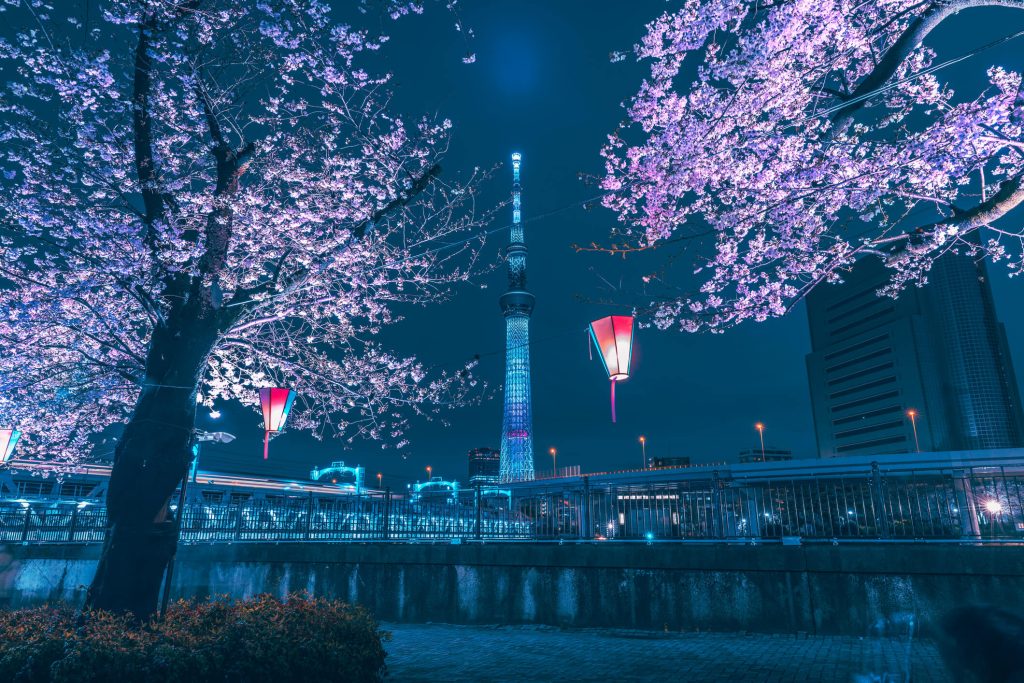
Sumida offers something the other spots don’t: the Tokyo Skytree as a backdrop. The riverside cherry trees are illuminated during peak bloom, and with Skytree lit up in the distance, the photography opportunities here are hard to beat.
Less packed than Ueno and Meguro River, which is a bonus.
- Access: Asakusa Station (multiple lines)
- Cost: Free
- Blossom forecast: Flowering March 22nd, Full Bloom March 30th
- 📍 View on Google Maps
Yoyogi Park
Yoyogi doesn’t have formal illumination, but it does have something equally enjoyable: casual evening hanami gatherings with a relaxed, local crowd. No spotlights, no lanterns, just people spreading out picnic mats as the sun goes down.
If you want to experience the social side of hanami without the tourist crush, a weeknight in Yoyogi is a good call.
Blossom forecast: Flowering March 23rd, Full Bloom March 31st
Best Night Cherry Blossom Spots Near Tokyo
Sankeien Garden (Yokohama)
Sankeien is a traditional Japanese garden full of historic buildings, and during cherry blossom season the evening illuminations here are genuinely lovely. The combination of lit-up blossoms, traditional architecture and reflective ponds makes it feel a world away from central Tokyo.
It’s also significantly quieter than most Tokyo spots, which is reason enough to make the trip.
- Access: Honmoku bus stop from Negishi or Yokohama Station
- Cost: ¥700 adults, ¥200 children
- Blossom forecast: Flowering March 22nd, Full Bloom March 30th
Minato Mirai / Kishamichi Promenade
The waterfront area of Yokohama has cherry trees lining the old railway promenade, with the Cosmo Clock ferris wheel and harbour lights as a backdrop. It’s a great evening walk, far less crowded than Tokyo, and the combination of blossoms and city waterfront lights makes for good photos.
👉 See my full guide to Cherry Blossom Viewing in Yokohama for more spots.
Yozakura in Kyoto
Kyoto’s temple gardens create some of the most atmospheric night blossom experiences in Japan. If Tokyo is about energy and scale, Kyoto’s yozakura is about beauty and quiet drama.
Maruyama Park
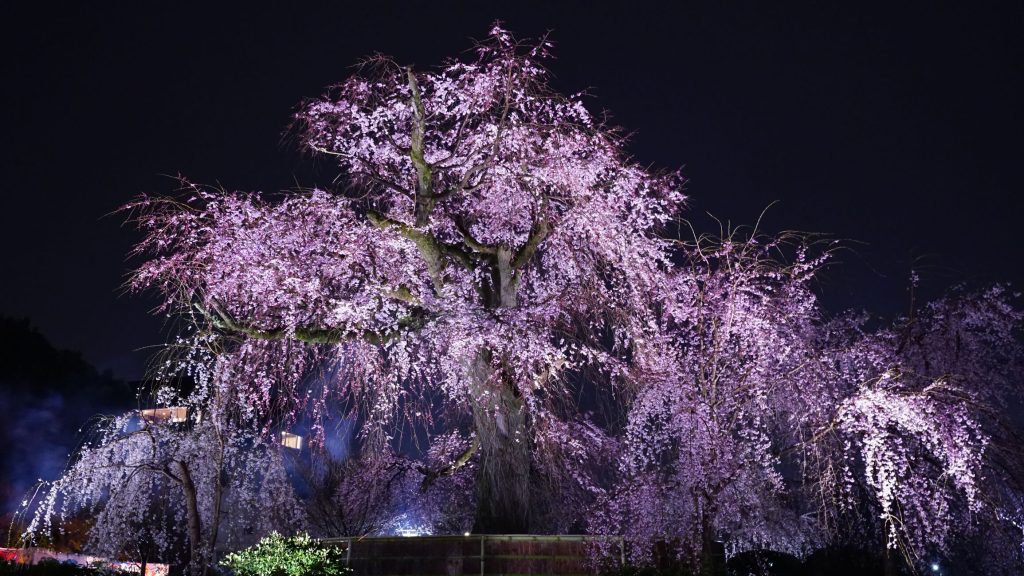
The weeping cherry tree at the centre of Maruyama Park is one of the most photographed trees in Japan, and it looks even more stunning at night when it’s lit from below. This is central Kyoto’s main cherry blossom gathering spot, and the evening atmosphere around the illuminated tree is hard to beat.
Be prepared for crowds. This one gets busy.
- Access: 10-min walk from Gion-Shijo Station (Keihan Line)
- Cost: Free
- 📍 View on Google Maps
- Blossom forecast: Flowering March 24th, Full Bloom April 1st
Nijo Castle
Nijo Castle’s Sakura Nights event is one of the most ambitious yozakura experiences in Kyoto. The castle grounds are transformed with light installations across multiple zones, projection mapping on the historic Ninomaru Palace walls, and illuminated cherry groves throughout the gardens. It runs well beyond just peak bloom week, which gives you more flexibility than most yozakura events.
A standout feature is the special nighttime access to Ninomaru Palace itself, a National Treasure, where the gold-leaf wall paintings and interior details look completely different under evening lighting. There’s also a lively food and drinks plaza with Kyoto craft beer and local wine, which is a nice bonus.
2026 event details:
- Dates: March 19 – April 19, 2026
- Hours: 6:00pm–10:00pm (last entry 9:00pm)
- Blossom forecast: Flowering March 29th, Full Bloom April 9th
- Website: Visit their official event website here
Tickets (Admission + Ninomaru Palace):
- Mon–Thu: ¥2,400 early bird / ¥2,800 regular (adults)
- Fri–Sun/holidays: ¥2,600 early bird / ¥3,000 regular (adults)
- Children ages 6–12: slightly lower rates across all categories
- Preschool children: free
- Special dates (April 4, 5, 11): require a specific special date ticket
Good to know:
- Early bird tickets available until March 18
- Tripods and monopods are not permitted
- Photography inside Ninomaru Palace is prohibited
- Standard Nijo Castle admission passes are not valid for this event
- The event runs in light rain, but umbrellas aren’t allowed during the Shirogeki theatre performance — bring a raincoat
- Access: Nijojo-mae Station (Tozai Line subway), or Kyoto City Bus No. 9 or 50 from Kyoto Station
- 📍 View on Google Maps
Heian Shrine
The garden at Heian Shrine contains beautiful weeping cherry trees, and occasional nighttime openings during peak bloom allow evening access. When they run, these events are worth going out of your way for. Check ahead as timing varies.
- Access: Higashiyama Station (Tozai Line), 10-min walk
- Cost: Garden entry fee applies during evening events
- 📍 View on Google Maps
- Blossom forecast: Flowering March 28th, Full Bloom April 5th
Kodai-ji Temple
Kodai-ji is known for its artistic lighting displays during spring and autumn. The temple gardens include reflective ponds and manicured trees, and the light installations are genuinely creative. A quieter alternative to Maruyama Park if you prefer atmosphere over crowd size.
- Access: 5-min walk from Gion-Shijo Station (Keihan Line)
- Cost: ¥600 adults
- 📍 View on Google Maps
Yozakura in Osaka
Osaka Castle Park

Osaka Castle Park is one of the Kansai region’s best cherry blossom spots, with around 3,000 Somei-Yoshino cherry trees – most of them about 70 years old – spread across the grounds. During peak bloom the castle itself gets lit up in cherry blossom pink, and the combination of illuminated blossoms surrounding the moat with the castle tower glowing overhead is genuinely impressive.
This year’s night viewing event is called the Cherry Blossom Night Game 2026, held as part of the broader Osaka Castle Spring Festival 2026 (March 10 – May 24, 2026). You can visit their official Spring Fest website here.
One thing to note is that there’s a ¥350 entry fee for the cherry blossom night viewing season. Not expensive, but worth knowing so you’re not caught off guard at the gate.
A fun detail: Osaka Castle’s Nishinomaru Garden is home to the official Japan Meteorological Agency specimen cherry tree for Osaka Prefecture – the tree used to officially declare when cherry blossoms have bloomed in the city. When five flowers open on that tree, it’s official. On that same day, the castle tower switches on its cherry blossom pink illumination from sunset until midnight.
- Event period: March 10 – May 24, 2026
- Night viewing fee: ¥350
- Access: Osakajokoen Station (JR Osaka Loop Line), or Tanimachi 4-chome Station (Tanimachi/Chuo subway lines)
- 📍 View on Google Maps
- Osaka Castle Blossom forecast: Flowering March 25th, Full Bloom April 2nd
Kema Sakuranomiya Park
A long stretch of riverside cherry trees along the Okawa River, with lanterns strung between the trees during peak bloom. It’s a relaxed evening walking spot, popular with locals doing casual hanami along the bank.
- Blossom forecast: Flowering March 25th, Full Bloom April 2nd
- Access: Sakuranomiya Station (JR Osaka Loop Line)
- Cost: Free
- 📍 View on Google Maps
Expo ’70 Commemorative Park
A large park with a substantial number of cherry trees and occasional illumination events. Significantly less crowded than central Osaka spots, which makes it a good option if you want to experience yozakura without fighting for space.
- Access: Banpaku-Kinen-Koen Station (Osaka Monorail)
- Cost: ¥260 adults, ¥80 children (park entry)
- 📍 View on Google Maps
What to Know Before Visiting Yozakura
A few things worth knowing before you head out:
- Illumination windows are short – often just 7–10 days during peak bloom, so check dates before you go
- Official websites are the most reliable source for exact illumination hours and entry fees
- Some parks charge evening entry – Rikugien and some temple events sell tickets in advance
- Arrive before sunset if you want to see the transition from day to night lighting (it’s worth it)
- Bring a jacket – evening temperatures in late March and early April can drop quickly
- Tripods are often restricted at crowded spots, particularly in narrow areas like Meguro River
- Food stalls are common at larger locations, so you won’t go hungry
Night Cherry Blossom Photography Tips
Night photography sounds harder than it is. A few simple things make a big difference:
- Phone users: use night mode, keep steady, and shoot in portrait mode for blossoms up close
- Camera users: increase your ISO, use a wide aperture (f/1.8–f/2.8), and shoot in RAW if you can
- No tripod? Use a railing, wall or fence to stabilise your shot
- Capture reflections in ponds and rivers – some of the best shots at Meguro and Chidorigafuchi come from shooting downward at the water
- Include lanterns in the frame – they add warmth and context to the shot
- Avoid using flash – it blows out the blossoms and irritates everyone around you
Yozakura Etiquette
Yozakura spots can get very crowded, so a bit of common sense goes a long way:
- No flash photography in crowds or near lit trees
- Stay on the paths – don’t step into garden beds or under roped-off trees
- Don’t touch the illuminated trees – the lighting equipment is fragile and the trees obviously aren’t for grabbing
- Respect park closing times – security will ask you to leave, and they’re polite about it exactly once
- Don’t block photographers at narrow spots like bridges and riverbanks
👉 For the full rundown, see my Hanami Etiquette Guide.
Can You Drink During Yozakura?
It depends entirely on where you are.
- Parks like Ueno and Yoyogi generally allow drinking during hanami season
- Riverside spots like Meguro River and Sumida Park are typically fine for a relaxed drink
- Temple and garden events (Rikugien, Kodai-ji, Heian Shrine) usually prohibit alcohol
- Some parks have changed their rules in recent years, particularly around organised drinking, so check current guidelines before you bring a picnic
👉 See my Hanami Drinks Guide for what to buy at the konbini before you go.
Yozakura Is Worth Doing at Least Once
My first accidental yozakura along the Meguro River stuck with me more than almost any other sakura viewing.
There’s something about cherry blossoms at night, under lanterns, reflected in dark water, that daytime viewing just can’t replicate. They’re the same trees. The same blossoms. But they feel completely different.
If you’re planning a trip around sakura season, try to fit in at least one evening viewing no matter how tired you may be. Go to Meguro or Chidorigafuchi in Tokyo. Walk through Maruyama Park in Kyoto after dark. Even just wandering past a lit-up park on the way back to your hotel counts.
It’s one of those Japan experiences that’s genuinely hard to explain until you’ve seen it for yourself.
Yozakura FAQs
What does yozakura mean?
Yozakura (夜桜) literally means “night cherry blossoms.” It refers to the tradition of viewing illuminated cherry blossoms after dark, which happens at parks, gardens and temples across Japan during peak bloom season.
How long do yozakura illuminations last?
Usually around 7–10 days, timed to coincide with peak bloom. They don’t run for the entire cherry blossom season, so timing your visit matters. Check the forecast and the official website for each location before you go.
Is yozakura free?
It depends on the location. Many spots like Meguro River, Ueno Park and Chidorigafuchi are completely free. Others, like Rikugien Garden, require a separate paid ticket for the evening event. Temple events in Kyoto often have entry fees too.
Do I need to book tickets in advance for yozakura?
For ticketed venues like Rikugien, yes – and it’s worth doing early. Daily numbers are capped and popular dates sell out. For free locations, no booking is needed, but arriving early (especially around sunset) is strongly recommended.
What should I wear to yozakura?
Dress in layers. Daytime temperatures in late March and early April can be quite pleasant, but evenings cool down quickly. A light jacket or coat is essential. Comfortable walking shoes too – you’ll be on your feet for a while.
Can I take a pram or stroller to yozakura events?
At open riverside spots like Meguro River and Ueno, yes, though crowds can make it tricky on peak nights. At garden events like Rikugien, most routes are accessible with detours available where needed. Narrow temple paths in Kyoto can be more challenging.
Is yozakura worth it if I’ve already done daytime hanami?
Yes, genuinely. It’s a different experience – the light, the atmosphere and the crowd energy all change after dark. If you can only do one evening of yozakura during your trip, do it. Most people who go wish they’d gone earlier in the week so they could go again.
Can kids enjoy yozakura?
Absolutely. The lanterns, glowing blossoms and food stalls tend to go down very well with kids. Just keep in mind that evening temperatures drop and you’ll be out late, so factor that in depending on your kids’ ages. At Rikugien, children under elementary school age get in free.