Last Updated on May 7, 2026 by Vlad
In 2016, I would’ve told you to rent pocket WiFi for your Japan trip.
In 2026, I think most tourists should get an eSIM instead.
After 22 years travelling to Japan and using everything from Vodafone roaming to a Sakura Mobile eSIM, this guide covers what actually works now: real 2026 prices, the best provider for your situation, and where the cheap “deals” turn into expensive headaches (looking at you, Optus prepaid roaming).
Let’s sort it out.
Quick Answer: eSIM or Pocket WiFi for Japan?
For most travellers in 2026, an eSIM is the better choice. It’s cheaper, there’s no device to charge or return, and coverage from the major providers is now excellent across all the spots tourists actually go.
But there are exceptions. Here’s the short version:
- Solo or couple traveller with a recent phone: Get an eSIM
- Family of 3 or more sharing internet: Pocket WiFi usually wins on cost and convenience
- Group of 4+: Pocket WiFi, no contest
- Heading to remote spots like rural Hokkaido or deep into the Japanese Alps: Either works, but pick a provider on the Docomo network
- Going for under 5 days with light usage: eSIM
- Phone is more than 5 years old or doesn’t support eSIM: Pocket WiFi or a physical SIM
The rest of this post explains why, with actual numbers.
eSIM vs Pocket WiFi: At-a-Glance Comparison
| Feature | eSIM | Pocket WiFi |
|---|---|---|
| Cheapest for solo travellers | Yes | No |
| Best for families and groups | No | Yes |
| Easiest setup and use | Yes | No |
| Extra device to charge each night | No | Yes |
| Works for multiple devices | Limited (via hotspot) | Yes (5 to 15 devices) |
| Best for rural Japan | Depends on provider | Depends on provider |
| Requires a recent phone | Yes | No |
| Nothing to return at the end | Yes | No |
Best Internet for Japan by Traveller Type
| Traveller type | Best choice |
|---|---|
| Solo traveller | eSIM |
| Couple | eSIM |
| Family with kids | Pocket WiFi (or shared eSIM with hotspot) |
| Group of 4+ mates | Pocket WiFi |
| Digital nomad / longer stay | Unlimited eSIM or Sakura Mobile |
| Older travellers / less tech-confident | Pocket WiFi |
| Rural Japan or Hokkaido | Docomo-based eSIM (Ubigi or Sakura Mobile 4G plan) |
| Phone is over 5 years old | Pocket WiFi or physical SIM |
The rest of this guide explains the reasoning behind each pick.
What is an eSIM and How Does it Work in Japan?
An eSIM is a digital SIM card. There’s nothing physical to insert. You buy a plan online, get sent a QR code, scan it with your phone, and you’ve got data the moment you land in Japan.
How it works in plain English:
- You buy the plan before you fly (do it from your couch the night before)
- The provider emails you a QR code
- You scan it via your phone’s settings to install the eSIM profile
- When you land in Japan, you switch on data roaming for the eSIM and you’re connected within a minute or two
Your normal Aussie SIM stays in the phone. You can still receive SMS and calls on your Australian number (handy for two-factor authentication codes), you just don’t use it for data.
Phones that support eSIM:
- iPhone XS and newer (most US iPhones from the 14 onwards are eSIM-only)
- Most Samsung Galaxy S20 and newer
- Google Pixel 3 and newer
- Most flagship Android phones from 2020 onwards
If you bought your phone outright in Australia, it’ll work. If your phone is locked to a carrier, you may need to ring them and request an unlock before you fly. Telstra and Optus will usually do this free for paid-off devices.
Quick check: On iPhone, go Settings → General → About → look for an EID number. If it’s there, you’ve got eSIM capability. On Android, dial *#06# and an EID will pop up if you’re eSIM-ready.
What is Pocket WiFi and How Does it Work?
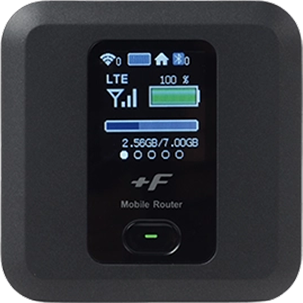
Pocket WiFi is a small portable router. You rent it for the length of your trip, switch it on, connect your devices to it via WiFi, and you’ve got internet wherever you go.
The basics:
- Order online before you fly
- Pick it up at the airport (Narita, Haneda, Kansai, Chubu, Fukuoka all have counters) or have it delivered to your hotel
- Use it for your whole trip
- Drop it back at the airport or post it back in a prepaid envelope
The device is roughly the size of a small phone. It runs for 9 to 20 hours on a charge depending on the model. You can connect 5 to 15 devices at once, so the whole family can share one router.
I rented pocket WiFi for years and it worked well. The reason I moved away from it wasn’t reliability. It was the hassle of carrying yet another thing in my pocket or day bag, remembering to charge it every night, and making sure I didn’t leave it behind. When eSIMs got good, I dropped pocket WiFi and haven’t gone back.
Should You Buy an eSIM or Pocket WiFi at the Airport?
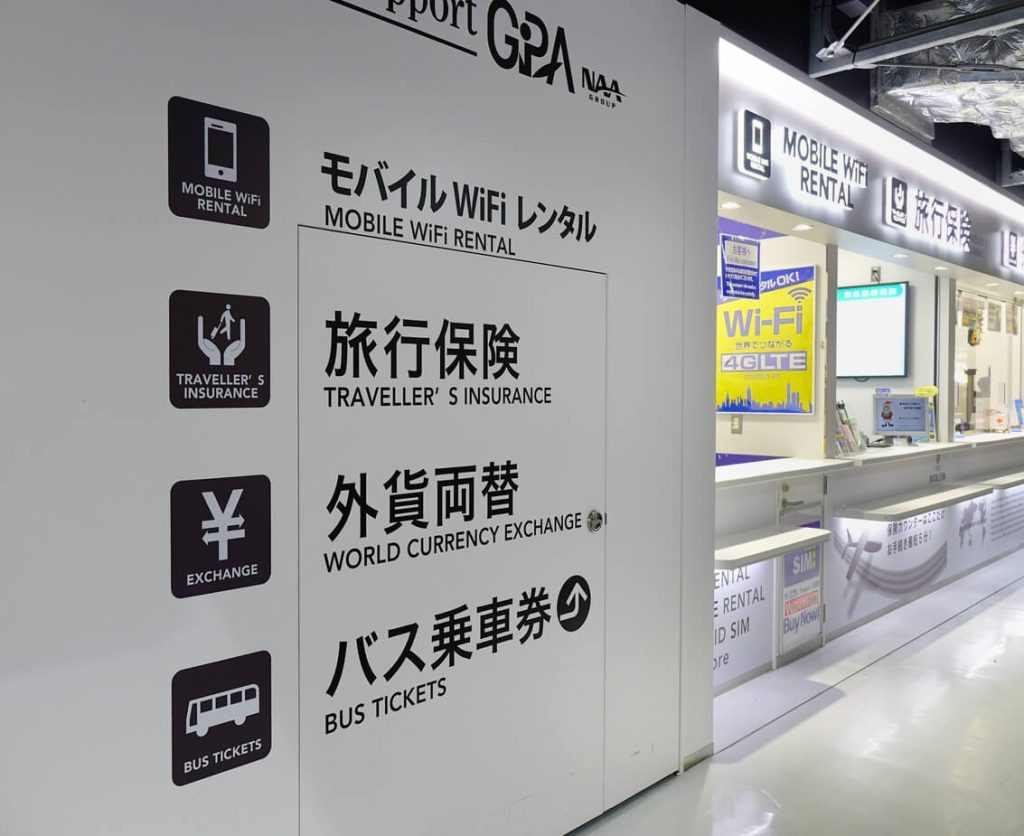
Short answer: sort it before you fly.
Narita, Haneda, Kansai and the other major airports all have SIM card vending machines, eSIM kiosks and pocket WiFi rental counters. They’re convenient. They’re also more expensive than buying online beforehand, and the queues at peak times are no joke after a long-haul flight.
Your three real options when you land:
- Pre-booked pocket WiFi pickup: Walk straight to the counter, show your booking, you’re sorted in 5 to 10 minutes
- Pre-installed eSIM: Switch on data roaming the moment you turn off airplane mode. You’re online before you’ve cleared customs
- Buy on arrival at the airport: Possible, but you’ll pay 20% to 50% more and queue for the privilege
Should I Get an eSIM Before Arriving in Japan?
Yes, absolutely. eSIMs are designed to be set up in advance.
- Buy the plan online from anywhere (do it the night before you fly)
- Install the QR code while you’re still on home WiFi
- Activate it the moment you land
You can install most eSIMs days or weeks before the trip without using any data. They only start counting down once you activate them in Japan.
Can Tourists Buy eSIMs in Japan?
Yes. Major Japanese providers like Sakura Mobile, Mobal and IIJmio sell eSIMs designed for tourists, and you can buy them online from overseas before your trip. International providers like Airalo, Ubigi, Holafly and Saily also offer Japan-specific plans that work the moment you land.
You don’t need a Japanese address, Japanese bank account or Japanese phone number to buy a tourist eSIM. The whole process takes about 5 minutes online.
What About Pocket WiFi Pickup at the Airport?
Pocket WiFi is the one case where airport pickup still makes sense. You pre-book online (usually 1 to 2 weeks ahead), select your pickup airport, and the rental company hands you the device when you arrive. You return it via airport drop-off or postbox before you fly home.
Don’t try to walk up to a pocket WiFi counter without a booking and expect today’s price. They’ll happily rent you one, you’ll just pay a premium.
Cost Comparison (2026 Prices)
Right, the numbers. All prices below are in AUD using approximate exchange rates as of April 2026. Always check the current rate before you buy.
eSIM pricing for a 14-day trip
| Provider | Plan | Approx AUD cost |
|---|---|---|
| Airalo | 5GB / 30 days | ~$18 |
| Airalo | 10GB / 30 days | ~$28 |
| Ubigi | 10GB / 30 days | ~$32 |
| Saily | 10GB / 30 days | ~$25 |
| Holafly | Unlimited / 15 days | ~$78 |
| Sakura Mobile | 30-day travel eSIM | ~$140 to $150 |
For most travellers, 5GB to 10GB is plenty for two weeks. You’re using WiFi at hotels and restaurants for the heavy stuff. Mobile data is mainly for Google Maps, translation apps, messaging and the odd Insta upload.
Pocket WiFi pricing for a 14-day trip
| Provider | Plan | Approx AUD cost (14 days) |
|---|---|---|
| Ninja WiFi | Unlimited 4G | ~$95 to $140 (depends on discount) |
| Japan Wireless | Unlimited 4G | ~$85 to $110 |
| Sakura Mobile | Unlimited 4G | ~$110 |
Add another $5 to $10 if you want delivery to your hotel instead of airport pickup, plus optional insurance.
Australian carrier roaming for a 14-day trip
The pricing depends heavily on whether you’re on a postpaid plan or prepaid. Here’s the rough breakdown:
| Carrier | Plan type | Cost structure | 14-day cost |
|---|---|---|---|
| Telstra | Postpaid | $10/day, 2GB/day | $140 |
| Telstra | Prepaid roaming pack | Various pack lengths | ~$25 to $40 |
| Optus | Postpaid (Choice Plus) | $5/day, 5GB/day | $70 |
| Optus | Prepaid roaming pack | $25 for 14 days, 5GB total | $25 |
| Vodafone | Postpaid $5 Roaming | $5/day, uses your existing plan data | $70 |
The real cost picture
For a solo traveller on a 14-day trip:
- Cheapest option: Airalo 10GB eSIM at around $28
- Most expensive option: Telstra roaming at $140
- The difference: $112 you could spend on ramen, train rides or convenience store snacks
For a family of four sharing one connection:
- eSIM with hotspot: ~$28 (one person hotspots to the others)
- Pocket WiFi: ~$95 to $110
The eSIM-with-hotspot route is cheaper but drains the host’s phone battery fast. More on this below.
Do You Actually Need Unlimited Data in Japan?
Probably not.
Most tourists massively overestimate their data needs in Japan. After multiple trips and watching people I travel with do the same, I’d say 90% of travellers would be fine on a 5GB to 10GB plan for a two-week trip.
Why typical Japan trip data use stays low:
- Hotels, hostels, AirBnBs, cafes, convenience stores and most train stations have free WiFi
- Google Maps is data-light once your map is loaded
- Offline maps (download the city maps the night before) cut data use further
- You’re out walking, eating, shopping. You’re not streaming Netflix on the train
- Most messaging apps use barely any data
What actually burns through data in Japan:
- Streaming Netflix or YouTube on long shinkansen rides
- Video calls back home daily
- Heavy social media uploads (especially video)
- Tethering kids’ iPads for hours at a time
My rule of thumb:
- Light user (maps, messaging, occasional social): 5GB for 14 days is plenty
- Average user (the above plus regular Insta posts and a few photo uploads): 10GB for 14 days
- Heavy user (video calls daily, streaming on transit): 20GB+ or unlimited
If you’re unsure, start with 10GB. You can almost always top up the same eSIM if you run out.
The unlimited eSIMs (Holafly, Sakura Mobile’s bigger plans, some Airalo packages) are mostly worth it for digital nomads, content creators, or families sharing one hotspot for multiple devices.
Speed and Coverage: Which is Faster?
Both options are reasonably fast in Japan. We’re talking 100 to 250 Mbps download speeds in cities, which is more than good enough.
Typical speeds across the country:
- Tokyo (Shibuya, Shinjuku, central wards): 150 to 250 Mbps on most major networks
- Kyoto (Gion, Arashiyama, central): 80 to 180 Mbps
- Osaka (Dotonbori, Namba): 120 to 220 Mbps
- Hakone and around Mt Fuji: 30 to 80 Mbps, slower in the mountain pockets
- Rural Yamanashi, Tohoku, mountain regions: 20 to 60 Mbps with the occasional dropout in passes
For tourists, both options are fast enough. You won’t notice a difference scrolling Instagram or pulling up Google Maps.
Subway and shinkansen reception:
- Tokyo metro stations all have signal, even underground. Trains have signal in most sections of the network now
- Shinkansen has reasonable coverage between cities. You’ll lose signal in long tunnels for a minute or two
- The big mountain crossings (going through the Japanese Alps) have more dropouts
Rural coverage:
This is where provider choice matters more than eSIM vs pocket WiFi.
- NTT Docomo network (used by Ubigi, Sakura Mobile 4G plans, Japan Wireless): best rural coverage, especially in Hokkaido, Tohoku and the mountain regions
- SoftBank network (used by Airalo, Ninja WiFi some plans): strong in cities, gaps in remote areas
- KDDI/au network (used by some Airalo plans, Sakura Mobile 5G plans, Holafly): strong nationwide, particularly good in cities and along major travel routes
For Mt Fuji, Hakone and most popular day trips from Tokyo, any provider works fine. For deeper rural travel, Docomo-based plans win.
Ease of Use
This is where the two options really diverge.
eSIM ease
- Setup: Slight faff the first time. You scan a QR code, pick which line to use for data and calls, set it up in settings. Takes 5 to 10 minutes
- Daily use: Zero effort. You forget you’ve got it
- Returning: Nothing to return. The eSIM just expires when the data runs out
Pocket WiFi ease
- Pickup: Find the rental counter at the airport. Usually 10 to 20 minutes including queue
- Daily use: Switch it on each morning, charge it each night, remember to take it with you
- Returning: Drop at the airport or pop it in a postbox. Easy enough but it’s another thing to remember when you’re trying to catch a flight home
The big trade-off for me with pocket WiFi was always the extra thing to carry. Phone, wallet, keys, transit card, camera, and now a router and its backup battery. With an eSIM there’s nothing extra. That’s the main reason I switched and haven’t looked back.
Battery and Practical Issues
This is the unsexy bit that doesn’t show up in most “best eSIM Japan” articles, but it matters.
eSIM battery drain
- Your phone is now doing all the work
- Heavy maps and translation use will drain a phone faster than usual
- You’ll likely want a power bank in your day pack (I use one most days regardless)
Pocket WiFi battery
- The router has its own battery (9 to 20 hours typically)
- Your phone battery lasts longer because it’s just doing WiFi, not cellular
- But now you have two devices to charge each night, not one
- If the router dies mid-afternoon, the whole family’s offline
What to do if your phone dies
This is the eSIM weakness. If your phone battery hits zero, you’ve got no internet for anyone. With pocket WiFi, you can still hand the router to your partner whose phone has charge.
My fix: carry a small 10,000 mAh power bank. Solves both problems and weighs less than a paperback.
Is an eSIM Worth It in Japan?
For most tourists, yes.
- It’s cheaper than carrier roaming for any trip over 5 days
- It’s faster to set up than queueing at the airport for a SIM
- You don’t have to carry, charge or return anything
- Coverage from the major providers is excellent in cities and most tourist areas
The exceptions are if your phone doesn’t support eSIM (most pre-2018 phones don’t), if you’re travelling as a group of 4+ where pocket WiFi is cheaper per person, or if you’re not confident with phone settings and would rather have a router someone else has set up.
For solo travellers and couples in 2026, an eSIM is the default best choice. Full stop.
Is Pocket WiFi Still Worth It in Japan?
Yes, but not for everyone.
Pocket WiFi still wins in three clear scenarios:
- Groups of 4+ sharing one device (cheapest per person)
- Families with kids on tablets who need consistent connection
- Travellers with older phones that don’t support eSIM
It used to be the default for everyone. That’s not the case anymore. If you’re a solo traveller booking pocket WiFi out of habit because that’s what your friend recommended ages ago, you’re paying for something you don’t need.
That said, pocket WiFi is far from dead. The major rental companies (Ninja WiFi, Japan Wireless, Sakura Mobile) are still operating well, prices are reasonable for groups, and the hardware is reliable.
Best for Solo Travellers
Get an eSIM. This isn’t even close anymore.
You’re carrying your phone everywhere already. Adding a router to charge, carry and not lose makes no sense for a solo trip.
My picks for solo travellers:
- Sakura Mobile if you want reliability over the lowest price. This is what I use. Real English-speaking support, choice of 4G Docomo or 5G KDDI plans, and it just works. Costs more than the budget options
- Airalo for travellers who want the best balance of price and reliability. Easy app, fair pricing, works on SoftBank and KDDI. The 5GB or 10GB plans are perfect for a 1 to 2 week trip
- Ubigi if you want NTT Docomo coverage at a budget price, especially handy if you’re heading rural or want 5G without Sakura Mobile’s premium
Skip Holafly unless you genuinely need unlimited data (most people don’t).
Best for Couples and Families
This is where it gets interesting, and where my recommendation depends on your situation.
When eSIM still wins for couples and small families
- Both adults have eSIM-capable phones
- You’re happy to hotspot from one phone to another or to kids’ devices
- You’re not streaming Netflix on the train
Two adults with their own eSIMs (around $28 each) is still cheaper than pocket WiFi.
When pocket WiFi wins for families
- You’ve got 3+ people who all need internet
- You’ve got kids on iPads who’ll burn through data watching shows on long shinkansen rides
- One adult doesn’t want to be the designated hotspot host with a flat phone by 2pm
- You’ve got someone with an older phone that doesn’t support eSIM
For my family trips with my son, my approach is one good eSIM (Sakura Mobile in my case) plus hotspot to other devices when needed. It works because we plan downloaded content (Netflix offline, downloaded podcasts, offline Maps) before long travel days, so the data demand stays manageable.
If we had two kids burning through tablet data daily, I’d probably switch to pocket WiFi for that trip.
Best for Groups (4+ People)
Pocket WiFi, every time.
One Ninja WiFi or Japan Wireless router runs about $95 to $110 AUD for 14 days. Split between four people, that’s roughly $25 each. There’s no eSIM that beats that for four people.
The routers handle 5 to 15 devices simultaneously. Realistically, you don’t want more than 4 to 5 devices on one router for decent speed, but for a small group it’s perfect.
Watch out for: the unlimited plans usually have a fair use clause. If you smash 10GB+ in a single day, speeds get throttled until midnight. For normal tourist use you’ll never hit it. For four people streaming video constantly, you might.
Best eSIM for Japan in 2026
Here’s the rundown of the main names worth considering.
Sakura Mobile
- Networks: Depends on the plan. 4G unlimited plans run on NTT Docomo. 5G plans run on KDDI/au
- Plans: Various data and unlimited options, including plans with a real Japanese phone number
- Pricing: Higher than the budget eSIM brands. The 4G unlimited plan is cheaper than the 5G option
- Hotspot: Yes
- English support: Excellent, properly staffed
- My take: This is what I personally use. I’ve been on the 4G Docomo unlimited plan and the 5G KDDI plan across different trips, both worked brilliantly. Costs more than Airalo or Ubigi, but reliability and English support are top-notch. Worth the premium if reliability matters more to you than saving $20
Airalo
- Networks: SoftBank + KDDI/au
- Plans: 1GB, 3GB, 5GB, 10GB, 20GB options
- Pricing: From around AU$7 for 1GB, AU$28 for 10GB
- Hotspot: Yes, works fine
- App: Polished, easy to manage multiple eSIMs
- My take: Most popular budget pick for good reason. If you want to save money and are happy on SoftBank/KDDI coverage, it’s the obvious choice
Ubigi
- Networks: NTT Docomo (best rural coverage)
- Plans: 1GB, 3GB, 10GB, 50GB options
- Pricing: Slightly higher than Airalo, around AU$32 for 10GB
- Hotspot: Yes
- 5G: Available on most plans
- My take: A cheaper way to get on Docomo than Sakura Mobile. Worth the small premium over Airalo if you’re heading to Hokkaido, Tohoku, the Japanese Alps or rural Kyushu
Holafly
- Networks: KDDI/au and SoftBank
- Plans: Unlimited only, charged by day
- Pricing: Around AU$78 for 15 days, AU$115 for 30 days
- Hotspot: Limited (often capped at around 500MB per day)
- My take: Expensive for what you get. The hotspot cap is a real issue for families. Only worth it if you’re a heavy user who genuinely streams video on mobile data and you don’t need to share
Saily
- Networks: Multiple
- Plans: 1GB, 3GB, 5GB, 10GB, 20GB, unlimited
- Pricing: Competitive, similar to Airalo
- Hotspot: Yes
- My take: Solid alternative to Airalo. Buying experience is clean. Worth comparing prices on the day you buy
Best Pocket WiFi for Japan in 2026
Ninja WiFi
- Network: SoftBank (4G) and Docomo (5G plans)
- Pricing: From around AU$10/day for unlimited (often heavily discounted, sometimes 35% to 80% off)
- Pickup: All major airports plus hotel delivery
- Battery: 9 hours, includes backup battery
- Devices: Up to 5 connected at once on standard plans, more on group plans
- My take: Best for short trips and casual users. Watch their seasonal sales
Japan Wireless
- Network: SoftBank (Premium plan is unlimited with no speed restrictions)
- Pricing: Around AU$6 to $7/day for 14-day rental
- Pickup: Airports, hotel delivery, post office collection
- Battery: 20 hours, includes backup battery
- Devices: Up to 10 connected
- My take: Best value for longer trips. The 20-hour battery is a real advantage for full sightseeing days
Sakura Mobile
- Network: NTT Docomo (best rural coverage)
- Pricing: Around AU$8/day, drops to AU$6/day for longer rentals
- Pickup: Major airports, hotels, AirBnBs, post offices
- Battery: 20 hours
- Devices: Up to 15 connected
- My take: Best English-speaking customer support of the three. Pick this if you’re going rural, going for a longer stay (4+ weeks), or want help in English if something goes wrong
What About Roaming with Your Australian Provider?
Short answer: sometimes a rip-off, occasionally not.
Telstra International Day Pass
Postpaid:
- $10 AUD per day in Japan
- Includes 2GB/day plus unlimited calls and SMS
- 14-day trip cost: $140
Prepaid roaming packs:
- $10 for 3 days
- $15 for 7 days
- $25 for 14 days
Telstra’s postpaid day pass is double the cost of Optus and Vodafone. Unless you’re already on a high-end Telstra plan and the convenience is worth $112 to you, get an eSIM. The prepaid packs are more reasonable but only available in 38 countries (Japan is included).
Optus Roaming
Optus has two completely different roaming setups depending on whether you’re postpaid or prepaid.
Optus postpaid (Choice Plus plans):
- $5 AUD per day in Japan
- Includes 5GB/day plus unlimited calls and SMS to Australia
- 14-day trip cost: $70
Optus prepaid roaming packs:
- $5 for 1 day (1GB data, 50 international SMS)
- $25 for 14 days (5GB data total)
- $45 for 28 days (10GB data total)
- $75 for 186 days (15GB data, 100 SMS)
On paper, the Optus prepaid roaming looks like brilliant value. In practice, I used Optus prepaid roaming in Japan for a few years and the speeds were frequently rubbish, slow enough to make Google Maps painful and sometimes basically unusable. Last December I bought the $45 / 28-day pack thinking I’d give it one more go. The connection was so terrible I gave up on it within two days and bought a Sakura Mobile eSIM instead at 14,850 yen for 30 days (about $140 AUD at the time).
So yes, the prepaid pack costs me $45. But after wasting that and paying another $147 on top, my “cheap” roaming option turned into the most expensive internet I’ve ever bought in Japan. Lesson learned.
Your mileage may vary, but I’d no longer trust an Optus roaming pack as the only data option for a serious trip.
Vodafone $5 Roaming
- $5 AUD per day in Japan
- Uses your existing Australian plan’s data allowance
- 14-day trip cost: $70
The Vodafone deal is solid if you’re on a generous plan with plenty of data. If you’ve got a 50GB plan at home, you’re not going to dent it on a Japan trip. This is the most “set and forget” option.
When carrier roaming might actually make sense
- Trip is under 5 days and you just need basic messaging and occasional maps
- You’re on Vodafone with a big data allowance
- You make a lot of calls (eSIMs are data only, you’d need WhatsApp or FaceTime for calls)
When it’s a rip-off (or worse, unreliable)
- You’re on Telstra postpaid and travelling 7+ days
- You’re a light data user (you’re paying for unlimited calls you’ll never make)
- You’re travelling as a family and everyone has their own plan ($5/day x 4 people x 14 days = $280)
- You’re relying on Optus prepaid as your only data source for a serious trip (speak from experience here)
My Personal Pick (And Why)
For years I roamed on my Australian carrier. Vodafone first, then Optus prepaid when I switched. The Optus prepaid roaming packs looked great on paper ($25 for 14 days, $45 for 28 days), but the actual connection in Japan was painfully slow. After putting up with it on multiple trips and finally giving up on a $45 / 28-day pack last December (covered above), I switched fully to Sakura Mobile and haven’t looked back.
I’ve now used Sakura Mobile across two trips on two different plans:
- March 2025: their 4G unlimited plan on Docomo (the cheaper option). Worked well across Tokyo, Yokohama and out in Yamanashi visiting friends
- January 2026: their 5G plan on KDDI/au (faster, costs more). Equally rock solid, faster speeds where 5G was available
That January 2026 plan was the 14,850 yen / 30 days I bought after the Optus prepaid disaster. Roughly AU$147. Significantly more than Airalo or Ubigi, but here’s what I get for the extra money:
- Reliable coverage everywhere I went, on whichever network the plan uses
- Real English-speaking customer support if something goes wrong
- Speeds that handle everything I throw at them, no patchy moments
- Zero stuffing around at the airport
For me, that reliability is worth the premium. I’m not on holiday to troubleshoot my data plan.
That said, I’d give different advice for different people:
- First-time Japan traveller on a budget: Airalo. Genuinely good, much cheaper, works great in cities
- Heading rural or wanting NTT Docomo at a lower price: Ubigi
- Group of four mates: Pocket WiFi from Japan Wireless, splitting one device makes the maths obvious
- Nervous about tech and want it to just work with someone to ring if needed: Sakura Mobile
For the record, I don’t run affiliate links on this site and I don’t accept sponsorships. The Sakura Mobile recommendation is what I personally pay for and use. The other recommendations are based on what I’d genuinely tell a mate planning their trip.
Frequently Asked Questions
Is eSIM cheaper than pocket WiFi in Japan?
Yes, for solo travellers and couples, eSIMs are significantly cheaper. A 10GB Airalo eSIM costs around AU$28 for two weeks compared to AU$95+ for pocket WiFi. For groups of 3 or more sharing one connection, pocket WiFi is usually cheaper per person.
Do I need internet in Japan as a tourist?
Yes. Free public WiFi exists at airports, train stations, convenience stores and some cafes, but it’s patchy, slow and often requires re-registering at each location. You’ll want reliable mobile data for Google Maps, train navigation, translation apps, restaurant reviews and emergency communication. Going without it makes the trip noticeably harder – don’t do it.
Can I use my Australian SIM in Japan?
Yes, but the cost depends on your carrier. Telstra charges $10/day, Optus and Vodafone both charge $5/day on most plans. Without activating a roaming pack, pay-as-you-go data rates are eye-watering (Telstra charges $3 per megabyte, which can mean a single Google Maps session costs more than a coffee). For trips longer than 5 days, an eSIM is almost always cheaper.
Which eSIM works best in Japan in 2026?
It depends on what you’re optimising for. Sakura Mobile is the most reliable (and what I personally use), with English-speaking support and a choice of 4G Docomo or 5G KDDI plans, but it costs more. Airalo is the best budget pick for most travellers and works well in cities. Ubigi is a good middle ground if you want Docomo coverage at a budget price. Holafly is only worth it if you genuinely need unlimited data and don’t need to hotspot.
Does pocket WiFi work on the shinkansen?
Yes. All major Japanese carriers cover the shinkansen routes, so any pocket WiFi rental will work on the bullet train. You’ll lose signal briefly in long tunnels (especially on the Tohoku and Hokkaido shinkansen lines) but it returns quickly when you’re back in the open. The same applies to eSIMs on the same networks.
Final Thoughts
If you’re heading to Japan in 2026 as a solo traveller or couple, get an eSIM. Sakura Mobile if you want premium reliability with English support and a choice of Docomo (4G) or KDDI (5G) networks (this is what I use). Airalo if you’d rather save the cash and you’re mostly sticking to cities. Ubigi if you want Docomo at a budget price.
If you’re travelling as a family of 3+ or a group of mates, pocket WiFi still earns its place. Japan Wireless is the best value pick, Sakura Mobile if you want the best English support and Docomo network on a router.
Whatever you pick, just don’t roll up to Narita without a plan and pay $3 per megabyte on Telstra PAYG. Your wallet will not recover.
Got questions about a specific trip or provider? Drop them in the comments and I’ll help you sort it out.
Related reading:
- Should Tourists Get a Suica or PASMO Card? for sorting out your transport payment
- Japan Travel Tips for First-Timers for the bigger picture stuff
- Can I Survive in Japan with Only English? for language and translation tips
- First Time in Tokyo Guide if Tokyo is your first stop