Last Updated on May 1, 2026 by Vlad
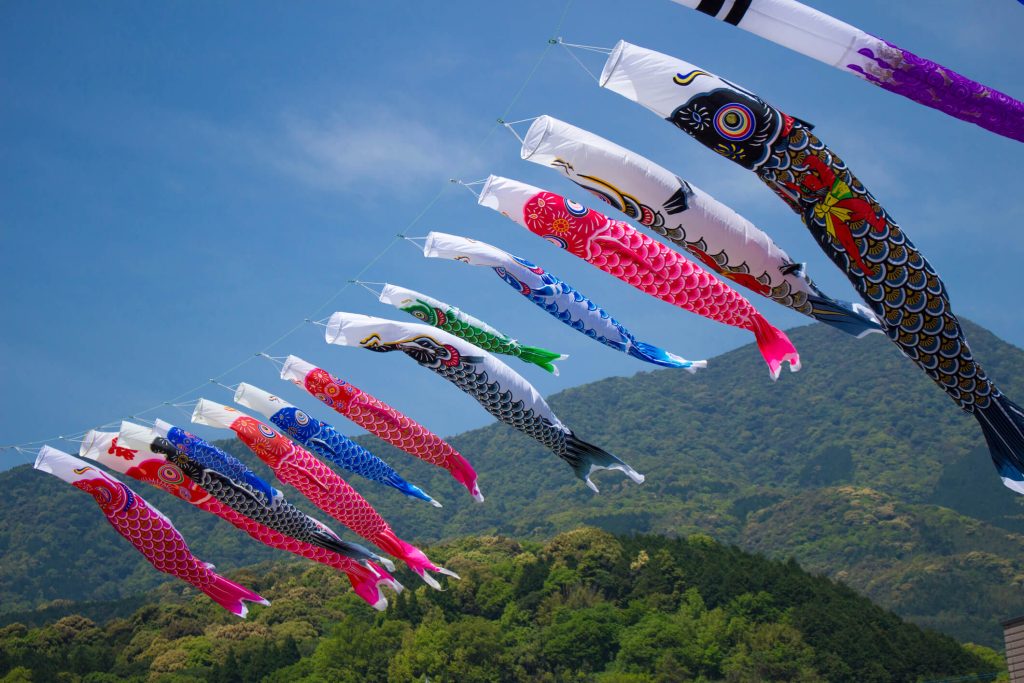
Walk through any Japanese town in early May and you’ll see giant fish flapping in the breeze. Strung over rivers, hanging off bridges, jutting from balconies. They’re not just decorations, they mean something.
This is Kodomo no Hi, Japan’s Children’s Day, held every year on 5th of May. The fish are koinobori, carp streamers, and they carry centuries of meaning about strength, perseverance, and parents quietly hoping their kids will turn out alright.
For many years, I had no idea what those flying fish were actually for. I would see them on every trip, take a few photos, and wonder vaguely why a country would hang fish from poles every spring. Then one year my son’s grandma in Japan gave him a tiny carp flag of his own, and that little gift sent me down a proper rabbit hole. Suddenly I noticed koinobori everywhere. I started learning what each colour meant, why families fly them, and the lovely old story behind it.
We’ve still got that little carp flag tucked away in a cupboard somewhere at home. Out at a mate’s place in Yamanashi, I’ve also helped raise proper full-sized koinobori up the flag pole on a Children’s Day morning, watching them catch the breeze and start “swimming” against the sky. It’s that kind of holiday. Quiet, family-focused, and a little bit magic once you understand what’s actually going on.
This guide covers what Children’s Day actually is, why the carp matter, where to see the best koinobori in 2026, what families eat, and whether it’s worth braving the Golden Week crowds as a tourist. Short answer to that last one: yes.
When is Children’s Day in Japan?
Children’s Day in Japan falls on 5 May every year. It’s a fixed-date public holiday, no rolling around.
A few quick things to know:
- It falls within Golden Week, Japan’s biggest holiday stretch
- In 2026, 5 May is a Tuesday, sitting in the middle of a four-day run of public holidays (3-6 May)
- Wednesday 6 May 2026 is also a public holiday in Japan, since Constitution Memorial Day (3 May) fell on a Sunday and the substitute day jumped to the next available weekday
- Most museums, parks, and family attractions stay open on Children’s Day. Government offices and some smaller shops shut
- Trains run on holiday timetables, which usually means more weekend-style services
If you want the full breakdown of how Children’s Day fits into Golden Week and what’s open or closed, my 2026 Public Holidays in Japan guide covers all 17 holidays in detail.
What is Kodomo no Hi? The Backstory
Children’s Day wasn’t always Children’s Day. For most of its history, it was something else entirely.
The festival’s roots go back to Tango no Sekku, one of five ancient seasonal festivals brought over from China and adopted by the Japanese imperial court. Originally celebrated on the fifth day of the fifth lunar month, it was a day to ward off illness and bad spirits. Practical stuff.
By the Edo period (1603-1868), samurai families had taken it over as Boys’ Day, displaying armour and banners outside their homes to celebrate sons being born and to wish them strength as future warriors. Daughters got their own day, Hinamatsuri on 3 March, with the doll displays.
Then in 1948, after the war, the Japanese government renamed Tango no Sekku to Kodomo no Hi (Children’s Day) and made it official: a day to celebrate the happiness of all children and to thank mothers. Boys, girls, the lot.
The samurai-era traditions stuck around, though. Most of what you see today, the carp streamers, the armour displays, the iris baths, all of it predates the modern holiday by hundreds of years. You’re basically watching Edo-period customs play out in 21st-century Tokyo.
Why the Carp Streamers (Koinobori)?
Here’s where it gets good. The carp streamers aren’t random. They come from a Chinese legend about a carp swimming up a waterfall and turning into a dragon at the top.
The idea is that life is hard, and only the determined fish makes it. Strong, persistent, doesn’t quit. Exactly what every parent wishes for their kid. So the carp became a symbol of perseverance, courage, and growing into something more than where you started.
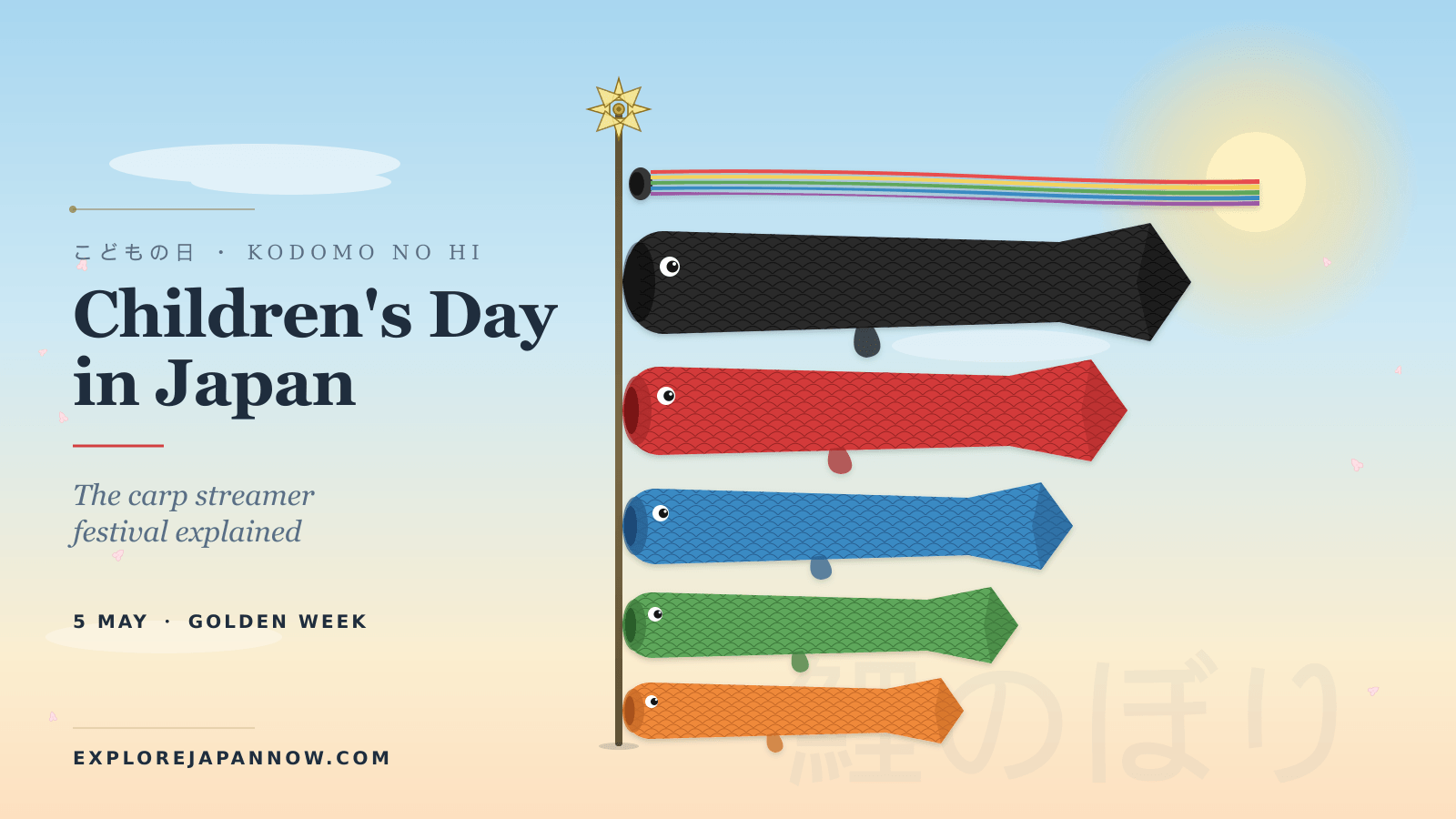
A traditional koinobori display is read from top to bottom like a family tree:
- Black carp (magoi) at the top: the dad
- Red or pink carp (higoi) below: the mum (originally this was the eldest son back in Boys’ Day times)
- Blue, green, orange, or purple carps below that: one for each child, in size order
Above the carps you’ll usually see a five-coloured streamer (gosiki fukinagashi) and a spinning vane at the very top. The whole arrangement is supposed to look like fish swimming upstream against the wind.
Watch them on a windy day and you’ll see why people love them. They genuinely look alive.
Best Places to See Koinobori in 2026
You’ll spot koinobori almost everywhere in late April and early May. But if you want the proper jaw-dropping displays, these are the spots worth planning around.
Tokyo Tower (333 koinobori)
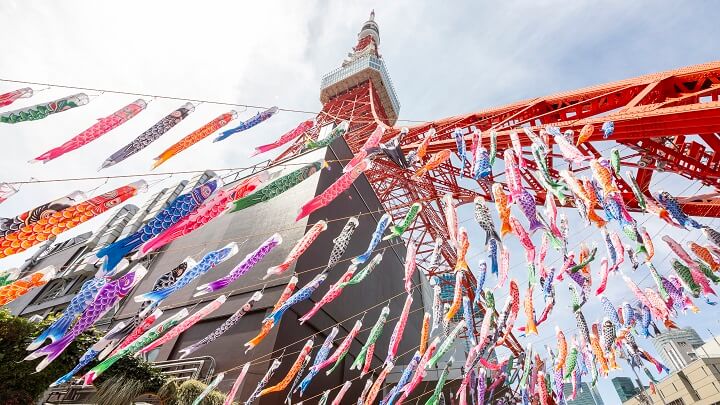
If you’re staying in Tokyo and only have time for one display, this is the easy answer.
- What: 333 carp streamers, matching Tokyo Tower’s exact height of 333 metres
- When: 18 March to 6 May 2026, displayed all day
- Where: First-floor main entrance, outdoors. Free to view from the ground
- The hidden detail: Look for a 6-metre Pacific saury streamer (sanmanobori) tucked among the carp. It’s there to honour the town of Ofunato in Iwate, which Tokyo Tower has supported since the 2011 tsunami
- New for 2026: Flying alongside the sanmanobori is a tairyobata (大漁旗, “great catch” fishing flag) featuring winning designs from a contest run with Ofunato kids. Lovely touch
- Bonus at night: The koinobori are lit up after dark, “swimming” against the illuminated tower. Photographers, this one is for you
- Official website – check for details
Tip: head up to the Main Deck for a bird’s-eye view of the carp from 150 metres above. Looking down at them is even better than looking up.
Tokyo Skytree Town (Solamachi)
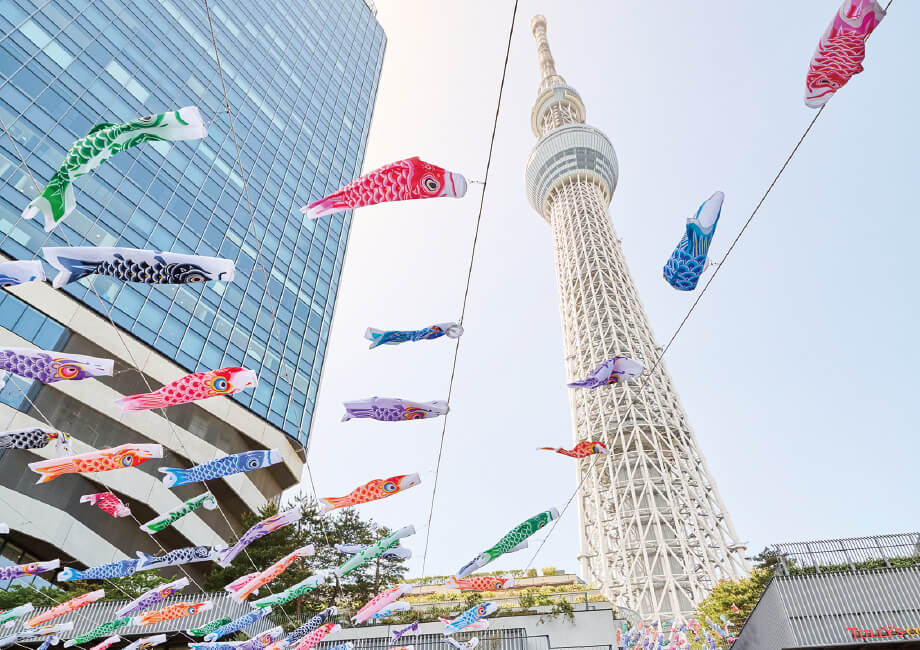
If your family’s already heading to Tokyo Skytree, sort yourself out a Children’s Day two-for-one and time it for the koinobori festival happening right there at the base. We’ve spent plenty of time around Solamachi on family trips and it’s perfect for kids: indoor and outdoor space, food everywhere, and now this.
- What: Around 1,000 carp streamers displayed across the Skytree Town complex, in cooperation with Kazo (Saitama), Tatebayashi (Gunma), and Kato (Hyogo) – three of Japan’s biggest koinobori-producing regions
- When: 10 April to 6 May 2026
- Where: Sky Arena and Solamachi Hiroba, plus various spots around Tokyo Skytree Town. Free to view
- Hidden detail: Sumida Aquarium have hung up a giant conger eel streamer (anago) and three friend-fish streamers among the koinobori. It’s a fun spot-the-difference game for kids. Look closely at displays and try to find them
- Bonus for foodies: Multiple restaurants and shops at Solamachi are running koinobori-themed menus and gifts during the festival period. Worth a wander if you’re already there
- Getting there: Tokyo Skytree Station (Tobu Skytree Line) or Oshiage Station (Asakusa/Hanzomon Lines)
This is the easiest pick if you’re already planning a Skytree visit with kids. You get the koinobori, the aquarium, the tower, the shopping and food, all in one afternoon.
Tokyo Tower or Tokyo Skytree? Both run koinobori festivals during Golden Week, but they're very different experiences as actual attractions. If you're trying to choose between visiting one or the other, my Tokyo Tower vs Tokyo Skytree comparison guide breaks down the differences (views, vibe, crowds, ticket prices, family-friendliness, and what's around each one) so you can pick the right one for your trip.Kodomonokuni (Yokohama)
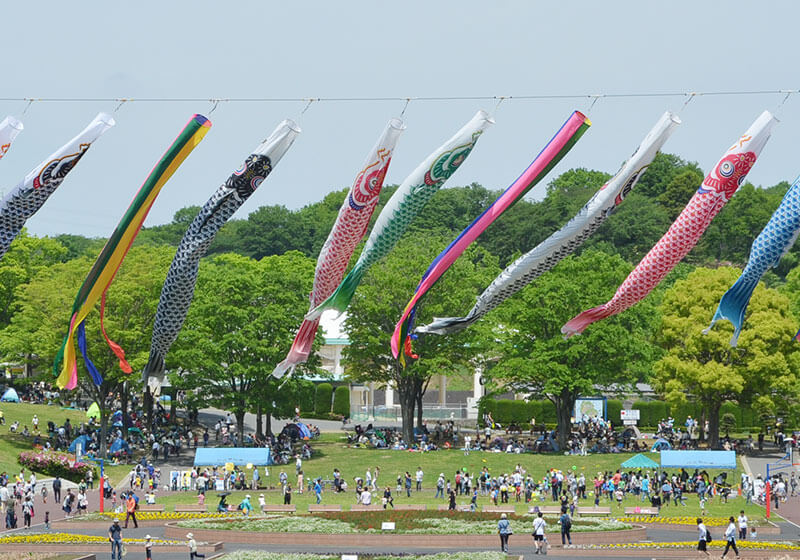
Here’s a lovely fact: Kodomonokuni (literally “Children’s Land”) opened on 5 May 1965, meaning the park itself shares a birthday with Children’s Day. In 2026, the park turns 61 on Kodomo no Hi.
It’s hands-down my pick for families based in Tokyo. Massive open green space, farm animals, playgrounds, rides, activities, and a Spring koinobori display that kids can wander right under.
- What: Spring koinobori display across the park, plus farm animals, a 115m roller slide, pedal boats, and 240 acres of running-around space
- Where: Yokohama, ~1 hour from Shibuya via the Kodomonokuni Line from Nagatsuta Station
- Cost: ¥800 adult, ¥300 elementary/junior high, ¥200 ages 3-5 (prices increased 1 April 2026)
- Heads up: Closed every Wednesday unless it’s a public holiday. 5 May 2026 falls on a Tuesday so you’re fine, but worth noting if you’re planning around it
- Special events: The park usually runs Children’s Day-themed events around 5 May. Check the official Kodomonokuni event calendar before you go
For the full breakdown of what to do at Kodomonokuni, including the cow milking, the brutal pedal boats, and the Wednesday closure I learned about the hard way, check my detailed guide: Kodomonokuni: The Best Family Day Out Near Tokyo (2026 Guide).
Tatebayashi Koinobori Festival (Gunma)
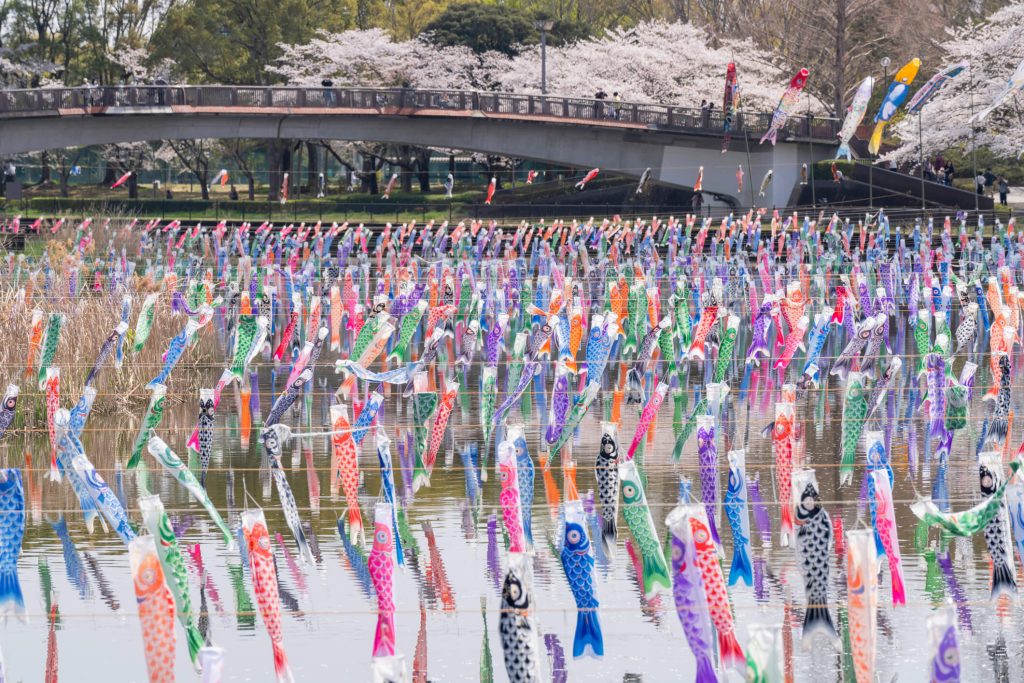
This is the one if you’re up for a day trip to the countryside (why not?!). Tatebayashi holds the Guinness World Record for the most koinobori displayed in one place (5,283 set in 2005), and they still fly over 4,000 streamers along the Tsuruuda River every year.
- What: 4,000+ carp streamers across five spots along the river
- When: Late March to early May
- Where: Tatebayashi City, about an hour from central Tokyo on the Tobu Isesaki Line
- Bonus: It’s one of the only festivals in Japan where you can catch koinobori and cherry blossoms together (depending on year and timing)
Kazo Koinobori Festival (Saitama)
Kazo is home to the world’s largest koinobori, full stop. We’re talking a single carp streamer that’s 100 metres long, hoisted into the air by a crane.
- What: The giant koinobori plus hundreds of smaller streamers
- When: Around 3 May (the giant one is only flown on certain days, weather permitting)
- Where: Tonegawa Riverside Green Space Park, Kazo City
- Getting there: About 1 hour 20 minutes from Tokyo, via Ueno Station to Kuki, then Tobu-Isesaki Line to Kazo
Worth checking the festival’s official social media before you go. The giant carp doesn’t fly if winds are too strong or too weak. Bit of a diva, that one.
Takatsuki Koinobori Festa 1000 (Osaka)
If you’re based in Kansai, this is your spot. Takatsuki sits roughly halfway between Osaka and Kyoto, so it’s an easy detour from either.
- What: Over 1,000 carp streamers above the Akutagawa River
- Where: Akutagawa Sakurazutumi Park, Takatsuki
- Getting there: 10-20 minutes by train from Osaka or Kyoto on the Tokaido-Sanyo Line, then a 20-minute walk or short taxi from Takatsuki Station
- Vibe: Family-friendly, food stalls, drum and dance performances on weekends
Ryujin Suspension Bridge (Ibaraki)
This one is for the photographers. The Ryujin Bridge spans 375 metres across a deep gorge in Ibaraki, and during koinobori season they string roughly 1,000 streamers across the bridge’s length.
- What: ~1,000 carp streamers running the length of the bridge
- When: Mid-April to mid-May
- Where: Hitachi-Ota City, Ibaraki Prefecture
- Free entry on 5 May: Junior high school students and younger cross free on Children’s Day. Normal fee is ¥320 for adults
- Getting there: 40-minute bus from Hitachi-Ota Station on the JR Suigun Line
The bridge has a glass viewing window in the middle that drops 100 metres down to the lake below. Not ideal if you don’t love heights, but the photo is worth it.
Foods Eaten on Children’s Day
Two traditional foods turn up everywhere on Kodomo no Hi:
- Kashiwa mochi: A sweet rice cake filled with red bean paste, wrapped in an oak leaf. The oak leaf is the symbolic bit. Oak trees don’t drop their old leaves until the new ones grow in, which makes them a metaphor for unbroken family lineage. Heavy stuff for a snack. I love kashiwa mochi, while my son won”t touch them again (he’s tried twice).
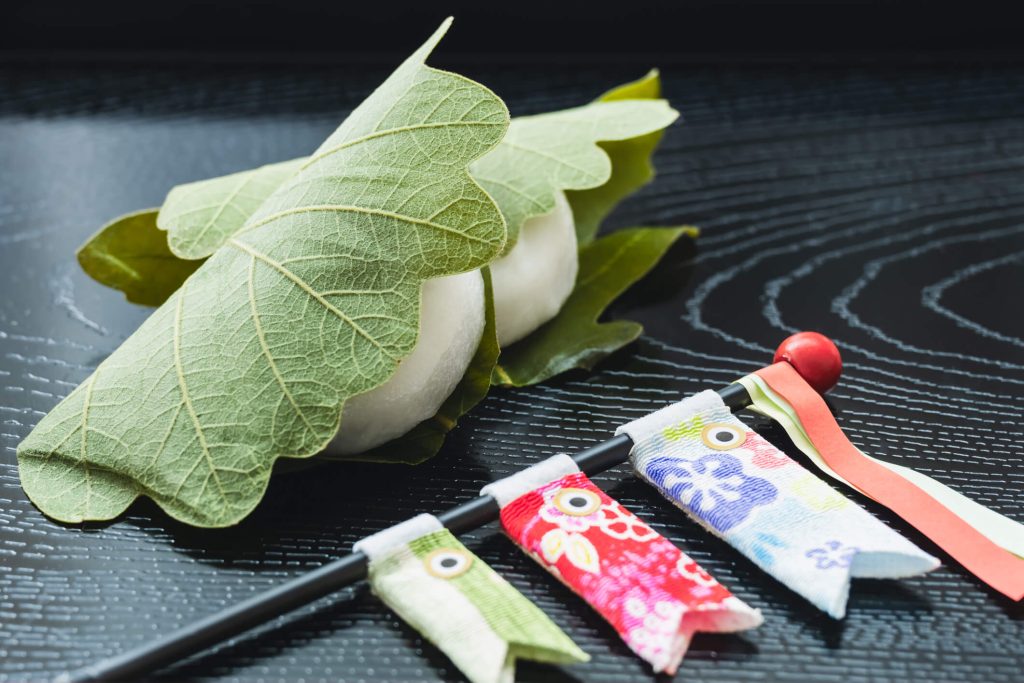
- Chimaki: Sweet steamed rice wrapped in bamboo or iris leaves. More common in western Japan (Kansai). Tied with string in a long, conical shape
Where to find them as a tourist:
- Department store basements (depachika) like Isetan, Takashimaya, or Mitsukoshi will have proper traditional versions in the lead-up to 5 May
- Convenience stores (especially Lawson and 7-Eleven) sell mass-produced versions from late April. Not as nice but cheap and everywhere
- Wagashi (traditional sweet) shops are the gold standard if you can find one near you
Grab one each so you can compare. The kashiwa mochi is the more accessible flavour for first-timers.
Other Children’s Day Traditions
Beyond the koinobori, families also do:
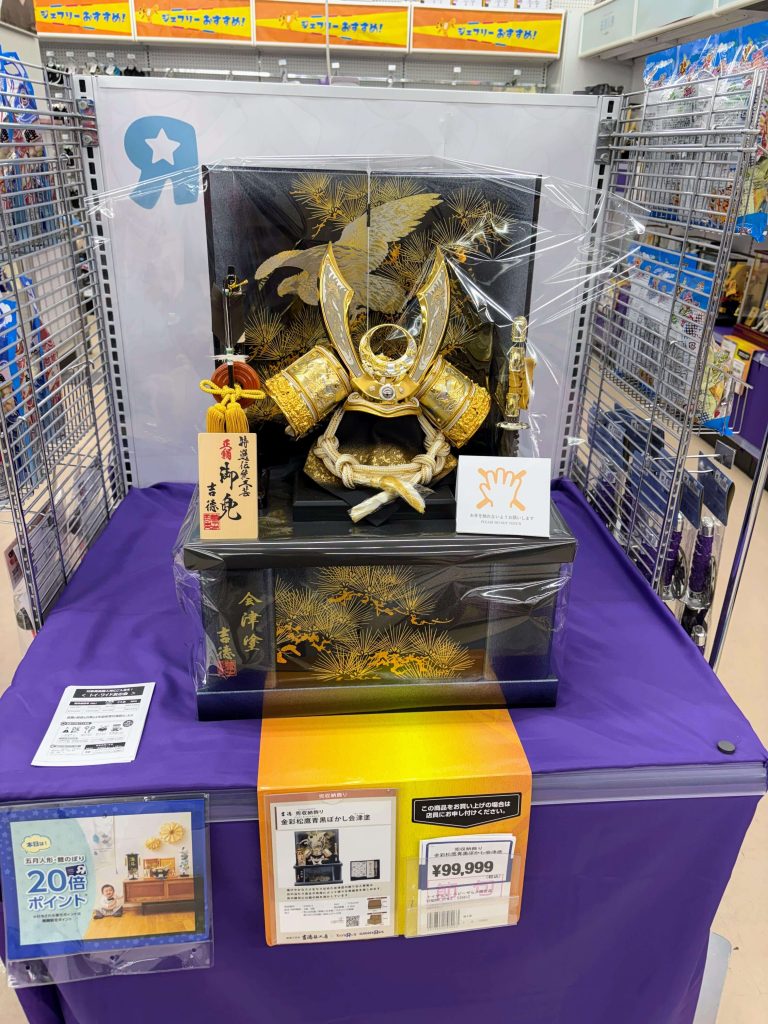
- Gogatsu Ningyo (May dolls): Miniature samurai armour and helmets displayed inside the home, usually on a low platform. The idea is the same as the koinobori, strong sons and protected children. Many families pass them down through generations
- Armour displays as souvenirs: These also make brilliant gifts and souvenirs to take home from Japan, but the price range is wild. Proper full-size handcrafted sets from established artisans can run well over ¥200,000 (we’re talking heirloom pieces). At the other end, you can pick up miniature paper or card versions for as little as ¥1,000 at department store seasonal sections, traditional craft shops, or even bigger souvenir stores. Both ends of the scale get displayed in real Japanese homes, so don’t feel you need to spend big to take home something authentic
- Shobu-yu (iris baths): Bathing with iris leaves floating in the hot water. Iris leaves are sword-shaped, and the word “shobu” sounds like the word for martial spirit. Some onsens and sento offer special shobu-yu baths on 5 May. Worth seeking out if you’re in Japan that day
- Family photos: Lots of formal family photos taken in front of the koinobori. If you see a Japanese family setting up for a photo near a display, don’t crowd them. Wait your turn
If you want a deeper dive into how the samurai connection links to other Japanese seasonal festivals, my Setsubun: The Day We Throw Beans at Demons guide covers another quirky one worth knowing about.
Things to Do With Kids on Children’s Day in Tokyo
If you’re travelling with kids, 5 May is basically Tokyo’s gift to family travellers. Loads of museums and attractions offer:
- Free or discounted entry for children at many municipal museums and gardens (varies by venue, check before going)
- Special events at theme parks: Tokyo Disney Resort and Universal Studios Japan run Children’s Day-themed parades and decorations
- Park picnics under the koinobori: Yoyogi Park and Showa Memorial Park usually have small displays. Bring a tarp, grab food from a konbini, and you’ve got the most Japanese afternoon possible
- Hands-on koinobori workshops: Some museums and community centres run drop-in craft sessions where kids can make a paper carp to take home
For more detailed Tokyo-with-kids planning, my Things to Do in Tokyo with Kids guide breaks down family-friendly itineraries by age and area.
Is It a Good Day to Travel as a Tourist?
Yes, of course.
The good:
- Atmosphere is brilliant. Families are out, the weather is usually mild, koinobori are everywhere
- Lots of family attractions go all out with special events
- The cultural experience is hard to fake. You won’t see this anywhere else
The not-so-good:
- It’s the final day of Golden Week, so domestic tourism is at its peak
- Trains, especially shinkansen, get booked out weeks in advance
- Big festival sites get crowded by mid-morning
- Hotel prices are at their highest point of the year
Best time of day to visit displays:
- Tatebayashi, Kazo, Ryujin: First thing in the morning. Crowds build by 10am, peak from late morning through early afternoon
- Tokyo Tower: Late afternoon, around 4-5pm. Lighting is gorgeous and crowds thin out
- Avoid the middle of the day at any major spot if you can help it
Your Frequently Asked Questions Answered
What is Children’s Day in Japan called?
Children’s Day is called Kodomo no Hi (こどもの日) in Japanese. Its older name was Tango no Sekku, which referred to the original Boys’ Day festival before it was rebranded for all children in 1948.
Why do they fly fish flags in Japan?
The fish flags, or koinobori, represent carp swimming upstream. According to a Chinese legend, a carp that successfully swims up a waterfall transforms into a dragon. Families fly them to wish their children the strength and persistence to overcome obstacles in life.
What do Japanese eat on Children’s Day?
The two traditional foods are kashiwa mochi (sweet rice cake filled with red bean paste, wrapped in an oak leaf) and chimaki (sweet steamed rice wrapped in bamboo or iris leaves). Kashiwa mochi is more common in eastern Japan, chimaki in western Japan.
Is Children’s Day a public holiday in Japan?
Yes. Children’s Day is a national public holiday and the final day of Golden Week. Government offices and many businesses are closed, but shops, restaurants, museums, and tourist attractions generally stay open.
Where can I see koinobori in Tokyo?
The biggest Tokyo display is at Tokyo Tower (333 streamers, 18 March to 6 May 2026). Tokyo Skytree Town runs its own Koinobori Festival from 10 April to 6 May 2026 with around 1,000 streamers across the complex. For a smaller, picnic-friendly display, head to Yoyogi Park or Showa Memorial Park in early May.
Travelling with kids during Golden Week? Check our Things to Do in Tokyo with Kids guide for full family itinerary ideas.