Last Updated on December 9, 2025 by Vlad
Looking for the best places to see snow in Japan? You’re in for a treat. Japan gets absolutely hammered with snow – we’re talking 10-15 metres per season in many areas, creating some of the world’s best powder skiing and most stunning winter landscapes.
From riding the lifts in Hakuba, to soaking in outdoor hot springs while snow falls around me in Yamagata. There’s something genuinely special about Japanese winter that goes beyond just the skiing – though the skiing is world-class even for beginners like myself.
This guide covers where to see snow in Japan based on what you’re actually after. Want guaranteed deep powder for skiing? I’ll point you to the right resorts. Travelling with young kids who’ve never seen snow? I’ve got easy day trips from Tokyo sorted. After cultural experiences like snow-covered temples or those famous bathing monkeys? That’s here too.
Let’s get into it.
📚 WINTER IN JAPAN RESOURCES
Planning a winter trip? Check out my complete winter guides:
- Winter in Japan with Kids – Everything you need to know for family winter travel
- What to Wear in Japan in Winter – Complete packing guide so you don’t freeze
- Visiting Tokyo in Winter – Your complete Tokyo winter guide
JUMP TO: Snow Destinations Overview | For Epic Skiing | For Snow Monsters & Villages | For Families & Day Trips | Snow Monkeys | Around Osaka/Kyoto | Interactive Map | How to Choose | FAQs
Quick Planning Guide
- Best time to visit: December through early March (peak snow is usually January-February)
- What to pack: Proper winter gear – thermal layers, waterproof jacket, insulated boots (full details in our winter packing guide)
- Getting around: Japan Rail Pass is your best mate for snow-hopping between regions – use our JR Pass Calculator to work out if it’s worth it for your trip
- Snow Guarantee: For guaranteed deep snow, head to the Japanese Alps (Niigata/Nagano prefectures) or Hokkaido. Snow in Kyoto or around Tokyo is a lucky bonus, not something to plan around or expect
- Family tip: Many ski resorts have excellent kids’ programs and gear rental – check our detailed winter travel with kids guide for everything you need to know
Best Snow Destinations in Japan: Quick Comparison
Here’s a quick overview of the best places to see snow in Japan to help you choose
For Epic Skiing: World-Class Powder & Resort Variety
Niseko (Hokkaido)
🎿 NISEKO AT A GLANCE
Best For: Deep powder skiing, English-speaking environment, families wanting resort amenities, Australians after easy access
Skip If: You want authentic Japanese atmosphere, you’re on a tight budget, you prefer avoiding Aussie tourist crowds
Snow Guarantee: Very High (15m+ average annual snowfall)
Pro Tip: Book accommodation 6+ months ahead for peak season (January-February). Prices have skyrocketed due to international popularity.
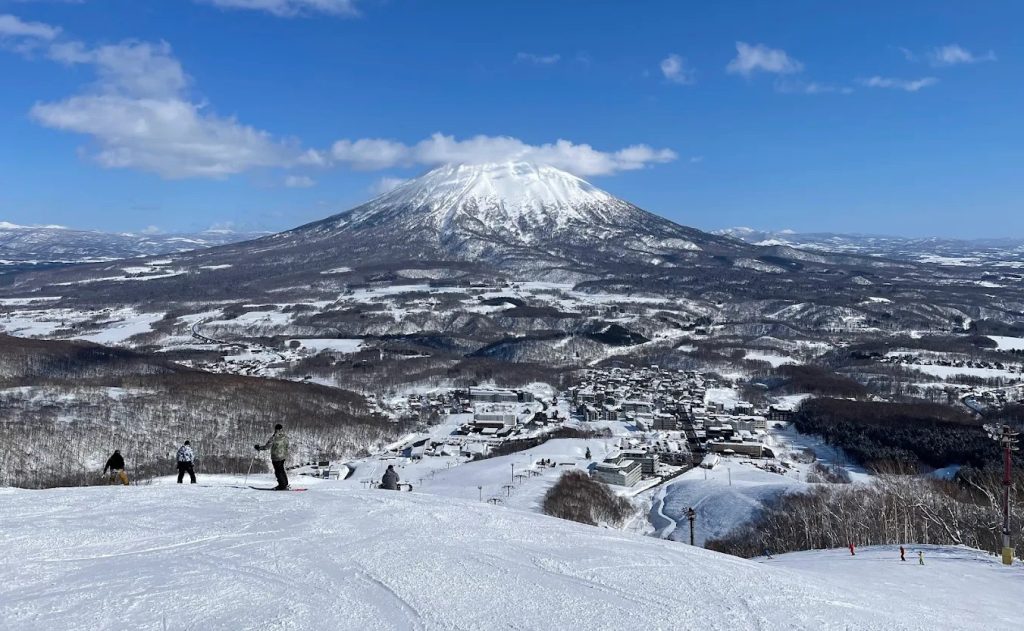
This is where every Aussie and their dog goes for powder skiing, and for good reason – the snow here is ridiculous. Light, fluffy, deep powder that just keeps coming.
Why Aussies love it:
- World-class powder snow that’s light and dry
- English everywhere (sometimes too much – it can feel like you’re in Jindabyne)
- Great for families with excellent ski schools
- Qantas runs seasonal flights from Sydney to Sapporo, making it easier to reach
Practical details:
- Getting there: Fly to Sapporo (Qantas seasonal flights from Sydney), then bus to Niseko (2-3 hours)
- Cost: Lift passes ¥6,000-8,000/day (pricier than other resorts)
- Accommodation: Everything from budget hostels to luxury ski-in/ski-out properties
Honest assessment: It’s brilliant for skiing, but if you want authentic Japan, you’ll need to venture beyond the resort. Too many English menus and Aussie accents for my taste.
Hakuba Valley (Nagano Prefecture)
🎿 HAKUBA VALLEY AT A GLANCE
Best For: Multiple resort options, reliable powder, Olympic-level facilities, families, English support
Skip If: You want a quiet weekend escape (gets mobbed on Saturdays/Sundays)
Snow Guarantee: Very High (11m+ average annual snowfall)
Pro Tip: Visit midweek to avoid Tokyo weekend crowds. The village atmosphere is far better when it’s not packed.
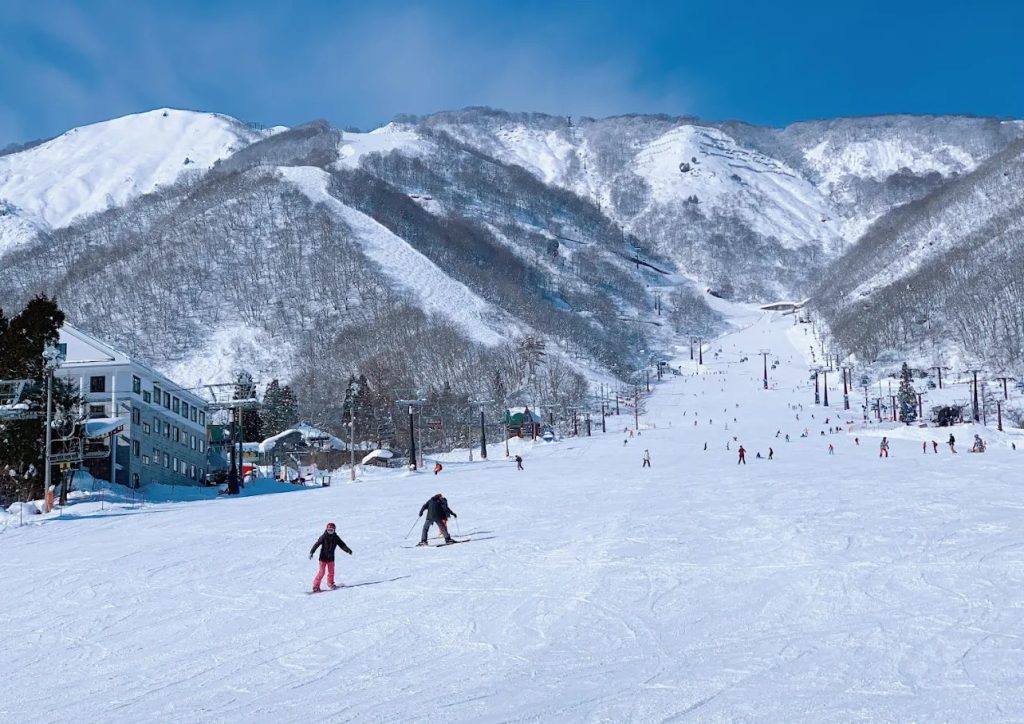
This is where you go when you want guaranteed snow and lots of it. Hakuba hosted the 1998 Winter Olympics, so they know what they’re doing.
Why I love it:
- Multiple ski resorts in one valley – you can try different slopes each day
- English-speaking staff at most resorts (leftovers from the Olympics)
- The village has that proper ski town vibe with excellent ramen shops
- Kids’ ski schools are top-notch (if you can get in!)
- Beats Niseko for me, always
Practical details:
- Getting there: 4-5 hours from Tokyo via train & bus (Hokuriku Shinkansen to Nagano, then local bus)
- Cost: Lift passes around ¥5,000-6,000/day; gear rental ¥4,000-6,000
- Where to stay: Hakuba Village has everything from budget hostels to fancy ski lodges
My take: My personal favourite place to see snow in Japan. Play, ski, snowboard, you name it. But, sitting in an outdoor onsen, watching the sunshine turn the peaks of North Alps into pink and orange colours keeps me coming back.
Shiga Kogen (Nagano Prefecture)
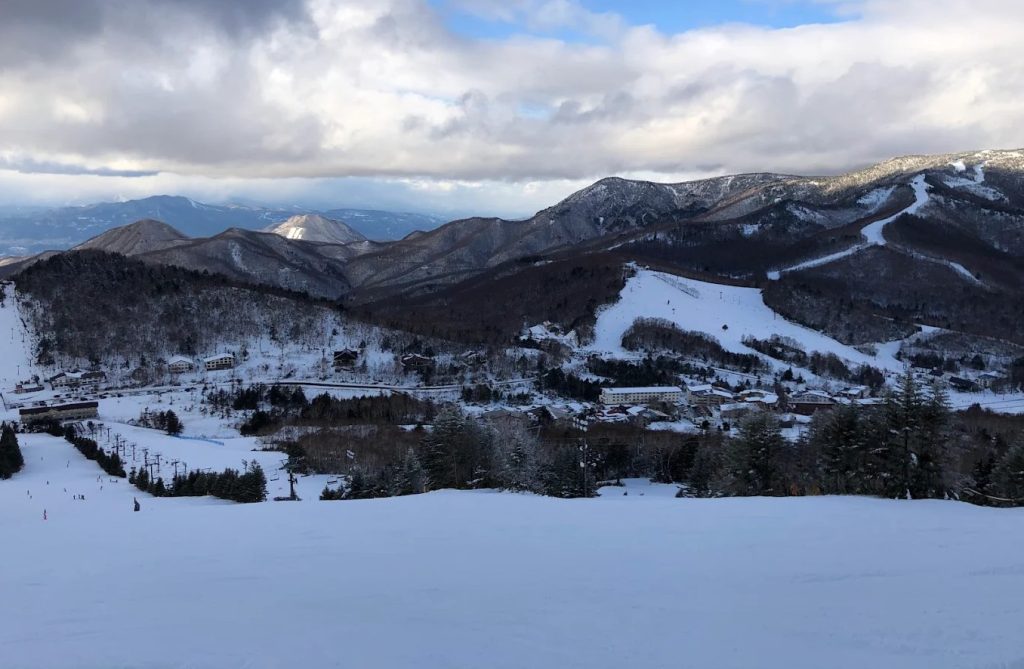
🎿 SHIGA KOGEN AT A GLANCE
Best For: Serious skiers wanting variety, value for money (one pass for 18 resorts!), high-altitude snow quality
Skip If: You only have 1-2 days (it’s too big to properly explore), you’re a beginner (some areas are quite challenging)
Snow Guarantee: Very High (high elevation maintains quality all season)
Pro Tip: Download the Shiga Kogen trail map app. With 18 resorts, you need navigation help or you’ll waste time getting lost.
If you want options, this is your spot. Shiga Kogen is Japan’s largest ski resort area with 18 interconnected ski areas and a massive 80+ lifts across the region.
Why it’s brilliant:
- One lift pass covers all 18 areas – incredible value
- Sits at higher altitude (1,300-2,300m) so snow quality stays excellent all season
- Less crowded than Hakuba on weekends
- Hosted several 1998 Olympics events, so facilities are top-notch
Practical details:
- Getting there: Bus from Nagano Station (about 70 mins, ¥1,500 one-way)
- Cost: Day pass around ¥6,000 (incredible value for 18 resorts)
- Best for: Intermediate to advanced skiers who want variety
My take: This place is huge. Like, properly massive. If you’re only going for a day or two, pick a few connected areas and stick to those, or you’ll spend all your time on buses between resorts.
Myoko Kogen (Niigata Prefecture)
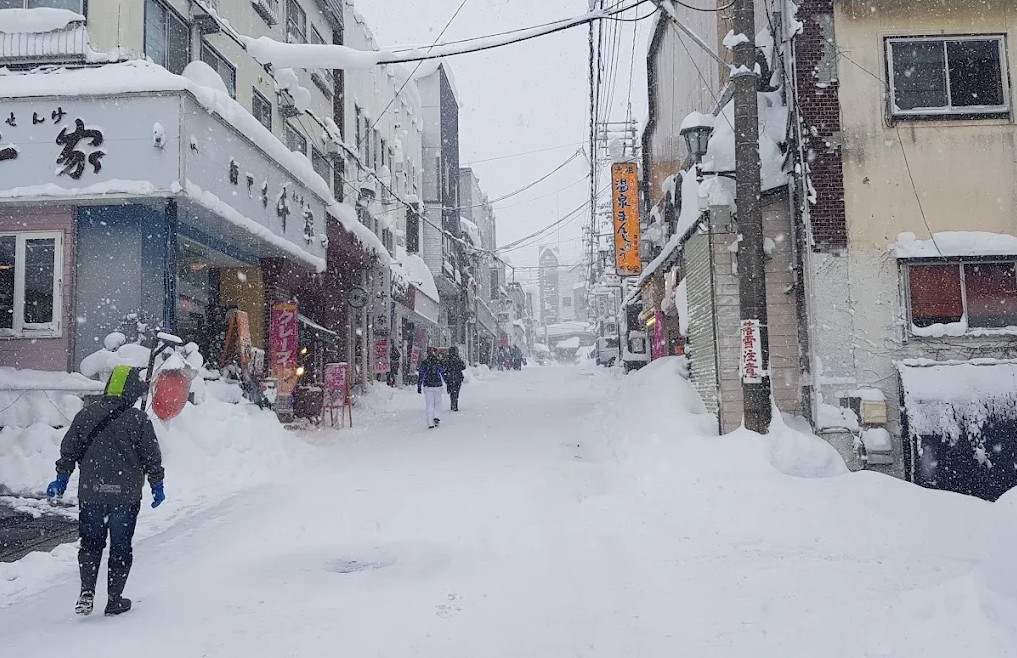
🎿 MYOKO KOGEN AT A GLANCE
Best For: Easy access from Tokyo, authentic Japanese ski town feel, excellent onsen, avoiding international crowds
Skip If: You need English signage everywhere, you want the biggest resort infrastructure
Snow Guarantee: Very High (13m+ annual snowfall – it’s in Japan’s second snowiest prefecture)
Pro Tip: Stay at a ryokan with private onsen. After skiing, soaking in milky hot spring water while watching snow fall is unforgettable.
Here’s a gem that doesn’t get enough love from international visitors. Myoko Kogen is only 2.5 hours from Tokyo and gets dumped on with snow thanks to being in Niigata Prefecture.
Why it works:
- Super accessible from Tokyo (much closer than Hakuba)
- Multiple resorts in the area with different vibes
- Gets absolutely hammered with snow – we’re talking 13+ metres per season
- Still feels authentically Japanese (not overrun with tourists yet)
Practical details:
- Getting there: Hokuriku Shinkansen to Joetsu-Myoko Station, then bus (total about 2.5 hours from Tokyo)
- Cost: Lift passes ¥4,500-5,500/day depending on resort
- Accommodation: Mix of ski lodges, ryokan, and pensions
Nozawa Onsen (Nagano Prefecture)
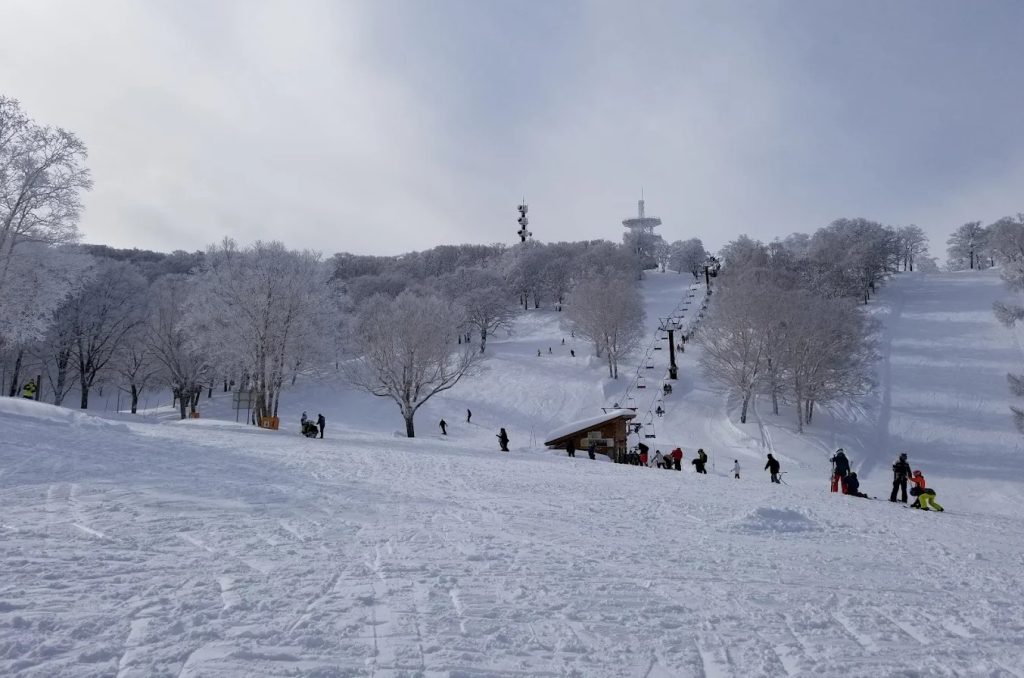
🎿 NOZAWA ONSEN AT A GLANCE
Best For: Beginner/intermediate skiers, traditional village atmosphere, onsen culture, families
Skip If: You’re an expert skier needing challenging terrain, you want modern resort facilities
Snow Guarantee: High (reliable snowfall all season)
Pro Tip: If you visit in mid-January, you can catch the Dosojin Fire Festival – it’s absolutely wild watching locals in loincloths running through fire in the snow.
Nozawa Onsen is one of those places that perfectly balances skiing with traditional Japanese culture. The village has been a hot spring resort for over 700 years, and you can feel that history in the narrow streets and public bathhouses.
Why it’s great:
- Excellent for beginners and families – gentle slopes with good ski schools
- Traditional onsen village at the base with 13 free public bathhouses
- Much more “real Japan” than international ski resorts
- The village is walkable and charming
Practical details:
- Getting there: Hokuriku Shinkansen to Iiyama, then bus (about 3 hours total from Tokyo)
- Cost: Lift passes around ¥5,000/day
- Accommodation: Mix of traditional ryokan and ski lodges
My experience: We stayed in a family-run ryokan where the grandmother showed me how to use the village’s public bathhouses properly. That authentic cultural immersion while being steps from the slopes? That’s what makes Nozawa special.
For Snow Monsters & Traditional Villages: Fairy-Tale Scenery
Zao Onsen (Yamagata Prefecture)
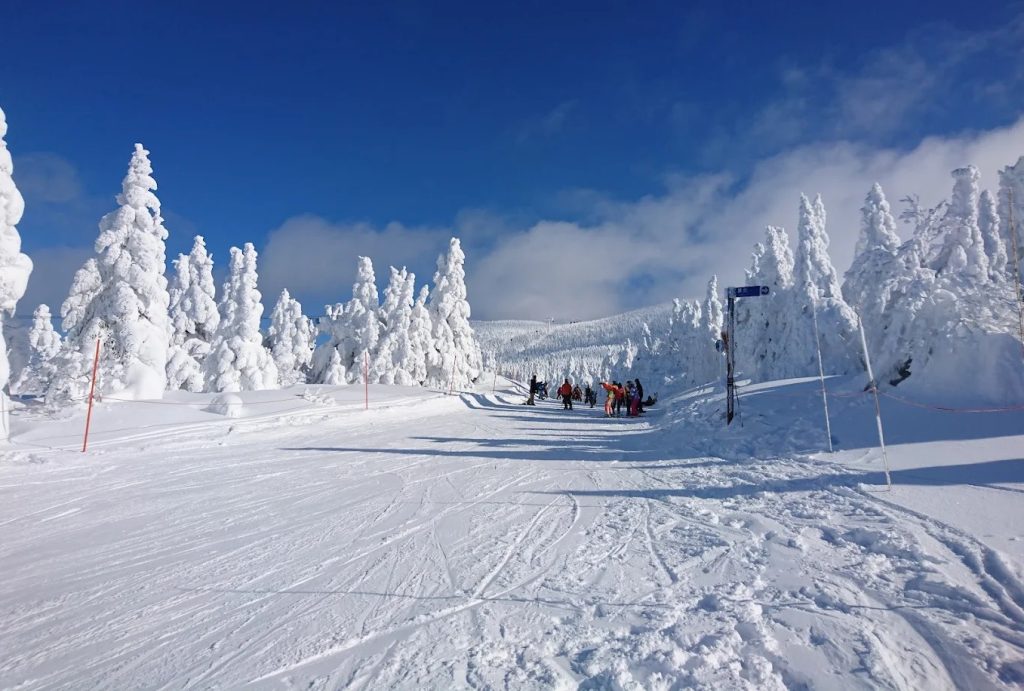
❄️ ZAO ONSEN AT A GLANCE
Best For: Unique “snow monster” phenomenon, excellent onsen, photographers, couples, those wanting something different
Skip If: You’re mainly after skiing (it’s more about the scenery), you have mobility issues (ropeway and paths can be challenging in heavy snow)
Snow Guarantee: Extreme (Yamagata is Japan’s snowiest prefecture)
Pro Tip: Book the night illumination of the juhyo. The lit-up snow monsters create an absolutely surreal landscape that’s worth the cold.
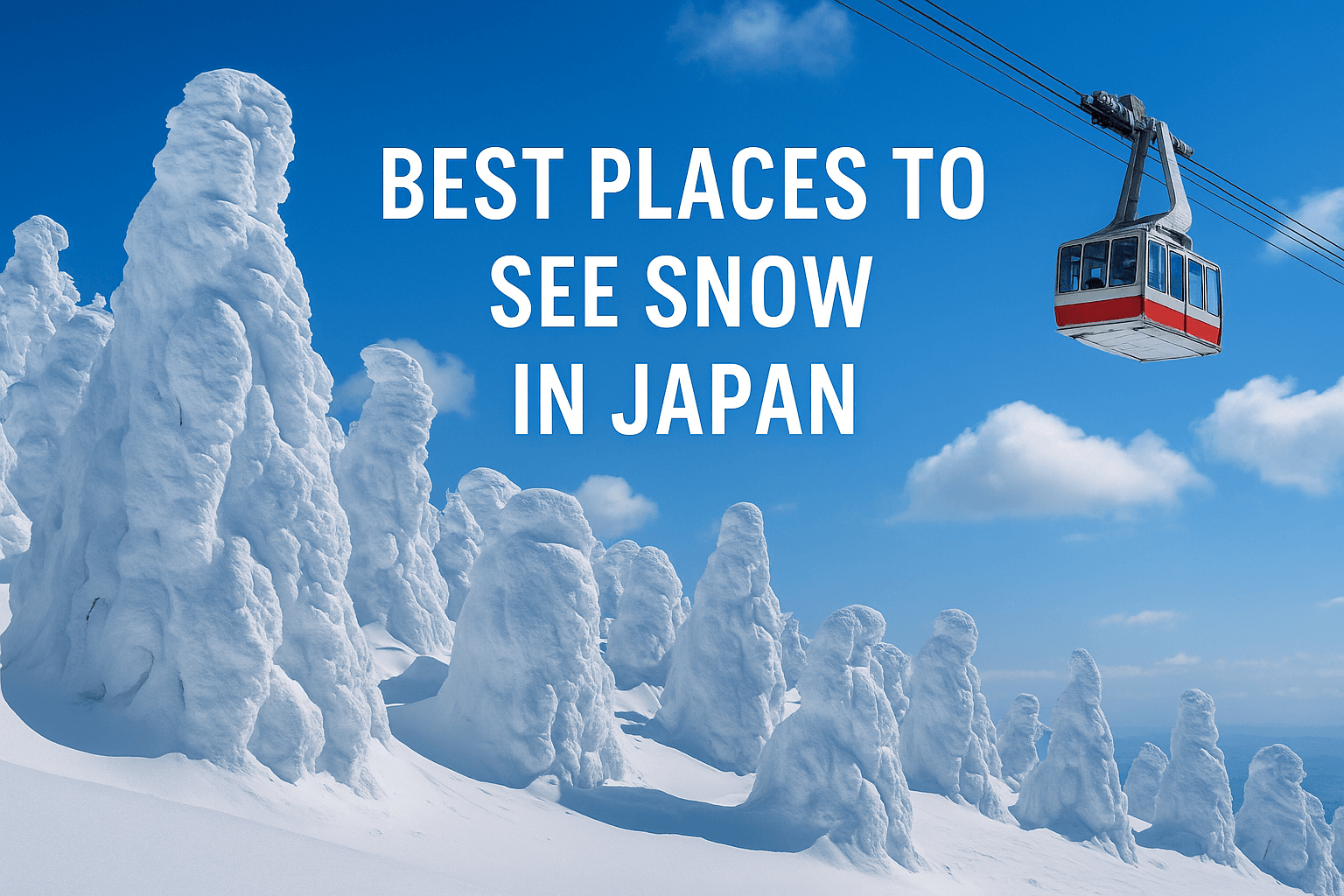
Come here for the “snow monsters” (juhyo) – trees covered in so much snow and ice they look like frozen creatures. It’s genuinely bizarre and beautiful. Yamagata is actually Japan’s snowiest prefecture, so they really know their winter stuff here.
Why it’s unique:
- The juhyo phenomenon only happens here and a few other places in the world
- Excellent onsen town at the base
- Far fewer foreign tourists than Hokkaido
- Night illuminations of the snow monsters are otherworldly
Practical details:
- Getting there: Train to Yamagata, then bus to Zao Onsen (about 40 mins)
- Cost: Ropeway to see snow monsters ¥3,000 return
- Best time: Late January to early March for peak juhyo formation
My recommendation: Stay overnight in one of the onsen ryokan. Soaking in an outdoor hot spring while it’s snowing is an experience you won’t ever forget.
Kusatsu Onsen (Gunma Prefecture)

♨️ KUSATSU ONSEN AT A GLANCE
Best For: Onsen lovers, non-skiers wanting snow scenery, couples, those wanting relaxation over activities
Skip If: You want skiing (there’s a small resort nearby but it’s not the main draw), you’re travelling with energetic kids needing activities
Snow Guarantee: High (reliable snow December-March)
Pro Tip: Visit the Yubatake (hot water field) at night when it’s snowing. The steam rising through the snow with the traditional wooden channels lit up is magical.
Kusatsu is one of Japan’s most famous onsen towns, and experiencing it in winter with snow falling while you’re in steaming outdoor baths is absolutely brilliant. This is where to go when you want snow without the skiing commitment.
Why it’s special:
- One of Japan’s best onsen towns (the water quality here is legendary)
- The Yubatake (hot water field) in the town centre is stunning with snow
- Traditional yumomi (hot water stirring) performances
- Free public footbaths around town
- Proper Japanese mountain town atmosphere
Practical details:
- Getting there: Train to Naganohara-Kusatsuguchi, then bus (about 3 hours from Tokyo)
- Cost: Most ryokan include onsen access; day-use onsen from ¥500-2,000
- Accommodation: Lots of traditional ryokan, many with private onsen
What to do:
- Walk around the Yubatake when it’s snowing (seriously gorgeous)
- Try the free public bathhouses (they’re HOT – locals style)
- Take the ropeway up Shirane Mountain when weather permits
- Just… relax. That’s the whole point.
Takayama & Shirakawa-go (Gifu/Toyama Prefecture)
🏘️ SHIRAKAWA-GO AT A GLANCE
Best For: Traditional architecture, cultural experience with snow, photographers, non-skiers, couples
Skip If: You’re mainly interested in skiing, you need guaranteed heavy snow (it gets snow but not metres of it)
Snow Guarantee: Moderate to High (reliable but not extreme)
Pro Tip: The night illumination events in Shirakawa-go (January-February) book out months in advance. If you miss out, visit on a regular snowy day – it’s still magical without the crowds.
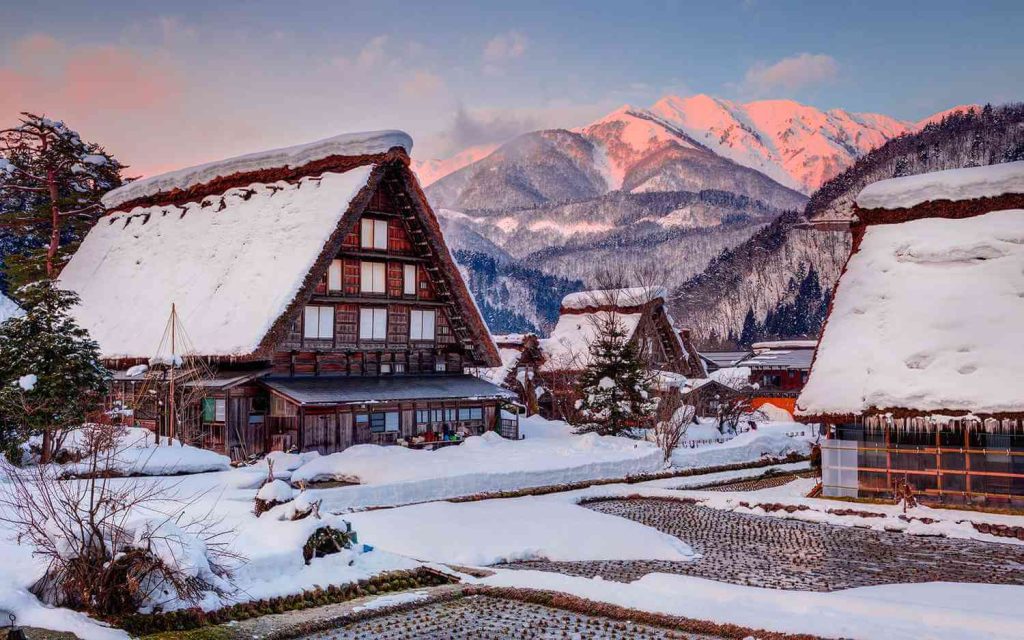
If skiing isn’t your thing but you want that Christmas card snow scene, this is your spot. Shirakawa-go’s thatched-roof farmhouses covered in snow are genuinely stunning.
Why it’s special:
- Traditional villages that look like they’ve time-travelled from the Edo period
- The gassho-zukuri houses (those steep thatched roofs) are built specifically to handle heavy snow
- Much less touristy than Kyoto in winter
- The onsen experience in snow is next level
Practical details:
- Getting there: Bus from Takayama to Shirakawa-go (about 50 mins, ¥2,600 one-way)
- Cost: Village entry is free; museum entry ¥300-600
- Best time: January-February for reliable snow coverage
Sapporo Snow Festival (Early February)
🎪 SAPPORO SNOW FESTIVAL AT A GLANCE
Best For: Families, photographers, those wanting spectacle over solitude, combining city exploration with snow
Skip If: You hate crowds, you want outdoor activities beyond looking at sculptures
Snow Guarantee: N/A (it’s a city festival, not a ski destination)
Pro Tip: Accommodation books out 6+ months ahead. If Sapporo is full, stay in Otaru (30 mins away) – it’s charming and has its own snow light path event.
If you’re not into skiing but want to see insane snow sculptures, this is a must. The Sapporo Snow Festival is one of Japan’s biggest winter events.
What to expect:
- Massive snow and ice sculptures (we’re talking 15+ metres tall)
- Three main sites across the city
- Goes for about a week in early February
- Completely free to attend
Practical details:
- Getting there: Sapporo is well connected by air and train
- What to wear: It’s COLD. We’re talking -5°C to -10°C most days
Best Snow Destinations for Families: Easy Day Trips & Kids’ Paradise
If you’re travelling with kids (or just want to experience snow without committing to full-on skiing), these spots are perfect. For complete details on managing winter travel with children, check out our comprehensive guide to winter in Japan with kids.
Family Snow Parks Comparison
Fujiyama Snow Resort Yeti (Shizuoka)
⛷️ SNOW TOWN YETI AT A GLANCE
Best For: First-time snow experience, young children (toddlers to 8 years), families who don’t ski, short day trips
Skip If: You want natural snow only (uses artificial snow), you want extensive facilities, older kids who’ll get bored quickly
Snow Guarantee: High (artificial snow October-April)
Pro Tip: Bring your own sleds if you have them – rental lines can be long on weekends. Also, pack extra gloves; they get wet fast.
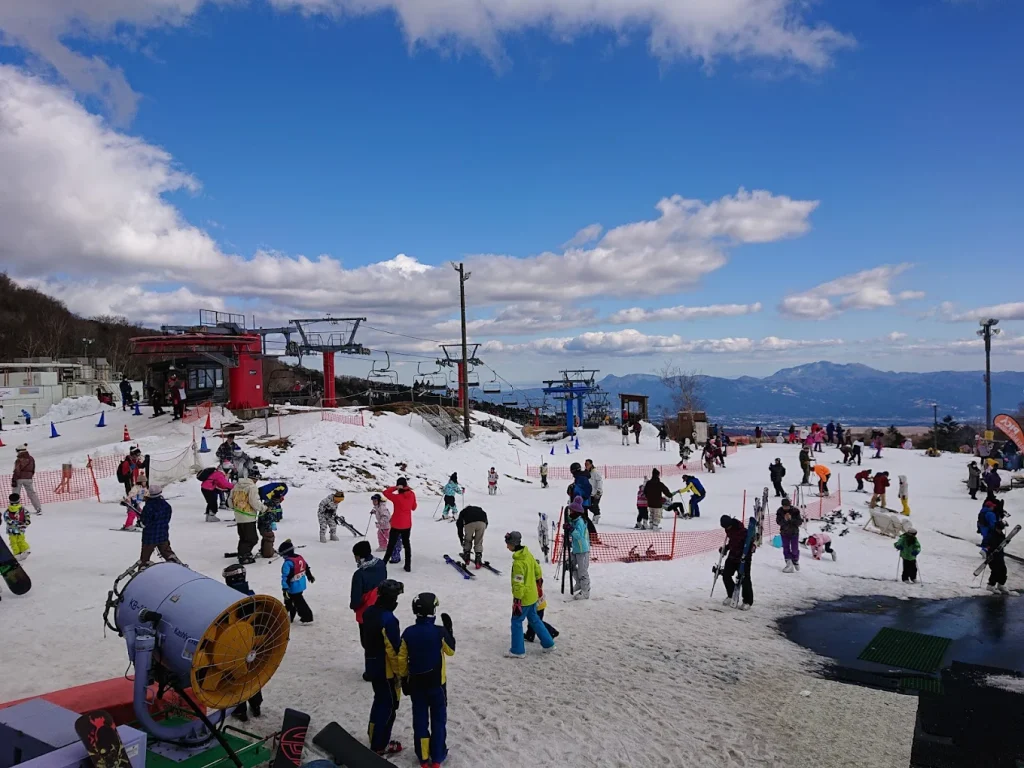
What to expect:
- Just sledding and snow play – no skiing required
- Only 90 minutes from Tokyo
- Perfect for first-timers and young kids
- Open October to April (uses artificial snow early/late season)
- Located on the Shizuoka side of Mt Fuji
Fujiten Snow Resort (Yamanashi)
⛷️ FUJITEN AT A GLANCE
Best For: Families with mixed interests (some ski, some don’t), Mt Fuji photography, those wanting quieter slopes
Skip If: You want the easiest access, you’re focused on snow play only
Snow Guarantee: High (good natural snow plus snowmaking)
Pro Tip: Go on a clear day – the Mt Fuji views from the slopes are spectacular. Check the weather forecast for visibility.
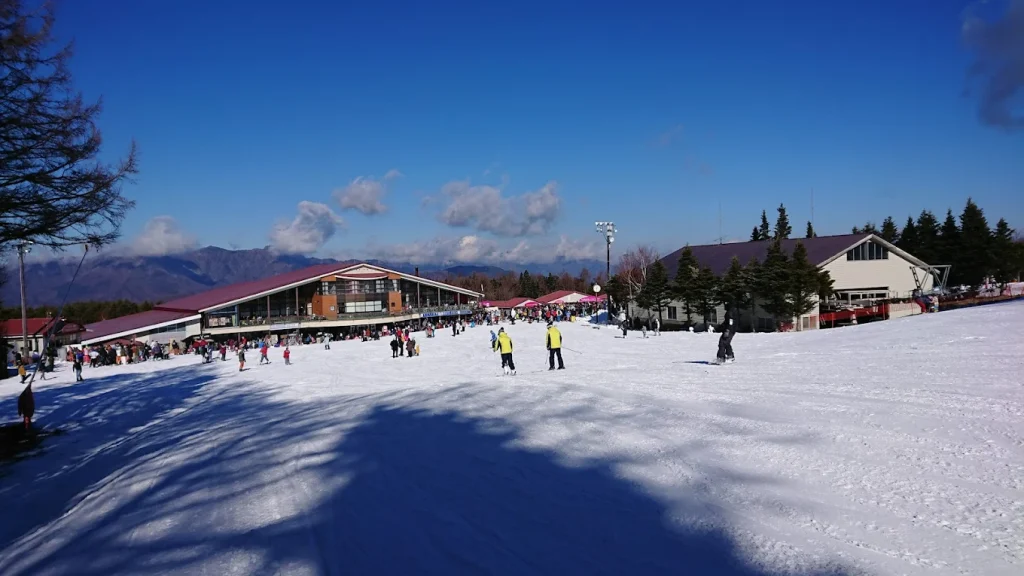
What to expect:
- On the Yamanashi side of Mt Fuji (opposite side to Yeti)
- About 2 hours from Tokyo
- Offers both skiing and sledding areas
- Stunning views of Mt Fuji on clear days
- Generally quieter than Yeti
Gala Yuzawa (Niigata Prefecture)
⛷️ GALA YUZAWA AT A GLANCE
Best For: Maximum convenience, families with varied skill levels, those without cars, anyone wanting quality snow close to Tokyo
Skip If: You want a traditional mountain village vibe, you’re on a tight budget
Snow Guarantee: Very High (Niigata’s second snowiest prefecture = real powder)
Pro Tip: The Shinkansen ticket from Tokyo includes a discount voucher for lift passes. Don’t throw away your ticket stub!
What makes it special:
- Connected directly to the shinkansen station (this is huge for families with gear)
- You can be on snow 75 minutes after leaving Tokyo
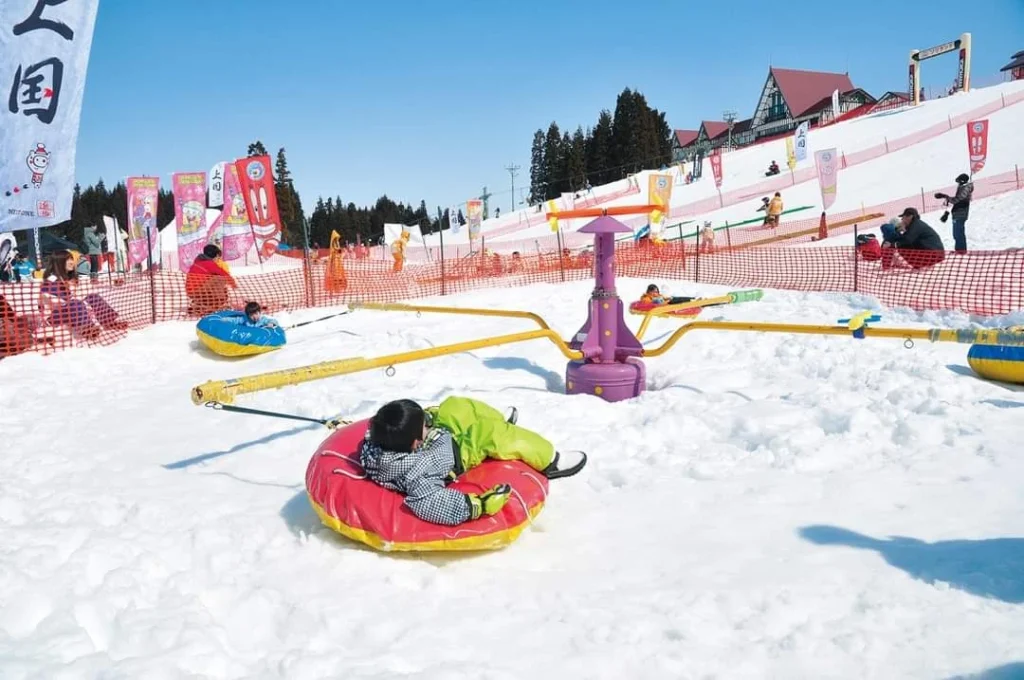
- Offers “snow escalator” for easy sledding
- Has a kids’ snow park completely separate from skiing areas
- Located in Niigata, Japan’s second snowiest prefecture – so snow quality is usually excellent
Practical details:
- Cost: Day pass around ¥4,500; snow park entry ¥2,000
- Gear rental: Full setup available, including kids’ sizes
- Food: Multiple restaurants in the complex
Jigokudani Snow Monkey Park (Nagano Prefecture)
🐵 JIGOKUDANI AT A GLANCE
Best For: Animal lovers, families, photographers, non-skiers, those wanting unique “Japan in winter” experiences
Skip If: You need guaranteed heavy snow (it snows but not always deeply), you want full-day activities
Snow Guarantee: Moderate (snow coverage varies but the monkeys are there year-round)
Pro Tip: Pair this with a visit to Shiga Kogen or Nozawa Onsen – they’re in the same region and make a perfect 2-3 day winter itinerary.
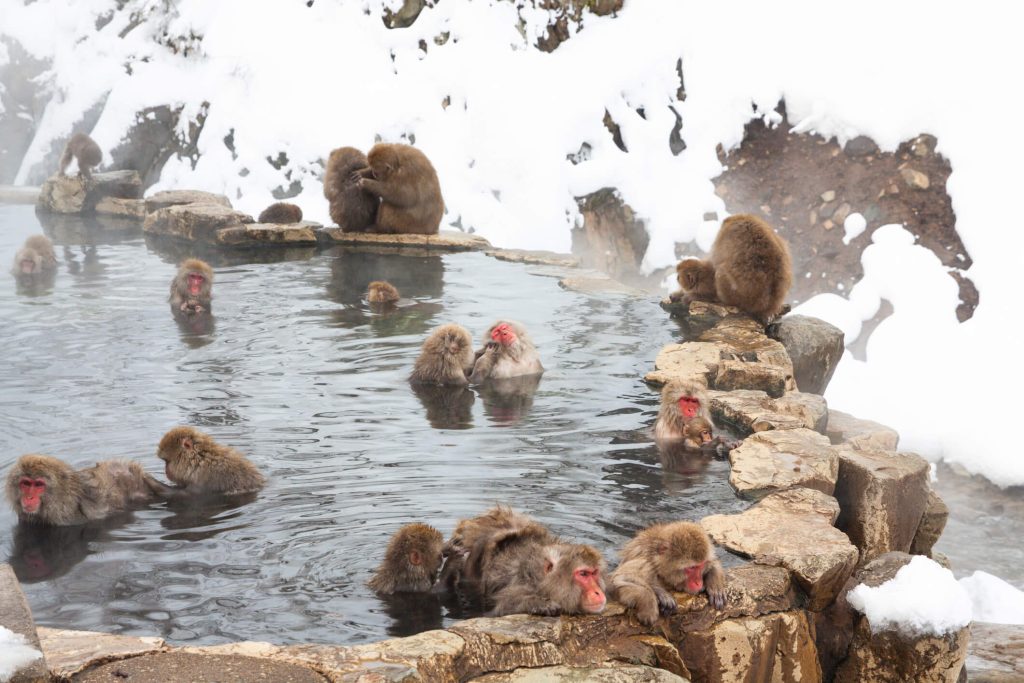
Let’s be honest – when most people think “snow in Japan,” those photos of wild monkeys chilling in hot springs often come to mind. Jigokudani is where that actually happens, and it’s pretty special.
Why it’s worth visiting:
- Wild Japanese macaques bathing in natural hot springs
- Absolutely adorable (yes, even for non-animal people)
- Great for families – kids lose their minds seeing monkeys up close
- Only takes 2-3 hours to visit, easy to combine with other Nagano activities
- Very “quintessentially Japan in winter” experience
Practical details:
- Getting there: Train to Nagano, then bus to Kanbayashi Onsen, then 30-min walk (about 3 hours total from Tokyo)
- Cost: ¥800 entry
- Best time: Early morning or late afternoon when monkeys are most active
- Snow factor: The area does get snow, but it’s not metres deep – more about the atmosphere
Reality check: The monkeys don’t perform or pose. Sometimes they’re all in the onsen, sometimes only a few are around. But even on a quieter day, seeing wild monkeys in a snowy forest setting is pretty cool, even for grownups.
Combining it: This pairs brilliantly with Shiga Kogen (about an hour away) or Nozawa Onsen. Do the snow monkeys in the morning, hit the slopes or an onsen town in the afternoon.
Can You See Snow Around Osaka and Kyoto?
Right, so most of this guide has focused on Tokyo, the Japanese Alps, and Hokkaido. But what if you’re based in Osaka or Kyoto? Can you see proper snow without travelling halfway across the country?
Kyoto Snow (The Reality Check)
⛩️ KYOTO SNOW AT A GLANCE
Best For: Cultural sites, those already visiting Kyoto, photographers hoping for that perfect shot, budget travellers
Skip If: Snow is your main priority (it’s rare), you hate crowds at temples, you need guaranteed winter activities
Snow Guarantee: Low (a few days per winter if you’re lucky)
Pro Tip: If snow is forecasted, get to Kinkaku-ji before 8am. By 10am it’s packed with everyone chasing that golden pavilion snow shot.
I’ve covered this earlier, but let me be crystal clear: don’t plan a Kyoto trip around seeing snow. It might happen a handful of times per winter, usually in January or early February. When it does, it’s stunning, but you need luck and flexibility
The temples worth rushing to if it snows:
- Kinkaku-ji (Golden Pavilion) – iconic but mobbed
- Kiyomizu-dera – stunning views over snowy city
- Fushimi Inari – red gates with snow are gorgeous
- Arashiyama Bamboo Grove – eerie and beautiful
Reliable Snow Near Osaka/Kyoto
If you actually want to see proper snow while based in Kansai, here are your best options:
Biwako Valley (Shiga Prefecture)
- About 90 minutes from Kyoto
- Ski resort on Mt Horai overlooking Lake Biwa
- Not massive but decent for a day trip
- Great views when clear
- Cost: Day pass around ¥5,000
Hachi Kita Kogen (Hyogo Prefecture)
- About 2-3 hours from Osaka
- Collection of smaller ski resorts
- Much quieter than Nagano resorts
- Good for families and beginners
- More about the snow experience than serious skiing
Rokko Mountain (Near Kobe)
- Closest option to Osaka (about 90 minutes)
- Small ski area but convenient
- Better for snow play than serious skiing
- Can combine with Kobe or Arima Onsen
My honest take: If you’re serious about seeing excellent snow and you’re based in Kansai, it’s worth the effort to get to Nagano (Hakuba, Shiga Kogen, Nozawa). The shinkansen makes it doable. But if you just want a taste of snow without a long trip, Biwako Valley works fine.
Time from Osaka/Kyoto:
- To Hakuba/Nagano: 3-4 hours by train
- To Biwako Valley: 90 minutes
- To Hachi Kita: 2-3 hours
The Kansai snow scene isn’t as developed for tourists as the Nagano/Niigata areas, but you’ve got options if you don’t want to trek to the Alps.
Interactive Map: Best Places to See Snow in Japan
Here’s an interactive map showing all the snow destinations mentioned in this guide. Click on any marker to see details about that location.
❄️ Best Places to See Snow in Japan
Click on any marker to see details
Legend
Snow by the Numbers: Where It Really Falls
If you’re a snow nerd (or just want to maximise your chances of seeing proper powder), here’s the ranking of Japan’s snowiest prefectures:
- Yamagata Prefecture – The snowiest in Japan (this is where Zao Onsen is)
- Niigata Prefecture – Second snowiest (home to Myoko Kogen and Gala Yuzawa)
- Akita Prefecture – Third snowiest (more off the beaten track but excellent)
Why These Areas Get Hammered
These prefectures are all on the Sea of Japan side, where cold Siberian winds pick up moisture as they cross the Sea of Japan, then dump it as snow when they hit the mountains. It’s called the “Sea of Japan effect” and it’s why Hokkaido and the western mountain ranges get metres of snow while Tokyo and the Pacific coast stay relatively dry.
Geography lesson over – but understanding this explains why some areas get 15+ metres of snow per season while others get a light dusting.
When to Visit: Monthly Breakdown
December (Early Season):
- Fewer crowds, cheaper accommodation
- Snow coverage can be hit-and-miss at lower elevations
- Great for: Budget travellers, avoiding crowds
- Skip if: You need guaranteed deep snow
January-February (Peak Season):
- Best snow quality and deepest coverage
- Peak crowds and peak prices
- Great for: Guaranteed snow, ski holidays, snow festivals
- Skip if: You hate crowds or are on a tight budget
March (Spring Skiing):
- Still good snow at higher elevations
- Warming up, more sunshine
- Fewer crowds, much better prices
- Great for: Value seekers, families wanting milder weather
- Skip if: You want that deep winter experience
My pick: Late January to mid-February for the best balance of snow quality, winter atmosphere, and reliable coverage across all regions. But March is great too – and lots of snow in Hakuba and Niseko.
How to Choose: Your Quick Decision Guide
Still not sure where to go? Here’s my honest recommendation based on what you’re actually after:
“I want to ski deep powder and don’t mind tourists” → Niseko or Hakuba Valley
“I want to ski but prefer a more local, authentic feel” → Myoko Kogen, Nozawa Onsen, or Shiga Kogen
“I want the absolute most snow on earth” → Yamagata Prefecture (Zao Onsen) or anywhere in Niigata Prefecture
“I want iconic photos and traditional scenery” → Shirakawa-go or Zao Onsen (for snow monsters)
“I’m based in Tokyo and just want a taste of snow for the day” → Gala Yuzawa (easiest) or Fujiyama Snow Resort Yeti (best for young kids)
“I’m travelling with young children who’ve never seen snow” → Check our winter in Japan with kids guide, then head to Gala Yuzawa or Yeti for a stress-free introduction
“I want to combine culture with possible snow” → Takayama/Shirakawa-go (reliable snow) or Kyoto (if you get lucky)
“I’m a serious skier who wants variety and value” → Shiga Kogen (18 resorts, one pass)
“I want onsen and snow without skiing” → Kusatsu Onsen or Nozawa Onsen
“I want something unique that’s not just skiing” → Jigokudani Snow Monkeys or Zao’s snow monsters
“I’m based in Osaka/Kyoto and don’t want to go far” → Biwako Valley for convenience, or make the trip to Nagano for proper snow
Practical Tips That Actually Matter
What worked for us:
- Layer up properly – check our complete winter packing guide so you’re not freezing or overpacking
- Waterproof everything – snow melts, you get wet, you get miserable
- Hand/toe warmers from convenience stores are cheap (¥100) and lifesavers
- Most ski resorts rent everything, so don’t stress about buying gear in Australia
What to avoid:
- Assuming everywhere will have English (outside major resorts, it’s limited)
- Wearing jeans in snow (they get wet and stay wet)
- Booking last minute during New Year period – everything sells out
- Planning a Kyoto trip specifically for snow – you’ll likely be disappointed
Money-saving tips:
- Buy ski gear at Japanese sports shops like Sports Authority or Xebio – prices are often better than Australia, and quality is excellent
- Use our JR Pass Calculator before buying – if you’re doing multiple snow destinations, it usually pays for itself
- Go midweek instead of weekends – accommodation is cheaper and slopes are quieter
- Snow parks near Tokyo (Yeti, Fujiten) are way cheaper than full ski resorts if you just want to play
Final Thoughts
Japan does snow properly. Whether you’re after world-class skiing in Niseko or Hakuba, the massive variety of Shiga Kogen, the accessibility of Myoko or Gala Yuzawa, cultural snow scenes in Takayama, or just want your kids to experience real winter at a snow park near Mt Fuji, there’s an option that’ll work.
My honest recommendation? If it’s your first time seeing snow in Japan with kids, start with something manageable like a day trip from Tokyo to Gala Yuzawa or Yeti. You get the snow experience without committing to a full ski resort situation.
If you’re serious about skiing or snowboarding, Hakuba gives you the best bang for your buck with multiple resorts and that authentic Japanese mountain town feel. But don’t sleep on Myoko – it’s closer to Tokyo, gets incredible snow, and hasn’t been discovered by the masses yet.
And if you want something completely unique, those snow monsters at Zao Onsen are worth the trip alone. Combine it with an onsen stay and you’ve got yourself a proper Japanese winter experience. Or spend a morning with the snow monkeys at Jigokudani – it’s one of those experiences that sticks with you.
Whatever you choose, just remember – it’s going to be cold. Properly cold. But that’s half the fun, right?
Frequently Asked Questions About Snow in Japan
Where does it snow the most in Japan?
Yamagata Prefecture is officially Japan’s snowiest prefecture, followed by Niigata and Akita. All three are on the Sea of Japan coast where Siberian winds dump massive amounts of snow. Specific destinations like Zao Onsen (Yamagata) and Myoko Kogen (Niigata) regularly get 13-15+ metres of snow per season. Hokkaido also gets extreme snowfall, with Niseko averaging about 15 metres annually.
What month has the best snow in Japan?
Late January through mid-February is peak snow season in Japan. You’ll get the deepest coverage, best quality powder, and most reliable conditions. December can be hit-and-miss at lower elevations, while March offers spring skiing with more sunshine but less guaranteed coverage. If you want the absolute best chance of perfect snow, aim for the last two weeks of January or the first two weeks of February.
Does it snow in Tokyo?
Tokyo gets a light dusting of snow a few times per winter, usually in January or February, but it rarely sticks around for more than a day. It’s not reliable enough to plan around. If you want to experience proper snow while visiting Tokyo, take a day trip to Gala Yuzawa (75 minutes by shinkansen) or Fujiyama Snow Resort Yeti (90 minutes by bus). Both offer guaranteed snow and are easy to reach from central Tokyo.
Is Japan good for beginners learning to ski?
Absolutely! Japan has excellent options for beginner skiers. Nozawa Onsen is perfect for beginners with gentle slopes and good ski schools. Gala Yuzawa offers beginner areas right at the shinkansen station. Many Japanese ski resorts have English-speaking instructors and gentle beginner zones. The snow quality (light, powdery) is actually easier to learn on than the heavier snow in Australia. Most resorts rent full gear, so you don’t need to buy/bring anything before.
Is Kyoto worth visiting in winter?
Yes, but not specifically for snow. Kyoto is much quieter in winter than spring or autumn, making it easier to explore temples without massive crowds. However, snow in Kyoto is rare – maybe a few days per winter if you’re lucky. Visit Kyoto for the culture, temples, and peaceful winter atmosphere, and consider it a bonus if you happen to see snow. If snow is a priority, combine Kyoto with a trip to the Japanese Alps (3-4 hours away) where it’s guaranteed.
Where can kids see snow near Tokyo?
The best family-friendly snow destinations near Tokyo are Gala Yuzawa (75 minutes by shinkansen, perfect for mixed ages), Fujiyama Snow Resort Yeti (90 minutes by bus, best for toddlers and first-timers), and Fujiten Snow Resort (2 hours, great Mt Fuji views). All three offer sledding areas, snow play zones, and easy day trip logistics. Gala Yuzawa has the best snow quality since it’s in Niigata Prefecture. Check our winter in Japan with kids guide for complete family planning details.
How cold does it get at Japanese ski resorts?
Temperatures vary by location, and by the month. Hokkaido (Niseko, Sapporo) is coldest at -5°C to -15°C during peak season. The Japanese Alps (Hakuba, Myoko) typically range from -10°C to 0°C. Lower elevation areas and those closer to Tokyo (Yeti, Fujiten) are milder at 0°C to -5°C. The key is layering properly – check our winter packing guide for exactly what to bring. The cold is dry rather than the damp cold we get in Australia, so it’s more manageable than you’d think.
Can you see snow and cherry blossoms in Japan at the same time?
Not in the same place. Cherry blossoms bloom late March to early April in most of Japan, by which time snow has melted in lower elevations. However, some higher elevation ski resorts (like Hakuba) have snow on the mountains while lower elevations show early spring flowers. If you visit in late March, you might catch spring skiing in the Alps and early blossoms in Tokyo on the same trip, but you won’t see both simultaneously in one location.
Where are you thinking of going for snow? First-timer wanting to see snow, or looking for epic powder skiing? Drop a comment below and I’ll point you in the right direction.