
Last Updated on February 12, 2026 by Vlad
I’ll never forget my first hanami over a decade ago by Tokyo’s Meguro River. Standing there with a cold Kirin beer in hand, I was feeling nervous and out of place among strangers. Then a local with broken English but a massive smile invited me to join their group. Within minutes, I was laughing, sharing stories, and toasting with new friends as lanterns flickered on.
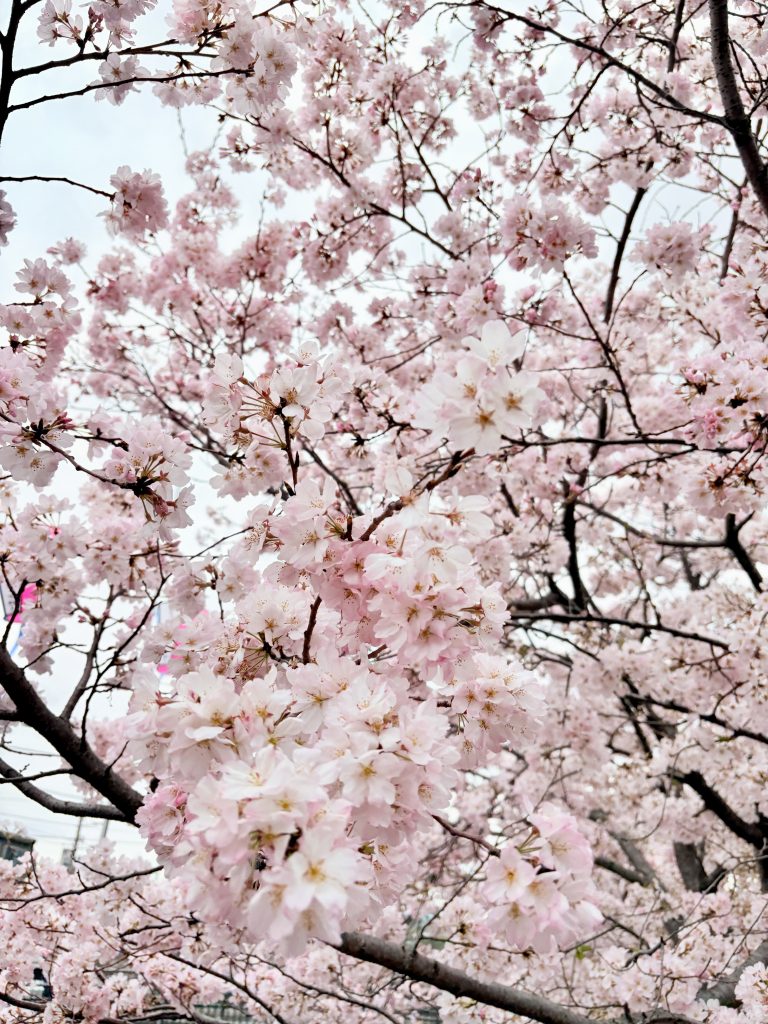
That night taught me hanami isn’t just looking at flowers – it’s connection, impermanence, and joy. Over a decade and many spring trips later, I’ve come to see sakura as the beating heart of Japanese culture itself.
Here’s what I’ve learned about why cherry blossoms matter so deeply to Japan – and why you’ll feel it too hopefully.
Quick Answer: What Do Cherry Blossoms Symbolise in Japan?
Cherry blossoms represent the fleeting nature of life and beauty in Japanese culture. Their brief two-week bloom embodies the Buddhist concept of impermanence and the uniquely Japanese philosophy of mono no aware – finding beauty in transience.
Specifically, sakura symbolise:
- Mono no aware – The bittersweet appreciation of impermanence
- Renewal and hope – Spring’s awakening and new beginnings
- The fragility of life – Beautiful but brief, here then gone
- The samurai spirit – Living fully, falling gracefully
- National identity – Japan’s unofficial national flower
What is Mono no Aware?
If you want to truly understand why cherry blossoms matter so much in Japan, you need to understand mono no aware (物の哀れ).
The Philosophy of Beautiful Transience
Mono no aware literally translates as “the pathos of things” or “the ‘ahh-ness’ of things.” It’s that bittersweet feeling you get when experiencing something beautiful that you know won’t last.
It’s not quite sadness and not quite joy, it’s both at once.
It’s what you feel watching cherry blossom petals swirling in the wind, a perfect sunset fading to darkness, or your child’s last day of primary school. The Japanese have elevated this feeling into an entire aesthetic philosophy.
Rather than fighting against impermanence or finding it depressing, mono no aware embraces it as what makes beauty profound. It took me a few years to fully understand and properly appreciate the term.
Mono no Aware in Japanese Culture
Poetry:
Classical Japanese poetry captures this perfectly. The famous haiku poet Kobayashi Issa wrote:
In this world
we walk on the roof of hell,
gazing at flowers
Film:
Director Yasujirō Ozu built his entire filmmaking style around mono no aware. His films like Tokyo Story focus on everyday moments – parents visiting their children, seasons changing, life moving forward – with gentle melancholy.
Modern Life:
Even today, you see mono no aware everywhere in Japan:
- Anime like Your Name and 5 Centimeters per Second
- The obsessive tracking of autumn leaves (koyo) before they fall
- Limited-edition seasonal products (only available for weeks)
- The nationwide anxiety about catching peak sakura bloom
I’ve experienced this myself during my spring visits. There’s this collective worry: Will we be too early? Too late? The uncertainty is part of it. When you finally stand under trees in full bloom, knowing they’ll be bare in a week, that awareness makes it more beautiful, not less.
The History of Sakura in Japanese Culture
From Plum to Cherry: Japan’s Cultural Awakening
Cherry blossoms weren’t always Japan’s favourite flower.
Back in the Nara period (710-794), the imperial court preferred plum blossoms (ume), imported from China with aristocratic prestige.
Everything changed during the Heian period (794-1185). The imperial court began hosting elaborate cherry blossom viewing parties. Emperor Saga started this tradition around 812 CE with flower-viewing parties under the cherry trees at Kyoto’s Imperial Court.
The shift from plum to cherry represented Japan developing its own distinct cultural identity separate from Chinese influence. Sakura became uniquely Japanese.
The Tale of Genji and Falling Petals
The Tale of Genji, written around 1000 CE, frequently mentions cherry blossom viewing among nobility. These scenes weren’t decorative – they carried deep meaning about love, loss, and time’s passage.
One famous passage describes how Genji watches petals fall and reflects on his own ageing. This connection between falling blossoms and human mortality became a recurring theme in Japanese art and literature for centuries.
I highly recommend The Tale of Genji to anyone – you can buy it on Amazon – I won’t post any links here, just Google!
Samurai and Sakura: Living Fully, Falling Gracefully
The samurai class adopted cherry blossoms as their symbolic flower, seeing their own lives reflected in the blooms.
A samurai’s life was meant to be lived fully and brilliantly, then ended swiftly without regret – just like sakura that bloom spectacularly for a week, then fall all at once.
The famous samurai Miyamoto Musashi wrote:
“Like the blossoms of spring, we must live fully in each moment, knowing our time is brief.”
This wasn’t morbid – it was about living with awareness and purpose. The samurai code of bushido emphasised that knowing life is temporary makes each moment more precious.
A Dark Chapter:
During World War II, this symbolism was co-opted for nationalist propaganda. Kamikaze pilots were painted with cherry blossoms and told they would “fall like sakura.” That dark chapter complicated the flower’s meaning for many Japanese people in the post-war period.
Today, sakura have reclaimed their original meaning; celebrating life’s beauty rather than glorifying death.
Sakura in Japanese Art and Literature
Classical Poetry
Cherry blossoms dominate Japanese poetry across centuries.
Heian Period Waka:
The poet Ariwara no Narihira wrote:
“If there were no cherry blossoms in this world,
perhaps our hearts would be at peace in spring”
This captures the anxiety and excitement sakura season brings – life would be simpler without them, but infinitely less beautiful.
Haiku Tradition:
Cherry blossoms are one of the essential kigo (seasonal words) in haiku. Matsuo Bashō, the most famous haiku poet, wrote:
Even in Kyoto,
hearing the cuckoo’s cry,
I long for Kyoto
This haiku implies missing the cherry blossoms of Kyoto even while being there, expressing the longing mono no aware creates.
Traditional Visual Arts
Ukiyo-e Woodblock Prints:
Artists like Hiroshige and Hokusai created countless prints featuring cherry blossoms. Hiroshige’s “Cherry Blossoms at Yoshiwara” shows crowds gathering under blooming trees. Hokusai included sakura in many prints as symbols of Japanese beauty and national identity.

Screen Paintings:
Folding screens (byōbu) in temples and aristocratic homes frequently depicted cherry blossoms, often with gold leaf backgrounds, representing the pinnacle of luxury and beauty.
Modern Media
Anime and Manga:
Cherry blossoms appear in countless anime during emotionally significant moments—opening scenes establishing spring, confession scenes under sakura trees (a romantic cliché but beloved), graduation episodes with falling petals, endings symbolising closure and new beginnings.
Film:
Japanese cinema uses sakura as shorthand for the passage of time, Japanese cultural identity, bittersweet moments, and coming-of-age themes.
Director Hirokazu Kore-eda uses cherry blossoms throughout his films to mark family milestones and emotional turning points.
Sakura in Modern Japanese Life
Spring as the Start of Everything
In modern Japan, sakura blooming coincides perfectly with significant life transitions.
The School Year:
Japan’s school year starts in early April, right when cherry blossoms peak. Elementary school entrance ceremonies happen under blooming trees. University graduations take place during sakura season. First days at new jobs feature cherry blossom backgrounds in company photos.
I’ve watched these ceremonies at my mate’s kids’ schools in Tokyo. The timing feels almost magical. Parents take thousands of photos of children in new school uniforms posing under cherry trees (even if just a few), it’s a cultural touchstone every Japanese person shares.
Corporate Culture:
Japan’s fiscal/financial year also starts on April 1st. New employees join companies during sakura season. Fresh graduates enter the workforce under blooming trees. Companies hold welcoming parties (kangeikai) with hanami picnics.
The symbolism is clear: just as cherry trees renew themselves each spring, so too do people begin new chapters of their lives.
This synchronised renewal – nature, schools, business – creates a powerful cultural rhythm. Spring isn’t just a season; it’s the beginning of everything. And cherry blossoms are the visual marker of that beginning.
The National Obsession: Sakura Zensen
Starting in January each year, Japan’s weather agencies begin releasing sakura zensen (桜前線) – the cherry blossom front forecast. (you can check out the 2026 forecast here)
The Japan Meteorological Corporation releases detailed forecasts tracking when cherry trees will bloom across different regions. This is serious business. The forecasts appear on national news. Businesses plan promotions around them. Millions of people book travel based on these predictions. And you know what, these predictions are more accurate than the weather forecasts we get in Melbourne!
Why such obsession? The bloom period is brutally short – typically 7-10 days from first bloom to peak, then another 3-5 days before petals start falling. Miss it by a week, and you’ve missed it entirely.
I learned this the hard way in 2007 when I arrived in Tokyo exactly one week late. The trees were green. No pink anywhere. My Japanese friends gave me endless stick about my timing – “Next year, Vlatto-san, next year!”
Limited-Edition Everything
Japanese companies go absolutely mental with cherry blossom products each spring. I am not going to lie, I am a sucker for these.
Starbucks releases sakura lattes (the queue, mate… the queue). McDonald’s launches sakura drinks. Every snack gets a cherry blossom version – Kit Kats, Pocky, icecream, craft beers with sakura petals, sake brewed with cherry blossoms.
Beyond food, there’s sakura-scented cosmetics, stationery, phone cases, and limited-edition clothing.
The FOMO is real. These products are only available for a few weeks, which feeds into the whole mono no aware thing – better buy it now because it won’t be here tomorrow.
Official Recognition
Sakura appear on the 100 yen coin, Japanese passports, government buildings, police badges, and various regional symbols.
This official recognition cements sakura as a national symbol, even though Japan technically has no official national flower (the chrysanthemum is the Imperial family’s symbol).
Hanami: More Than Just Looking at Flowers
Hanami (花見) literally means “flower viewing,” but it’s evolved into a full cultural practice.
What Hanami Means
Hanami isn’t just admiring blossoms – it’s a social ritual. Groups claim spots under trees (sometimes starting at dawn), spread blue tarps, bring food and drinks (usually lots of beer), and stay for hours enjoying both the blossoms and each other’s company.
It’s about community, connection, and shared experience of beauty that won’t last.
I’ve done hanami everywhere from Tokyo’s massive Yoyogi Park to tiny neighbourhood spots. Sometimes the best experiences aren’t at famous locations. My local park in Yokohama has quite a few cherry trees. Last year it was very cold but my son and I wanted our own ohanami experience, so we went to the park. Just us, some salaryman clearly playing hooky from work, an elderly couple, and a young family. Quiet, peaceful, perfect.
Food is woven into the ritual too.
Hanami dango – threecoloured rice dumplings on a skewer in pink, white, and green, represent the full arc of the season: cherry blossoms, departing winter snow, and the new green leaves of summer approaching.

Sakura mochi – pink rice cakes filled with sweet bean paste and wrapped in a pickled cherry leaf are only available for these few weeks. The leaf is edible, adding a subtle salty-floral flavour that somehow tastes exactly like spring smells. Both treats disappear from shops the moment sakura season ends, which of course is the whole point. You can’t stockpile mono no aware.
Yozakura: Night Viewing
Yozakura (夜桜) – nighttime viewing with illuminated trees – has become incredibly popular.
The atmosphere at night is completely different from daytime hanami. It’s quieter, more romantic, slightly mysterious. The illumination makes the pink petals almost glow. It’s the same trees, but the experience feels entirely different.
This duality – day and night, social and contemplative, joyful and melancholic, captures mono no aware perfectly.
The Future of Sakura Culture
Climate Change Impact
Cherry blossom bloom dates are shifting earlier due to climate change.
Historical records show Kyoto’s peak bloom in the 800s was early April. In 2021, peak bloom hit March 26 – the earliest recorded. The overall trend shows blooms arriving 1-2 weeks earlier than historical averages.
This affects traditional timing with school ceremonies, cultural expectations, tourism planning, and tree health. The sakura-and-school-year synchronicity that’s existed for centuries is slowly shifting.
Over-Tourism Concerns
Popular viewing spots struggle with damaged trees from people climbing or shaking them, litter issues, and local resident quality of life impact.
Some spots now require reservations or limit visitor numbers during peak season. Some “close” early (yes, you Meguro River). The challenge is preserving the peaceful hanami atmosphere while sharing this cultural phenomenon with the world.
Preserving the Tradition
Efforts to maintain sakura culture include tree planting programmes, education about proper viewing etiquette, promotion of lesser-known viewing spots, and community-organised local hanami events.
The tradition adapts while keeping its core meaning intact, just like the trees themselves, renewing each spring.
Frequently Asked Questions
What does mono no aware mean?
Mono no aware is the Japanese aesthetic of finding beauty in impermanence. It’s the bittersweet feeling when experiencing something beautiful that won’t last—like cherry blossoms blooming for just a week.
Why do cherry blossoms fall so quickly?
They’re bred for beauty, not longevity. Wind, rain, or warm weather triggers petals to fall. This brief bloom period is central to their cultural significance—the fleeting nature is the point.
Are cherry blossoms Japan’s national flower?
Unofficially, yes. Japan has no official national flower, but sakura are universally recognised as representing the nation. The chrysanthemum is the Imperial family’s symbol.
Final Thoughts
After over a decade of spring visits to Japan, I’ve come to understand it’s not really about the flowers themselves.
It’s about what they represent – the acknowledgement that beautiful things don’t last, and that’s exactly what makes them precious.
Every spring when I see those first blossoms, I’m reminded why I fell in love with Japan in the first place. It’s a country that’s taken a simple natural phenomenon and woven it into art, philosophy, poetry, food, ceremony, and daily life.
You don’t need to understand mono no aware intellectually to feel it under the cherry trees. You just need to be there, present, aware that this moment – right now – is all you get.
Next week the petals will be gone. Next year you might not make it back. This moment, these blossoms, this feeling, it’s all temporary.
And somehow, that makes it perfect.
Related Reading
- Japan Cherry Blossom Forecast 2026
- Best Cherry Blossom Viewing Spots in Tokyo
- Cherry Blossom Viewing Spots in Yokohama
- What is a Hanami Party?
Have you experienced sakura season in Japan? What did it mean to you? Drop a comment below—I’d love to hear your stories!