Last Updated on April 29, 2026 by Vlad
Everyone told me to skip Japan in June. Even my own wife.
The first time I went during tsuyu, I’d booked the trip months earlier without realising. People warned me to push the dates, particularly the second half of June when tsuyu hits its peak. I didn’t budge. And it ended up being one of my favourite trips in 22 years of going to Japan.
Yes, it rained. Yes, the humidity made my hair look like a bad 80s movie. But the temples were largely empty, the hydrangeas were everywhere, and I paid way less for the same hotel than I would have just a month earlier.
So if you’re sitting there with a June or early July trip booked and your group chat is telling you to panic, take a breath. Here’s what tsuyu actually is, when it hits each region, and whether you should genuinely consider rebooking.
How does Tokyo’s rainy season compare?
Average monthly rainfall in cities around the world
Sources: Australian Bureau of Meteorology, Japan Meteorological Agency (Tokyo), UK Met Office (London), NEA Singapore, NOAA (Miami). All figures are long-term monthly averages.
TL;DR: Should You Cancel Your June Japan Trip?
- First-time city trip (Tokyo, Kyoto, Osaka): Don’t cancel. June is one of the best value months of the year.
- Hiking, Mt Fuji: Do consider rebooking. Outdoor-heavy itineraries struggle in tsuyu.
- First half of June: Often barely a rainy season at all (more on this below).
- Second half of June to mid-July: This is when most people mean when they say “skip June.”
- Pair with Hokkaido: The smartest hack. No tsuyu up north and 5-10°C cooler.
What is Tsuyu? (Japan’s Rainy Season Explained)
Tsuyu (梅雨) literally translates as “plum rain” because it falls during the plum-fruiting season. Sweet name for what is essentially Japan getting hit by a stalled weather front for about six weeks.
Here’s the technical bit, for the interested: a humid air mass from the Pacific Ocean meets a cooler one from the north, and the boundary parks itself over Japan for weeks. The result is a stretch of grey, drizzly, occasionally heavy rain across most of the country.
Crucially, tsuyu is NOT typhoon season. Typhoons mostly hit between August and October. Tsuyu is gentler, more persistent, and far more predictable. It’s also not monsoon-style tropical downpours.
One important fact most travel blogs and social media gloss over: Hokkaido doesn’t have an official rainy season. Skipped entirely by JMA. Hokkaido does sometimes get a brief “ezo-tsuyu” in late June, but it’s much milder and shorter than what mainland Japan goes through. We’ll come back to that later because it’s a useful escape hatch.
When Does Rainy Season Start in Japan in 2026?
The Japan Meteorological Agency (JMA) releases the official tsuyu forecast in late May. Until then, the dates below are based on the long-term averages. Regional dates vary by a week or two annually.
Typical tsuyu windows by region:
- Okinawa: early May to late June
- Kyushu (Fukuoka): early June to mid-July
- Shikoku (Matsuyama): early June to mid-July
- Chugoku (Hiroshima): mid-June to mid-July
- Kansai (Osaka, Kyoto): mid-June to late July
- Tokai (Nagoya): mid-June to late July
- Kanto (Tokyo, Yokohama): mid-June to late July
- Tohoku south (Sendai): mid-June to late July
- Tohoku north (Aomori): late June to early August
- Hokkaido (Sapporo): no official rainy season
If you’re travelling between mid-June and mid-July, you’ll be in tsuyu somewhere on the mainland. The further north you go, the later it hits and the shorter it lasts.
What I’ve actually seen the last few years (2022-2025)
The last few years, every time NHK has rolled out the “tsuyu has started” graphic, the rain has been weirdly underwhelming. 2022, 2023, 2024, 2025. Same pattern in Tokyo: a few drizzly days, a stretch of grey skies, then it just sort of fizzles out.
The strange bit is what happens AFTER. A week or two past the official end of tsuyu is when Tokyo’s actually copped the heaviest rain in recent years. By then everyone’s stopped paying attention.
I’m not saying ignore the forecast. JMA knows what it’s doing. But the official tsuyu window and the actual wettest fortnight don’t always line up, especially when you are a visitor. If you’re flexible, the first half of June has been a sweet spot. Officially in tsuyu, practically not much rain at all.
How Much Does it Actually Rain?
This is where the panic level usually drops. Tsuyu doesn’t mean it’s pelting down 24 hours a day for six weeks.
Here’s what June rainfall actually looks like in the cities most tourists visit:
- Tokyo: average 167mm across the month, spread over roughly 12 rainy days
- Kyoto: average 224mm, around 12 rainy days
- Osaka: average 185mm, around 11 rainy days
- Hakone: much wetter, often over 350mm, mountainous microclimate
Compare that to Cairns in February where you can get 400mm in a week and the rain comes down in sheets. Tsuyu is closer to Sydney in winter. Showers, not storms. Some days you’ll see proper rain. Others you’ll get a misty drizzle for 30 minutes then a clear afternoon.
The bigger problem is humidity, which I’ll come back to. It hovers around 75-85% almost every day, regardless of whether it’s actually raining.
Should You Cancel Your June or Early July Trip?
Short answer: no.
Longer answer: don’t cancel, but adjust your itinerary.
Here’s how I’d think about it:
Don’t cancel if: you’re a first-timer doing a city-focused trip, you’ve never seen hydrangeas, you want lower prices, you don’t mind some rain, or you’re heading to Tokyo, Kyoto, Osaka and similar.
Do consider rebooking if: your trip is 100% outdoor (hiking, Fuji, beach focused), you’re a serious photographer who needs clear skies for specific shots, or you have a chronic condition aggravated by humidity.
The smartest middle ground: plan three or four days that work fine if it pours. Pair Tokyo and Kyoto with a Hokkaido leg. Hokkaido has no official tsuyu and June up there is really glorious. Sapporo, Furano, and Hakodate are all 5-10 degrees cooler than mainland Japan and basically dry.
The Hidden Upsides of Visiting Japan in Tsuyu
Here’s the part nobody mentions when they tell you to cancel:
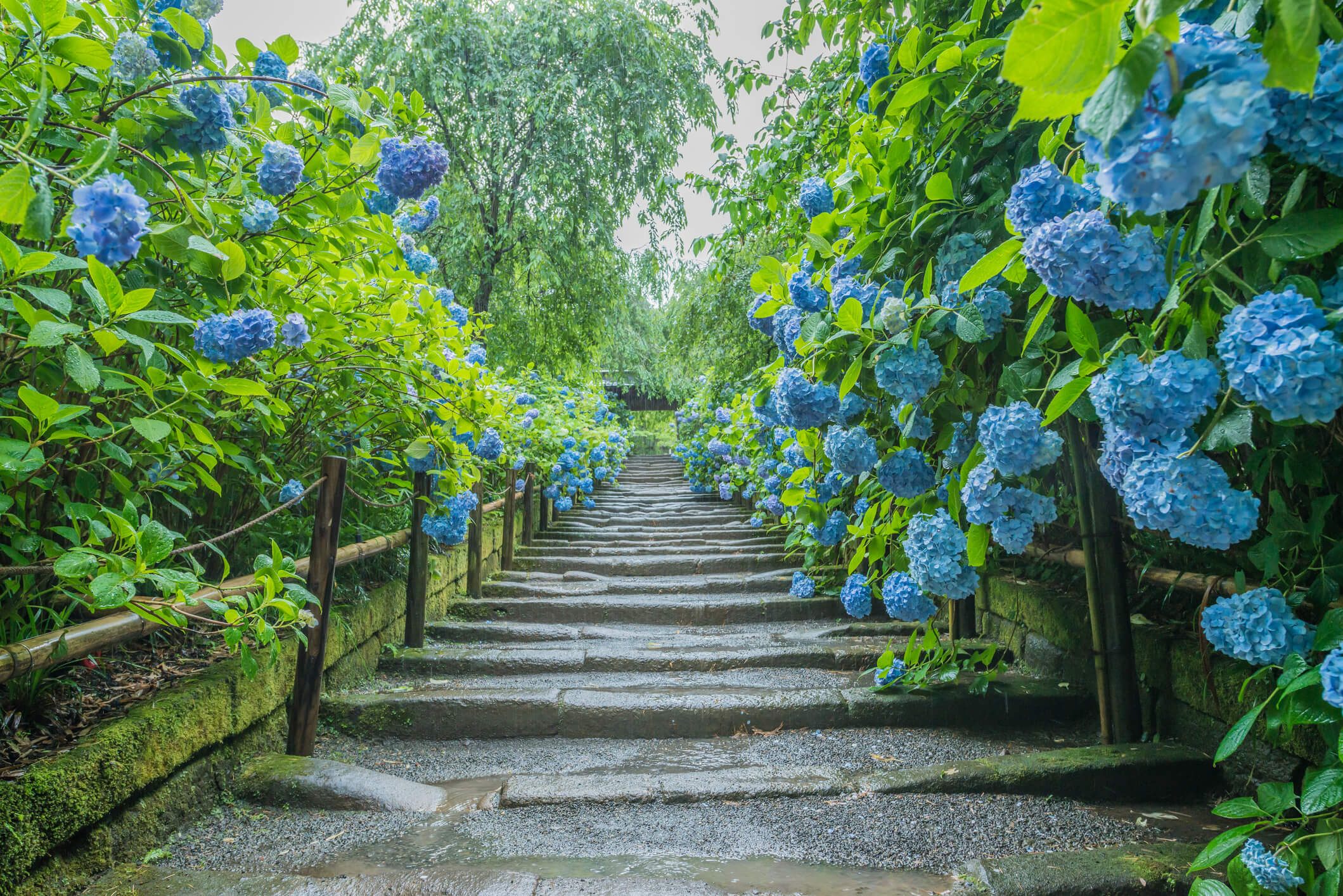
Hydrangeas (ajisai) are everywhere. June is peak hydrangea season and the temples that look gorgeous in cherry blossom season look completely different (and arguably better) under hydrangeas. Meigetsu-in in Kamakura turns into a blue and purple cloud. Hakusan Shrine in Tokyo is a quiet local secret (this over 1000 year old shrine holds an annual Hydrangea Festival in mid-june). If you’ve already done sakura, ajisai is the consolation prize that’s actually a prize.
The crowds disappear. This is the big one. Fushimi Inari, Arashiyama bamboo grove, Senso-ji at sunrise. Places that can be unmanageable in cherry blossom season are suddenly walkable. You can get a quiet moment at famous spots that’s basically impossible in March or April.
Hotels are noticeably cheaper. Expect 20-30% off peak season rates in major cities. Ryokan in Hakone and Atami often run their lowest rates of the year. If you’ve been priced out of somewhere fancy in spring, June is when you can sneak in.
Greens at their best. Moss gardens look like they’re glowing. Mountainsides go from pretty to “I should be charging for this view.” Soft, overcast light is also way better for photography than harsh summer sun. Some of my favourite shots from the last decade in Japan were taken in light rain.
Cooler than peak summer. This isn’t talked about enough. Late July and August in Tokyo regularly hit 35-38C with the same humidity. June in Tokyo averages 26C. You’d take rain over heatstroke any day.
Seasonal fruit you can’t get any other time. Yamanashi Prefecture‘s peach harvest starts in June, and if you’ve never eaten a freshly picked Japanese peach straight from the orchard, it’s hard to explain how different it is from anything you’d find back home. I’m lucky enough to have a mate with a peach orchard out there, and a June visit has become something I genuinely look forward to as much as anything else on the trip. Even without the insider access, Yamanashi has plenty of farm stays and u-pick orchards running through the season. It’s an easy day trip from Tokyo and most people have no idea it’s even possible in June.

The Real Downsides
Let’s talk about what’s actually a hassle.
Humidity creeps in. But it’s manageable! This is the bit most people get wrong. June humidity is nothing like July or August, when Tokyo turns into an outdoor sauna. Early June still feels reasonable. By the back half of the month you’ll notice the air thickening, especially after rain, but you can still walk around all day without melting. If you’ve survived a Sydney or Brisbane summer, you’ll be perfectly fine.
Outdoor festivals are limited. Most of the big summer festivals (Gion Matsuri, Sumida Hanabi) are still a few weeks away when tsuyu is at its peak. Mid-June to early July is a quieter festival window.
Some hiking trails close or get dangerous. Mt Fuji’s official climbing season doesn’t start until 1 July at the earliest, and not all trails open even then. The Yoshida Trail opens 1 July. The Fujinomiya, Subashiri, and Gotemba trails don’t open until 10 July. Mountain trails elsewhere can be slippery and prone to landslides. If hiking is your priority, June is the wrong month.
Mt Fuji is often invisible. Cloud cover is heavy. If your dream is the photo of Fuji-san reflected in Lake Kawaguchiko, you’ll need patience and lots and lots of luck.
Laundry is slow. Clothes don’t dry as quickly as you’re used to back home. You’ll cycle through outfits faster than you planned. Hotel dryers can also struggle on the muggier days.
What to Pack for Japan’s Rainy Season
The packing list isn’t long but the items matter.
- Compact umbrella (don’t bother bringing one from home, every konbini sells a clear vinyl one for 500 yen and they’re fine)
- Quick-dry shirts and trousers (linen and technical fabrics, not cotton, never cotton)
- Waterproof shoes or sandals (your sneakers can get soaked, plan accordingly)
- Plastic ziplock bags (for your phone, wallet, passport)
- Microfibre travel towel (dries faster than your hotel one)
- Anti-frizz hair product if relevant (you’ll thank me)
- Spare underwear (more than you’d normally pack, trust me)
- Foldable rain cover for your daypack (or a waterproof backpack)
What NOT to pack: a thick raincoat (way too hot), adult gumboots (too hot, too heavy), or “just in case” denim (you’ll never wear it).
There’s a lot more on this in my What to Wear in Japan in Summer guide, but the rainy season twist is that humidity matters more than the rain itself.
Best Things to Do in Japan During Rainy Season
This is where good trip planning saves you.
Onsen towns. Hakone, Kusatsu, Atami, and the broader hot spring scene is built for this weather. Steamy outdoor baths in light rain is an experience you can’t replicate.
Hydrangea temples. Make at least one of these a planned outing. Kamakura is the obvious choice from Tokyo. Mimurotoji from Kyoto. Even small local shrines often have stunning displays.
Indoor museums. TeamLab Planets in Tokyo, the freshly reopened Edo-Tokyo Museum (back open after a four-year renovation), the Mori Art Museum, the Kyoto National Museum. All air conditioned, all worth several hours each.
Department store food halls (depachika). Genuine attractions in their own right. Mitsukoshi in Ginza, Isetan in Shinjuku, Takashimaya in any major city. Cool, dry, and you’ll eat better than at most restaurants.
Underground arcades. Tokyo Station’s Yaesu mall, Osaka’s Whity Umeda, Nagoya’s underground network. Genuinely tsuyu-proof shopping and eating with restaurants, bookshops, and stationery stores you can lose half a day in.
Cooking classes. Sushi making in Asakusa, ramen workshops in Shinjuku, soba classes in Kyoto. Three hours indoors, learning something useful, and you eat at the end.
Day trip to Hokkaido. Sounds extravagant but a return flight from Tokyo to Sapporo can be cheaper than a Tokyo hotel for two nights. Worth running the numbers.
Hotel afternoon tea. Yes, it’s touristy. Yes, it’s expensive. The Peninsula in Tokyo or the Ritz Carlton in Kyoto on a wet afternoon is just a really good way to spend an afternoon.
Quick reassurance for nervous planners
- Shinkansen runs in the rain. Bullet trains operate normally through tsuyu. Occasional delays during torrential rain, but services rarely cancel.
- Tokyo Disney, USJ, and most theme parks stay open. Outdoor rides may pause briefly during heavy rain, but the parks operate.
- Tokyo, Osaka, and Nagoya have huge underground station networks. You can move between hotels, restaurants, and trains for hours without getting wet.
A tsuyu-proof 3-day Tokyo plan
If you want a starting framework, here’s what I’d actually do.
- Day 1 (rain-flexible): Asakusa morning, Senso-ji under an umbrella (atmospheric, not annoying), lunch at a depachika in Ginza, afternoon at TeamLab Planets in Toyosu.
- Day 2 (mostly indoor): Edo-Tokyo Museum in Ryogoku, sumo stable area, lunch at a chanko nabe restaurant, afternoon hydrangea trip to Hakusan Shrine if the weather lifts, Yaesu underground for dinner if it doesn’t.
- Day 3 (day trip): Kamakura. Meigetsu-in for hydrangeas, Hokokuji bamboo grove (uncrowded vs Arashiyama), lunch in a covered shopping street, train back to Tokyo by late afternoon.
Three days, almost everything works whether it rains or not.
Final verdict: who June actually suits
If you’ve already booked, almost certainly stay. Adjust your itinerary, pack smart, and lean into what tsuyu actually offers (cheaper hotels, fewer crowds, lush gardens, hydrangeas).
If you haven’t booked yet and you can choose any month, June isn’t my first pick. But it’s a long way from my last.
The travellers who hate Japan in June are the ones who turned up with a sakura-season itinerary and got sad it wasn’t sakura season. The ones who plan for tsuyu and lean into it tend to come home raving about how empty Kyoto was.
Frequently Asked Questions
Is June a bad time to visit Japan?
No. It’s a different time. Expect rain, humidity, and lower crowds at major sights. If you plan around the weather rather than fight it, June can be a brilliant month, especially the first half.
Does it rain every day during tsuyu?
No. Tokyo averages around 12 rainy days in June out of 30, and most of those involve a few hours of rain rather than full-day downpours. Plenty of dry hours every week.
Is rainy season cheaper for tourists in Japan?
Yes. Hotels typically run 20-40% below peak rates and ryokan in onsen towns often hit their lowest annual prices. Flights from Australia are also softer in June compared to March-April, although 2026 may be an exception due to Iran conflict.
Which part of Japan doesn’t have a rainy season?
Hokkaido. The northernmost main island officially skips tsuyu, though it occasionally gets a brief “ezo-tsuyu” in late June. June and early July in Sapporo, Furano, and Hakodate are warm, dry, and around 10 degrees cooler than Tokyo. It’s a smart escape if you want to dodge the worst of the humidity.
Can you climb Mt Fuji during rainy season?
No. The Yoshida Trail opens 1 July, and the other three trails (Fujinomiya, Subashiri, Gotemba) don’t open until 10 July. June is closed. For 2026, climbers also need to pre-register, pay a ¥4,000 climbing fee, and on the Yoshida Trail there’s a daily cap of 2,000 climbers.
Planning Your June Trip?
If you’re still on the fence, run your dates through my When to Visit Japan Quiz and see if there’s a month that fits your priorities better.