
Last Updated on November 3, 2025 by Vlad
Quick Facts
📍 Location: Kanagawa Prefecture, ~100km southwest of Tokyo
🚄 Distance from Tokyo: 90-120 minutes by train, 2 hours by car
💰 Budget: ¥15,000-30,000 per person/day (inc. accommodation & food)
⏰ Recommended stay: 2-3 days
🎫 Hakone Free Pass: ¥7,100 (2-day) / ¥7,500 (3-day) from Shinjuku
🌡️ Best seasons: Spring (March-May) & Autumn (September-November)
🗻 Mount Fuji views: Best November-February, early mornings
💳 Cash needed: Yes – many places don’t take cards
📱 English support: Major attractions have English-speaking staff
♨️ Onsen everywhere: Tattoo-friendly options available
I’ll be straight with you – I spent years bypassing Hakone thinking it was just another tourist trap. Then I finally caved in 2022 and went three times that year. Then another four times in 2023. And once more in 2025. Yeah, turns out I was an idiot for avoiding it.
This mountainous region about 100km from Tokyo gets absolutely packed with tourists (Japanese and international), and for good reason. Hot springs everywhere, volcanic valleys that look like something out of a sci-fi movie, and enough Hakone attractions to fill a week if you’ve got the time. Plus, if you’re lucky, Mount Fuji views that’ll make your Instagram followers weep. (If you’re looking for other options, check out my guide to the best day trips from Tokyo for more ideas.)
I’ve done Hakone the “proper” tourist way on the trains, buses, and I’ve driven there twice (including one of the most terrifying driving experiences of my life – more on that later). Both have their perks. After eight trips over three years, here’s my complete Hakone travel guide 2025 with everything you actually need to know – no fluff, just the good stuff.
When to Visit Hakone: Seasons at a Glance
Picking the right time can make or break your trip. Here’s the honest breakdown:
| Season | Weather | Crowds | Why Visit / What to Expect |
|---|---|---|---|
| Spring (March-May) | 10-20°C, mild, occasional rain | Moderate to High | Cherry blossoms (late March-early April), comfortable temps, popular but manageable. Great for hiking. |
| Summer (June-August) | 20-30°C, hot & humid, rainy season June-July | High (peak domestic tourism) | Everything’s open, lush greenery, onsen feel amazing after hot days. Can be sticky. Hydrangeas bloom June-July. |
| Autumn (Sept-Nov) | 10-20°C, comfortable, clear skies | Very High (peak season) | Good autumn foliage (late Oct-early Nov), best weather, clearest Fuji views. Book accommodation ahead. |
| Winter (Dec-Feb) | 0-10°C, cold, occasional snow | Low to Moderate | Quietest season, best odds for Fuji views, onsen in cold weather is magic. Some facilities have reduced hours. |
My pick: Start of November for autumn colours (if you don’t mind crowds) or March-April for cherry blossoms and fewer people. Winter if you want the place more to yourself and don’t mind the cold.
How to Get to Hakone from Tokyo: Trains vs Driving
From Tokyo by Train
The Romancecar (My go-to when I can’t be bothered driving):
- Shinjuku to Hakone-Yumoto: roughly 100 minutes, around ¥2,470
- Comfy seats, sometimes you can even see Mount Fuji on the way (sit on the right hand side)
- Gets you straight to the action
- Romancecar ticket is separate to Hakone Free Pass
The budget option:
- Tokyo Station → Odawara Station on the JR Tokaido Line
- Takes longer, costs less
- Then catch a bus or local train into Hakone proper
Shinkansen route:
- Tokyo/Shinagawa → Odawara (35-40 minutes)
- Transfer to Hakone Tozan Line
- Faster but pricier if you don’t have a JR Pass
That Hakone Free Pass everyone talks about: Look, if you’re doing the full tourist loop (ropeway, boats, multiple attractions), the 2-day pass (¥7,100 from Shinjuku) actually saves you money. Covers 8 different types of transport including those pirate ships on Lake Ashi. The 3-day pass is about ¥7,500.
From Tokyo by Car (My Preferred Method… Usually)
Right, here’s where it gets interesting. I’ve driven to Hakone twice now, and despite one genuinely terrifying experience, I still reckon it’s brilliant when conditions are good.
The fog incident: 2022 – we’re heading up the mountain, visibility’s fine, then BAM. Thick fog rolls in. And I mean THICK. Couldn’t see more than a few metres ahead at best. Mountain roads. Narrow. Winding. Edges you can’t see. Honestly one of the toughest driving days of my life. My knuckles were white gripping that steering wheel. Lucky it was Tuesday and not the weekend. But we made it, and now it’s a story. Just know that mountain weather can change FAST.
The upsides (when weather cooperates):
- You’re not stuck to anyone’s timetable
- Can pull over at random viewpoints (and there are heaps)
- Access to spots that are a pain to reach on public transport
- No suitcases on and off trains
- Way easier if you’ve got older family members or young kids
- Route 1 along Lake Ashi is genuinely beautiful
The downsides:
- Weather can turn on you (see above)
- Parking can be tight at popular spots (especially Owakudani on weekends)
- Tolls add up (budget around ¥2,000-3,500 for expressway tolls)
- Weekend traffic can be a nightmare, especially on the way back to Tokyo
- Some mountain roads are narrow and winding
- If ropeways close due to weather, you might need alternate routes
Pro tip: If you’re driving, hit the major spots earlier in the day. I couldn’t park at Owakudani on my first drive there as it was jam packed, and after about 45mins we gave up.
From Kyoto
Shinkansen (fastest):
- Kyoto → Odawara: about 2.5 hours
- Then local train or bus into Hakone
JR Tokaido Line (scenic but slow):
- Kyoto → Mishima: around 3 hours
- Budget-friendly if you’ve got time
Bus:
- Direct services available, 4-5 hours
- No transfers though, which is nice if you’re tired
What to Actually Do in Hakone
The Hot Springs (Onsen)
Alright, if you skip the onsen in Hakone, you’ve basically missed the point. The whole region sits on volcanic activity, so hot springs are everywhere. Japanese people go, so why shouldn’t you?
My picks:
Tenzan Onsen – Proper traditional vibes, outdoor baths surrounded by forest. Feels like you’ve gone back in time. Can get busy on weekends but weekday mornings are mint.
Hakone Yuryo – Mix of indoor and outdoor baths, various types of tubs. Has massage services if you’re feeling fancy. Good spot if you don’t want to stay overnight in a ryokan but still want the onsen experience.
Yunessun – This one’s a bit weird (in a good way). Wine baths, coffee baths, green tea baths. More theme park than traditional onsen. Kids love it, traditionalists might think it’s sacrilege.
Onsen etiquette basics:
- Wash yourself thoroughly BEFORE getting in the bath
- Birthday suits only (no swimmers)
- Keep noise down
- No photos in bathing areas (seriously, don’t be that person)
Got tattoos? Traditional onsen might turn you away, but there are tattoo-friendly places. Yunessun is usually fine, and some ryokan offer private onsen where tattoos don’t matter.
Best Things to Do in Hakone: Must-See Attractions
Owakudani (The Volcanic Valley)

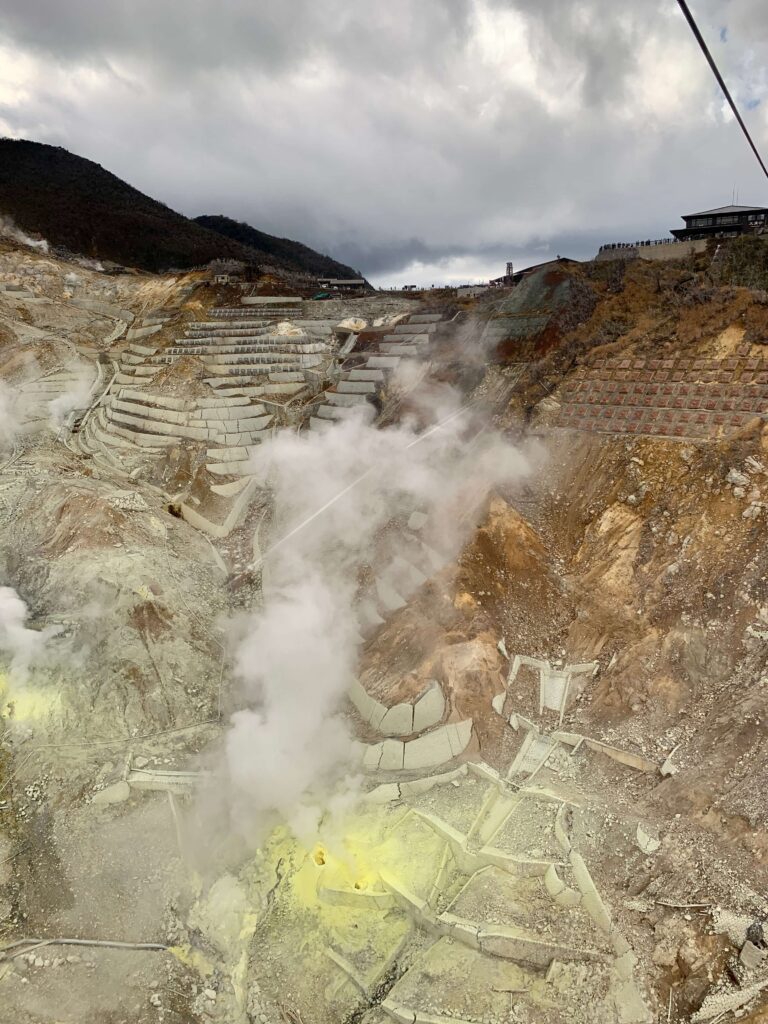
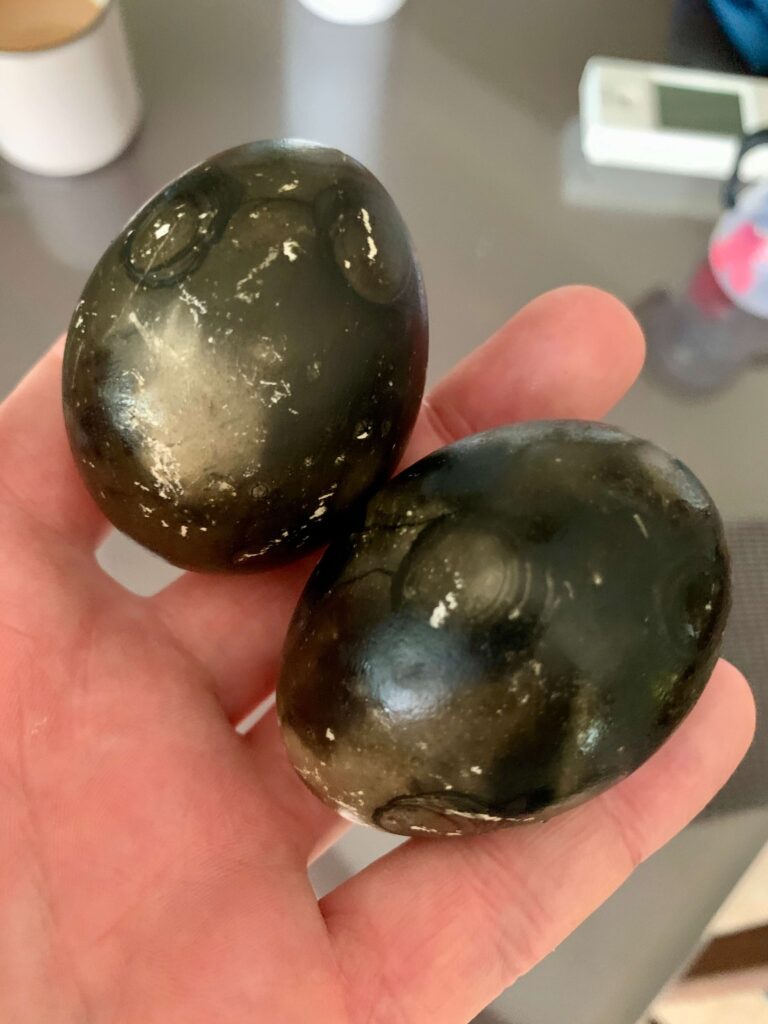
This is Hakone’s biggest drawcard and for good reason – it’s absolutely mental. Active volcanic vents spewing sulphur steam, the whole valley smells like rotten eggs, and you can eat black eggs that allegedly add 7 years to your life.
How to get there:
- Hakone Ropeway (the cable car) – best views on the way up
- Bus if the ropeway’s closed (happens when volcanic activity picks up or its really windy)
- Drive and park (if you can find a spot)
The black eggs: Boiled in the volcanic hot springs, the shells turn black. They’re just regular eggs inside but the novelty’s fun. ¥500 gets you 5 eggs.
Real talk: Owakudani is BUSY. I’ve been there on a Tuesday morning in October and it was packed. Weekday visits are better but expect crowds regardless. The ropeway can have 30+ minute waits on weekends.
Also, if you’ve got breathing issues, the sulphur fumes might be a problem. They close the area entirely if volcanic activity spikes.
Lake Ashi (Ashinoko)


Created by a volcanic eruption about 4,000 years ago, this lake sits 700m above sea level and never freezes. On clear days, Mount Fuji reflects in the water and it’s genuinely stunning.
The boat cruises: Everyone bangs on about the pirate ships, and yeah they’re cool, but they’re also packed. I prefer the regular ferries – same views, way fewer people, better chance of actually getting photos without someone’s elbow in the frame.
The boats connect different parts of the lake (Moto-Hakone, Hakone-machi, Togendai). If you’ve got the Hakone Free Pass, cruises are included.
What you’ll see:
- The red torii gate of Hakone Shrine from the water
- The old Sekisho checkpoint
- Mountains all around
- Mount Fuji (if the weather gods are kind)
Hakone Ropeway
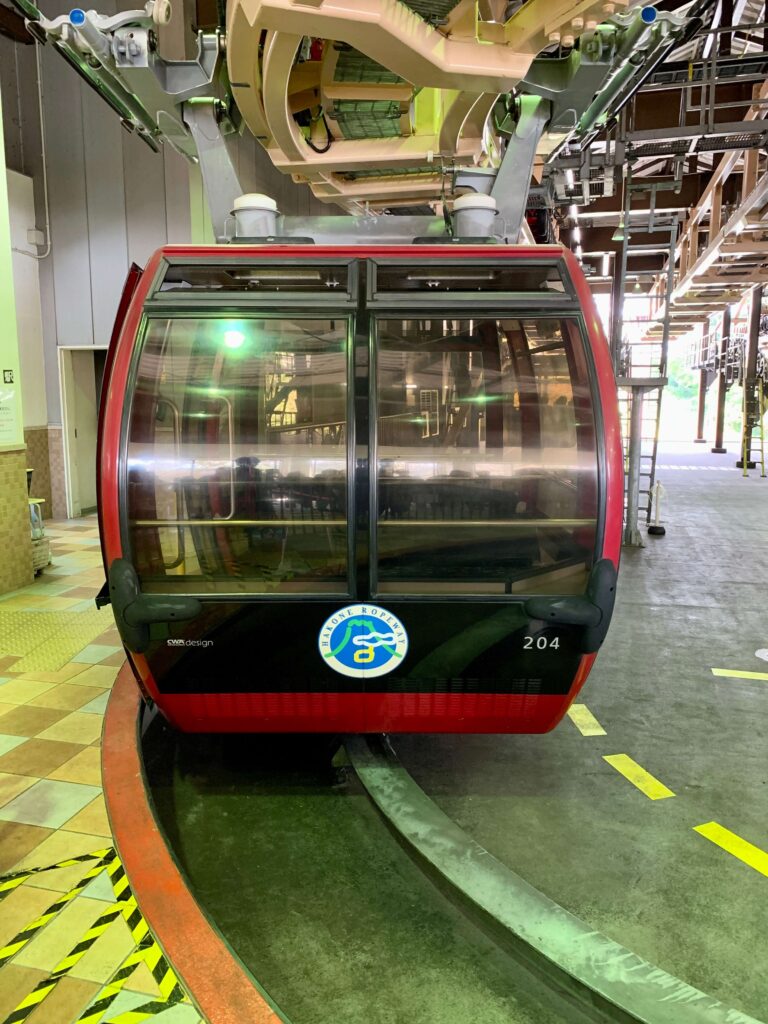


This cable car system connects Sounzan to Togendai (via Owakudani). The views are ridiculous – forests, Lake Ashi, volcanic activity, and Fuji-san on clear days.
The route:
- Sounzan → Owakudani → Ubako → Togendai
- Total journey: about 30 minutes
- Runs every minute or so (though queues can be long)
I’ve done this route probably 10+ times and it never gets old. Autumn colours from the ropeway are next level.
Hakone Komagatake Ropeway (The One Tourists Miss)

Right, this is my favourite and barely any foreign tourists know about it. The ropeway goes from Hakone-en up to Mount Komagatake peak (1,356m) in just 7-8 minutes. Return ticket is about ¥2,000.
Why I love it:
- Less crowded than the main ropeway
- Views of Fuji are killer on clear days
- There’s a shrine at the top (Hakone Mototsumiya Shrine – the ORIGINAL Hakone Shrine)
- You feel like you’re on top of the world
When you’re standing at the summit looking at Mount Fuji with Lake Ashi below, it’s one of those moments where you just stop and think “yeah, this is why I travel.”
Sengokuhara Susuki Grass Fields
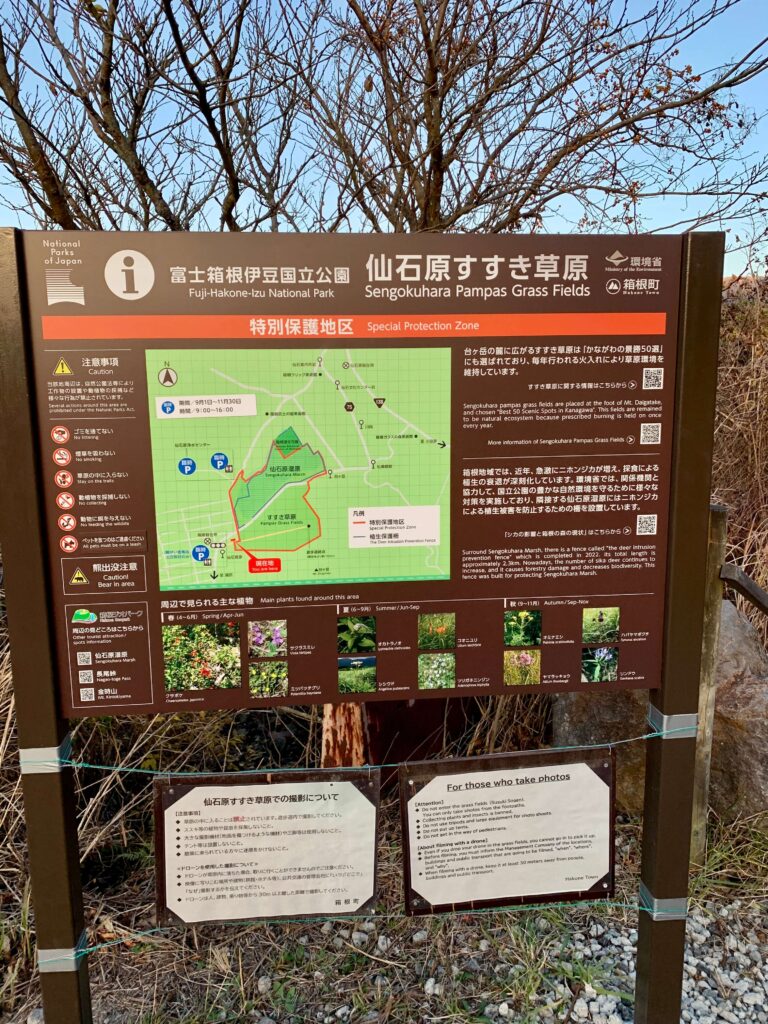
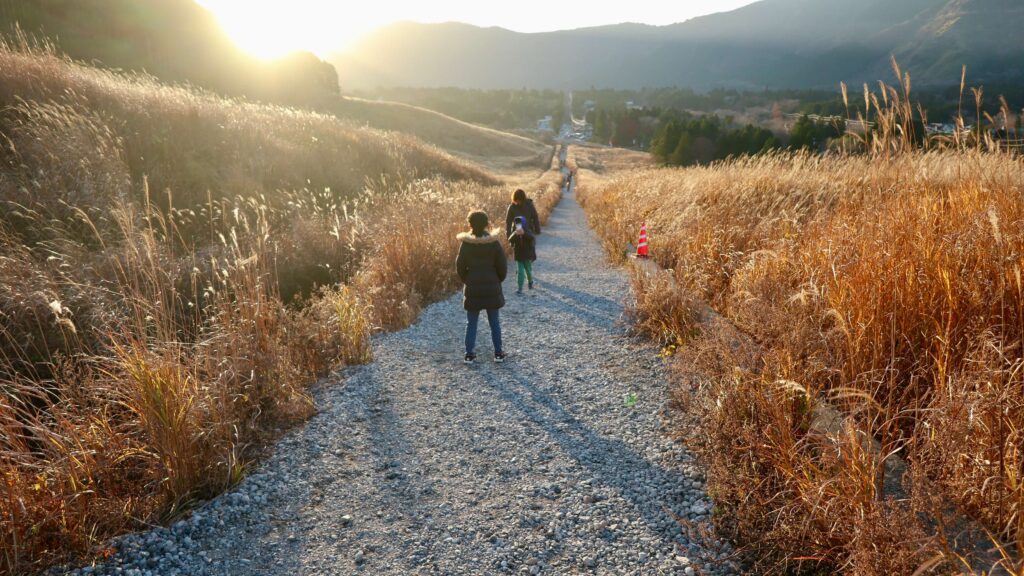


Here’s something completely different from the volcanic steam vents and lake cruises – massive fields of pampas grass (susuki) that stretch almost as far as you can see. Located in the Sengokuhara area, this is one of my favourite spots in Hakone.
Best time: Early October to mid November when the grass turns golden and catches the light. The whole field glows this incredible amber colour, especially at sunset. It’s honestly stunning.
The walking trails through the fields are easy and flat – nice change from all the mountain climbing elsewhere in Hakone. Takes about 30-40 minutes to walk through at a leisurely pace.
What I love about this place is how different it feels. No crowds fighting for photos, no sulphur smell, just peaceful grass fields swaying in the wind. It’s free, it’s relaxing, and it photographs beautifully.
Getting there: Easiest by bus from Hakone-Yumoto (about 25 minutes) or by car if you’re driving. The bus stop is right there – “Sengoku-Kogen” or “Sengokuhara” stop.
Taikanzan Observatory


If you want Mount Fuji views and don’t want to deal with massive crowds, come here. It’s a lookout point with 180-degree views covering:
- Mount Fuji
- Lake Ashi
- Rolling hills and volcanic domes
- Sagami and Suruga Bays (on really clear days)
Sunset here is magic. The sky goes pink and orange, Fuji’s silhouette gets darker, and it’s just… bloody beautiful.
Getting there: Easier with a car, but doable on buses from Moto-Hakone or Hakone-machi.
Hakone Shrine
Sitting right on Lake Ashi’s edge, this shrine is famous for its red torii gate that stands in the water. The main shrine is up a path lined with massive cedar trees – proper atmospheric.
Come early morning if you can. The place gets swarmed by tour groups from about 10am onwards. I’ve been there at 7:30am and it was peaceful as. By noon, you’re queuing for photos.
Hakone Sekisho (The Old Checkpoint)


For history nerds (like myself), this reconstructed checkpoint from the Edo period is fascinating. Back in the day (1603-1868), this was one of 53 checkpoints along the Tokaido Highway between Edo (Tokyo) and Kyoto. They checked everyone passing through – no sneaking past with contraband or unauthorised travel.
What’s there:
- Reconstructed guard houses and gates
- Exhibits showing how they checked travelers
- Displays of weapons and armour
- Gardens with lake views
- Sometimes cultural performances (martial arts, traditional music)
The views from up the hill looking down at the checkpoint with Lake Ashi behind it are excellent photo material.
Hakone Open-Air Museum


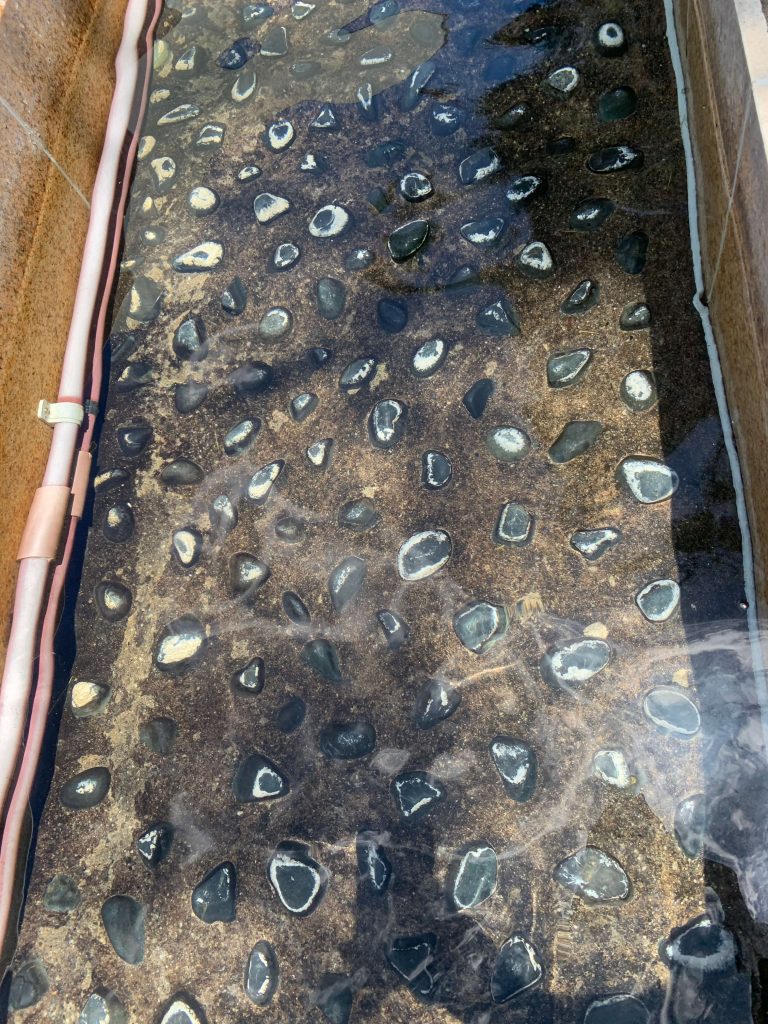

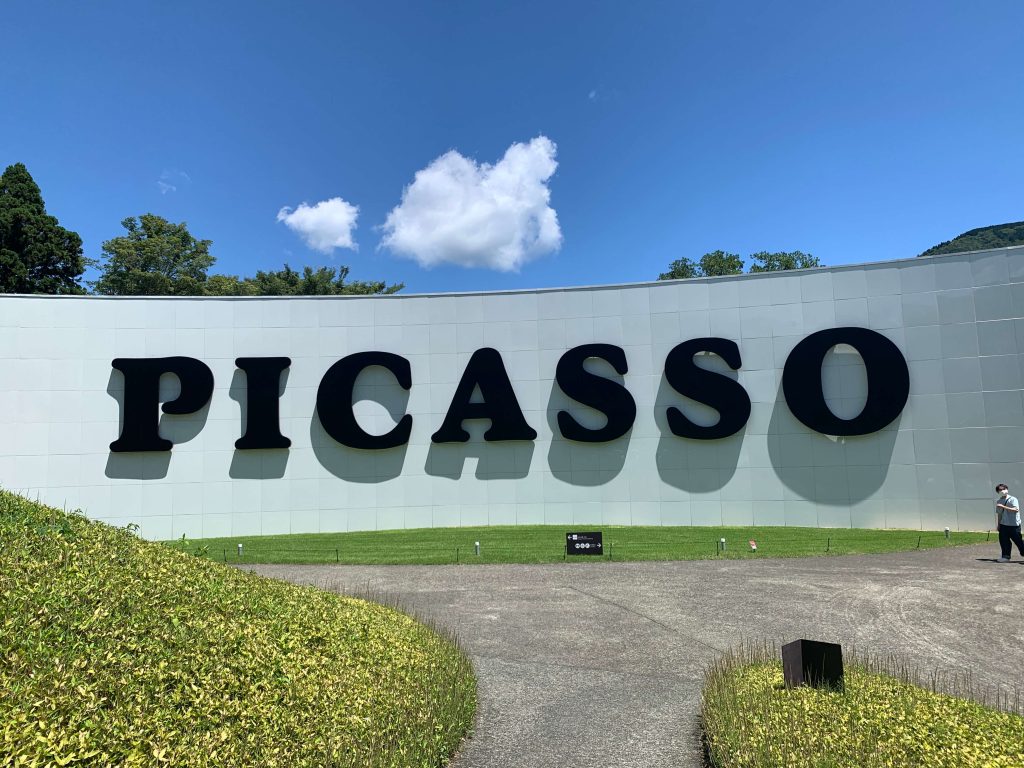


This place is brilliant – over 70,000 square metres of outdoor sculpture park plus indoor galleries. Works by Henry Moore, Rodin, Picasso, Japanese artists. Art and nature together.
Highlights:
- The sculptures blend with the landscape (not just plonked randomly)
- Picasso Pavilion – world’s first permanent Picasso exhibition (ceramics, paintings, sculptures)
- Kids’ area (Woods of Net) where they can actually play (not just look)
- Hot spring foot bath IN the museum (genius)
Budget 2-3 hours minimum. Entry is around ¥2,000 for adults or ¥1,800 if you book directly online – visit their official website here.
Hakone Botanical Garden of Wetlands
If you’re into plants and want somewhere quieter, this is lovely. Wetland vegetation, moss, seasonal flowers, well-maintained paths. Peaceful spot when you need a break from the tourist mobs.
Getting Around Hakone
The transport loop (if you’re not driving): Most people do the “Hakone Round Course” which uses multiple types of transport:
- Train (Hakone Tozan Railway) – winds through mountains
- Cable car (Hakone Tozan Cable Car) – Gora to Sounzan
- Ropeway – Sounzan to Togendai via Owakudani
- Boat – across Lake Ashi
- Bus – back to starting point
With the Hakone Free Pass, this whole loop is covered.
If you’re driving: Navigation apps work fine but:
- Some mountain roads are narrow
- Parking at major attractions fills up fast (especially weekends)
- Tolls add up but save heaps of time
- Having a car means you can hit less touristy spots easily
Where to Stay
Hakone’s got accommodation sorted whether you’re on a budget or ready to splash out. The choice between Hakone hotels and ryokan is the big one – both offer different experiences.
Ryokan (Traditional Inn): If you’ve never stayed in a ryokan, Hakone’s a great place to do it. Tatami floors, futon beds, kaiseki meals, private onsen access. The whole experience.
Book ahead – especially for weekends and autumn foliage season (October-November).
Hotels: Plenty of options from budget to luxury. Many have their own onsen facilities. More familiar if you prefer Western-style beds and amenities.
Budget options: Guesthouses and minshuku (family-run places) exist if you’re watching your wallet.
Private villa with onsen: For groups or families, renting a place with your own private hot spring is boss. Not cheap but split between people it’s reasonable.
What to Eat
Important heads up: Loads of restaurants in Hakone close early in the week – Monday, Tuesday, sometimes Wednesday. I learned this the hard way when we went with friends and ended up driving 45 minutes just to find an udon place that was actually open. If you’re visiting midweek, check restaurant hours beforehand or have backup plans. Weekends are safer for dining options.
Hakone soba: Buckwheat noodles are the local specialty. Fresh, handmade, served hot or cold. Simple but delicious.
Black eggs: Yeah, they’re mostly a novelty but try one at Owakudani.
Kaiseki cuisine: Multi-course traditional Japanese meals. Many ryokan include this in your stay. It’s an art form – seasonal ingredients, beautiful presentation, tastes incredible.
Other local stuff:
- Hoshi-gaki (dried persimmons)
- Yuba (tofu skin)
- Kuro-tamago (black sesame rice balls)
There’s also heaps of international food (French, Italian, Chinese) if you need a break from Japanese cuisine – but again, check opening days if visiting early in the week.
Practical Tips (From Someone Who’s Actually Been There… Eight Times)
Here are my essential Hakone tips from eight trips – the stuff I wish someone had told me on my first visit.
Best time to visit Hakone:
- Spring (March-May): Mild weather, cherry blossoms, not too hot
- Autumn (October-November): Foliage is good, comfortable temps
- Summer: Hot and humid, biggest crowds, but everything’s open
- Winter: Quieter, colder, but onsen feel amazing in cold weather
Each season has its perks, but if you’re asking me for the absolute best time to visit Hakone, I’d say late October to early November for the autumn colours, or March-April for cherry blossoms. Just expect bigger crowds during these peak times.
Weather is UNPREDICTABLE: Cannot stress this enough. Mountain weather changes fast. I’ve had perfectly clear mornings turn into pea-soup fog within an hour. Be prepared for:
- Ropeways to close due to wind or fog
- Lake Ashi boats unable to dock at certain piers
- Visibility dropping to basically zero
On the bright side, when boats can’t dock or schedules get messed up, you get more time to enjoy the cruise. Maybe grab an extra beer and enjoy the ride. Roll with it – that’s part of the Hakone experience.
The toilet situation: Right, nobody warns you about this. Squat toilets still exist in Hakone. Not everywhere, but they’re around. I discovered this delightful fact when I took my then-3-year-old to the toilet. Let’s just say it was… an experience. If you’ve got young kids or mobility issues, look for signs indicating Western-style toilets (usually marked with a toilet symbol). Newer facilities and major attractions generally have Western toilets.
Mount Fuji views: Right, let’s talk about the elephant in the room – or rather, the mountain that’s NOT in the room. Every single time I went to Hakone, I expected to see stunning views of Mount Fuji. Eight trips. Eight. And Fuji-san decided to show up properly maybe… once or twice?
Here’s the truth: Mount Fuji creates its own weather and hides behind clouds about 4 out of 5 times. Maybe more. Your best chances:
- Early morning (before 9am)
- Winter months (November-February when air is clearer)
- After rain has cleared the atmosphere
- From elevated spots (Taikanzan Observatory, Komagatake peak)
But honestly? Don’t plan your entire trip around seeing Fuji. Hakone’s got plenty to offer even when the mountain’s playing hide and seek. If you do see it, consider yourself lucky and take a million photos.
Money stuff:
- Bring cash – not everywhere takes cards (especially smaller restaurants and some transport). If you’re wondering why cash is still so popular in Japan, I’ve written about that too.
- ATMs at 7-Eleven and Family Mart work with foreign cards
- Budget more than you think (entry fees, transport, food adds up)
Restaurant timing: Heaps of places close Monday-Wednesday. Seriously. One time we drove 45 minutes looking for an open restaurant. Check hours beforehand if visiting midweek.
What to wear:
- Comfortable shoes (you’ll be walking heaps)
- Layers (mountain weather changes quickly – trust me on this)
- Sunscreen in warmer months (UV gets high)
- Rain jacket (not optional – bring it)
How long to spend: One day is possible but rushed. Two days is ideal – gives you time to relax, hit the main spots without sprinting, and actually enjoy the onsen. Three days if you want to explore deeper or just chill.
Crowds: Weekdays are noticeably quieter than weekends. If you can, avoid:
- Weekends (obviously)
- Japanese public holidays
- Peak autumn foliage (late October to early November)
Booking ahead:
- Ryokan – book at least 2-3 weeks in advance (earlier for popular dates)
- Transport usually fine without booking
- Restaurants at popular ryokan should be booked if you’re not staying there
Driving tips:
- GPS/navigation works well
- Some roads are single lane and winding
- Mountain fog can roll in FAST – be prepared to slow right down
- Parking at Owakudani can take 30+ minutes to find on busy days
- Early morning or late afternoon for easier parking
- Tolls from Tokyo to Hakone run around ¥2,000-3,000
- Check weather forecast but know it can change anyway
Frequently Asked Questions
Is Hakone worth visiting?
Absolutely. If you’re in Tokyo and want a quick escape to nature, hot springs, and mountain views, Hakone’s your spot. It’s touristy for a reason – the combination of easy access, onsen culture, and natural beauty is hard to beat. Just manage expectations about crowds, especially on weekends. This Hakone travel guide 2025 covers everything you need to know before you go.
How many days do you need in Hakone?
Two days is the sweet spot. One day is doable but you’ll be rushing around trying to hit everything like most of the tourists. Three days if you want to properly relax and soak in those onsen. I’ve done quick day trips before but honestly, you miss out on the ryokan experience and the vibe of the place at night.
Can you do Hakone as a day trip from Tokyo?
Yes, absolutely. This is what the large majority of tourists do. But it’s a lot. You’ll spend about 4-6 hours on transport (return) and have maybe 5-6 hours in Hakone. Possible to hit the main Hakone attractions (Owakudani, Lake Ashi cruise, ropeway) but you won’t get the full experience. Stay overnight if you can. (Want more day trip ideas? Check out my complete guide to day trips from Tokyo.)
Is the Hakone Free Pass worth it?
If you’re doing the full loop (train, cable car, ropeway, boat), then yeah, it pays for itself. The pass costs ¥7,100 for 2 days and covers 8 different types of transport. Without it, you’d spend way more buying individual tickets. However, if you’re driving, skip it.
What’s the best way to see Mount Fuji from Hakone?
Early morning is key – before 9am if possible. The summit tends to disappear behind clouds as the day warms up. Best viewing spots are Taikanzan Observatory, Lake Ashi (from the boat), and the ropeway. Winter months (November-February) give you the best odds of clear views. But real talk – Fuji hides A LOT. I’ve been 8 times and seen it properly maybe twice. Don’t plan your whole trip around seeing it.
What if Mount Fuji is hiding?
This will probably happen, so don’t let it ruin your trip. Hakone’s volcanic valleys, hot springs, Lake Ashi, shrines, and mountains are all brilliant even without Fuji in the background. Some of my best Hakone memories were on foggy days when Fuji was nowhere to be seen. The atmosphere changes completely – can be quite magical actually.
Can you visit Hakone with tattoos?
Some traditional onsen will turn you away if you have visible tattoos, but there are tattoo-friendly options. Yunessun is usually fine, and many ryokan offer private onsen where tattoos don’t matter. If you’ve got ink, check with the accommodation or onsen beforehand to avoid disappointment.
Is Hakone good for kids?
Yeah, kids love it. The pirate ships on Lake Ashi are a hit, Yunessun onsen theme park is designed for families, and the ropeway over volcanic valleys is exciting for little ones. The Open-Air Museum has a kids’ area too. Just be prepared for lots of walking. Our kid loved it each and every time.
How cold does Hakone get in winter?
Hakone sits at elevation so it’s colder than Tokyo. Winter (December-February) averages 0-8°C. Can get snow but not heaps. The onsen feel amazing in cold weather though – sitting in hot water with cold air on your face is brilliant.
Do I need to speak Japanese in Hakone?
Nah, you’ll be fine. Major attractions have English signage and staff who speak some English. Transport systems have English announcements and maps. Restaurants in tourist areas usually have English or picture menus. It’s one of the more tourist-friendly areas in Japan.
What should I pack for Hakone?
Comfortable walking shoes (non-negotiable), layers (weather changes quickly in the mountains), rain jacket, sunscreen, and CASH. Your phone’s fine for photos but bring a proper camera if you’re keen on photography – the scenery’s worth it.
Can you drive to Hakone?
Absolutely, and I reckon it’s one of the best ways to see it if you’re comfortable driving in Japan. Takes about 2 hours from Tokyo, roads are well-maintained, and you can reach spots that are trickier on public transport. Just be ready for tolls (¥2,000-3,500), narrow mountain roads, and parking hassles at popular spots on weekends.
What’s the difference between the Hakone Ropeway and Komagatake Ropeway?
The Hakone Ropeway is the main one everyone talks about – connects Sounzan to Togendai via Owakudani. Gets busy. The Komagatake Ropeway goes up Mount Komagatake from Hakone-en – way less crowded, killer views of Fuji (when he decides to show up), has a shrine at the top. Most foreign tourists miss it, which is why I prefer it.
How unpredictable is the weather?
Very. Mountain weather changes fast – I’ve seen clear mornings turn to thick fog in an hour. Ropeways shut down for wind or poor visibility, boats sometimes can’t dock at certain Lake Ashi piers. When this happens, don’t stress – you might get an extra beer on the cruise or more time to explore. It’s part of the adventure. Just bring layers and a rain jacket.
Are there Western-style toilets everywhere?
Mostly, but squat toilets still exist in Hakone. Found this out the hard way taking my 3-year-old to the loo – bit of a surprise! Newer facilities and major attractions usually have Western toilets. Look for signs or ask if you’ve got young kids or mobility concerns.
Where can I eat if visiting midweek?
Heads up – loads of restaurants close Monday, Tuesday, sometimes Wednesday. I once drove 45 minutes with friends trying to find an open udon place. Check restaurant hours before you visit if going early in the week. Weekends are safer for dining options. Your ryokan will always have food if you’re staying overnight – another reason to book Hakone hotels and ryokan rather than day-tripping.
Is Hakone safe?
Very safe. Japan in general is super safe, and Hakone’s a tourist area so it’s well-monitored. The only “danger” is volcanic activity at Owakudani – they’ll close it if things get dicey. Also watch for sudden weather changes in the mountains, especially fog when driving. Follow signs and restrictions if alert levels are raised.
When is peak season in Hakone?
Weekends year-round get packed. But the absolute worst times are autumn foliage season (late October to early November) and Japanese public holidays. If you can swing a weekday visit, do it – way more pleasant. This timing also factors into the best time to visit Hakone – early spring or late autumn are gorgeous but expect crowds.
Are there coin lockers in Hakone?
Yeah, at all the major stations (Hakone-Yumoto, Gora, etc.). Handy if you’re doing a day trip and don’t want to lug bags around. Costs a few hundred yen depending on size.
Final Thoughts
Look, I bypassed Hakone for years thinking it was overrated. Then I went once in 2022 and ended up going back seven more times over the next few years. That should tell you something.
Yeah, it gets busy. Yeah, Mount Fuji will probably hide from you. Yeah, the weather might throw a tantrum and shut down ropeways. But there’s a reason people (including me, apparently) keep coming back.
The combination of easy access from Tokyo, natural beauty, hot springs, and cultural stuff makes it a winner. I’ve seen Hakone in different seasons, from different angles (train views vs car views are completely different), in thick fog where I couldn’t see my hand in front of my face, and on crystal clear days where everything’s perfect.
My biggest Hakone tips after eight visits? Give yourself at least two days, book a ryokan for one night (trust me on this), do the tourist loop but also try to hit Komagatake Ropeway which everyone misses, bring cash and a rain jacket, and don’t stress if Mount Fuji’s playing hide and seek.
Oh, and if you’re driving, check that weather forecast. Then prepare for it to be completely wrong anyway. That’s Hakone for you.
The onsen though? Can’t beat sitting in hot volcanic water with cold mountain air on your face, even if you can’t see more than 5 metres through the fog. Maybe especially then.
Need any other tips or got questions about specific spots? Hit me up in the comments.
All prices and information current as of November 2025 but check official websites before visiting as things change.